Have you ever felt a sudden fear that seemed to come out of nowhere? Perhaps it struck during a quiet moment, in a dream, or even in the middle of a busy day.
Fear can feel overwhelming, confusing, and even isolating. But in the Bible, fear is not always a sign of weakness. It can be a message, a guide, or a reminder of God’s presence in our lives.
Imagine walking through a dark forest, unsure of the path ahead. Your heart races, and your mind floods with worries.
Suddenly, a small light appears in the distance. This light brings a sense of peace, guiding you forward.
This is similar to how fear can function in our spiritual lives; it highlights areas where we need God’s guidance, protection, and comfort.
So, what does Fear in the Bible Meaning? Is it something to avoid completely, or can it be part of our spiritual journey?
Let’s explore its deeper meaning and discover how God uses fear to strengthen faith, teach lessons, and bring hope.
Biblical Meaning of Fear
In the Bible, fear carries different meanings depending on the context. There is the natural, human fear we all experience, like being afraid of danger, loss, or the unknown.
Then there is the “fear of the Lord,” which is a spiritual reverence and awe towards God.
The fear of the Lord is described as the beginning of wisdom in
Proverbs 9:10:
“The fear of the Lord is the beginning of wisdom, and knowledge of the Holy One is understanding.”
This type of fear is not about terror but about respect, trust, and humility before God. It inspires obedience, love, and a deeper connection to His guidance.
On the other hand, the Bible also addresses fear as a human challenge to overcome.
Isaiah 41:10 encourages believers:
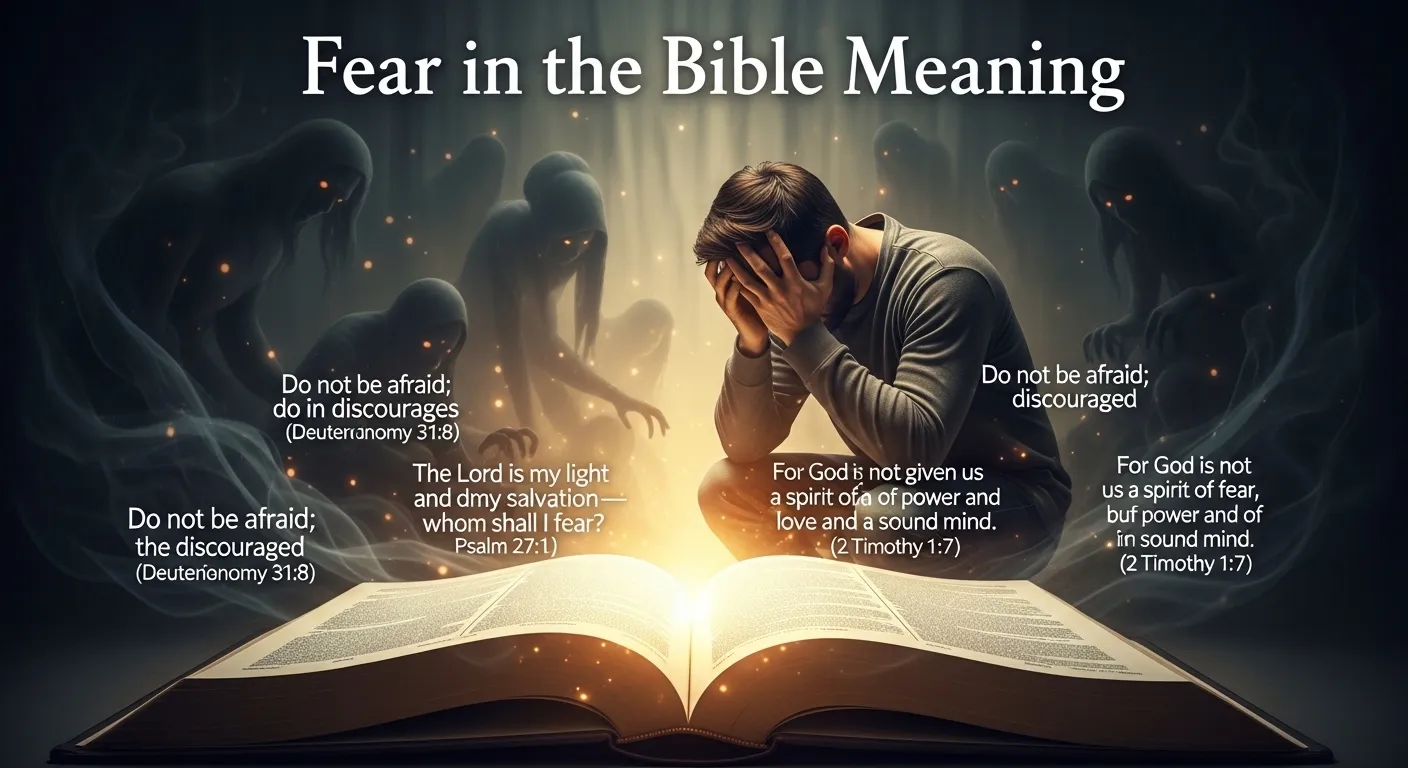
“So do not fear, for I am with you; do not be dismayed, for I am your God. I will strengthen you and help you; I will uphold you with my righteous right hand.”
Here, God acknowledges that fear is natural but reassures us of His presence. Fear, when guided by faith, becomes an opportunity for growth, courage, and reliance on God.
In some cases, fear acts as a warning or call to action. For example, fearing the consequences of sin or straying from God can lead to repentance and spiritual awakening. Psalm 34:4 reminds us:
“I sought the Lord, and He answered me; He delivered me from all my fears.”
Biblical fear is therefore dual in nature: it can protect, guide, and teach, but it can also limit us if we allow anxiety or doubt to take control. The key is to transform fear into faith, prayer, and trust in God’s plan.
Fear in the Bible Meaning: Spiritual Significance and Symbolism
Spiritually, fear is a powerful symbol of God’s protective presence. When we feel afraid, it signals a moment to pause, reflect, and seek divine guidance.
Fear can be a mirror showing us where we need healing, courage, or faith.
For example:
A sudden fear before a big decision might be God’s way of urging you to pray, reflect, and seek wisdom. Feeling fear during life’s storms reminds us to lean on God’s promises, like in
Psalm 56:3:
“When I am afraid, I put my trust in You.”
Fear also symbolizes transformation. Just as fear challenges us, God uses it to strengthen our character and deepen our spiritual awareness.
By facing fear with prayer and faith, we experience peace, courage, and a renewed sense of hope.
In everyday life, this can look simple: praying before a test, trusting God during illness, or relying on Him when relationships feel strained. Each moment of fear is an invitation to connect with God, grow spiritually, and experience His peace.
Fear in the Bible Meaning: Biblical Interpretations in Dreams or Real Life
Fear often appears in dreams or real-life experiences, carrying different spiritual messages.
- Peaceful fear: This might appear as a gentle warning or guidance, signaling that God wants you to pay attention to a situation or choice.
- Overwhelming fear: A strong, paralyzing fear can highlight areas where faith is needed. It’s a call to surrender control and trust God’s timing.
- Repetitive fear in dreams: Could symbolize unresolved concerns, sin, or spiritual growth opportunities.
No matter the scenario, God’s presence is comforting. Reflecting through prayer, reading the Word, and seeking His guidance turns fear into a message of hope rather than anxiety.
Practical Lessons & Faith Insights
- Embrace fear as a teacher, not a tyrant.
- Use prayer to transform anxiety into trust in God.
- Reflect on scripture that strengthens faith during fearful times.
- Remember, fear is temporary, but God’s love is eternal.
Conclusion:
Fear in the Bible is not just a feeling to avoid it is a spiritual signal, a guide, and a teacher.
If it appears in dreams, daily life, or moments of uncertainty, fear points us toward prayer, faith, and God’s comforting presence.
Embrace fear as a path to spiritual growth, and let God transform it into hope, courage, and peace.

Samuel Brooks is a Bible enthusiast and storyteller who connects Biblical lessons with contemporary life. At biblicaltribez.com, he crafts engaging content that educates and uplifts readers. His work aims to make Scripture accessible, meaningful, and inspiring for all audiences.