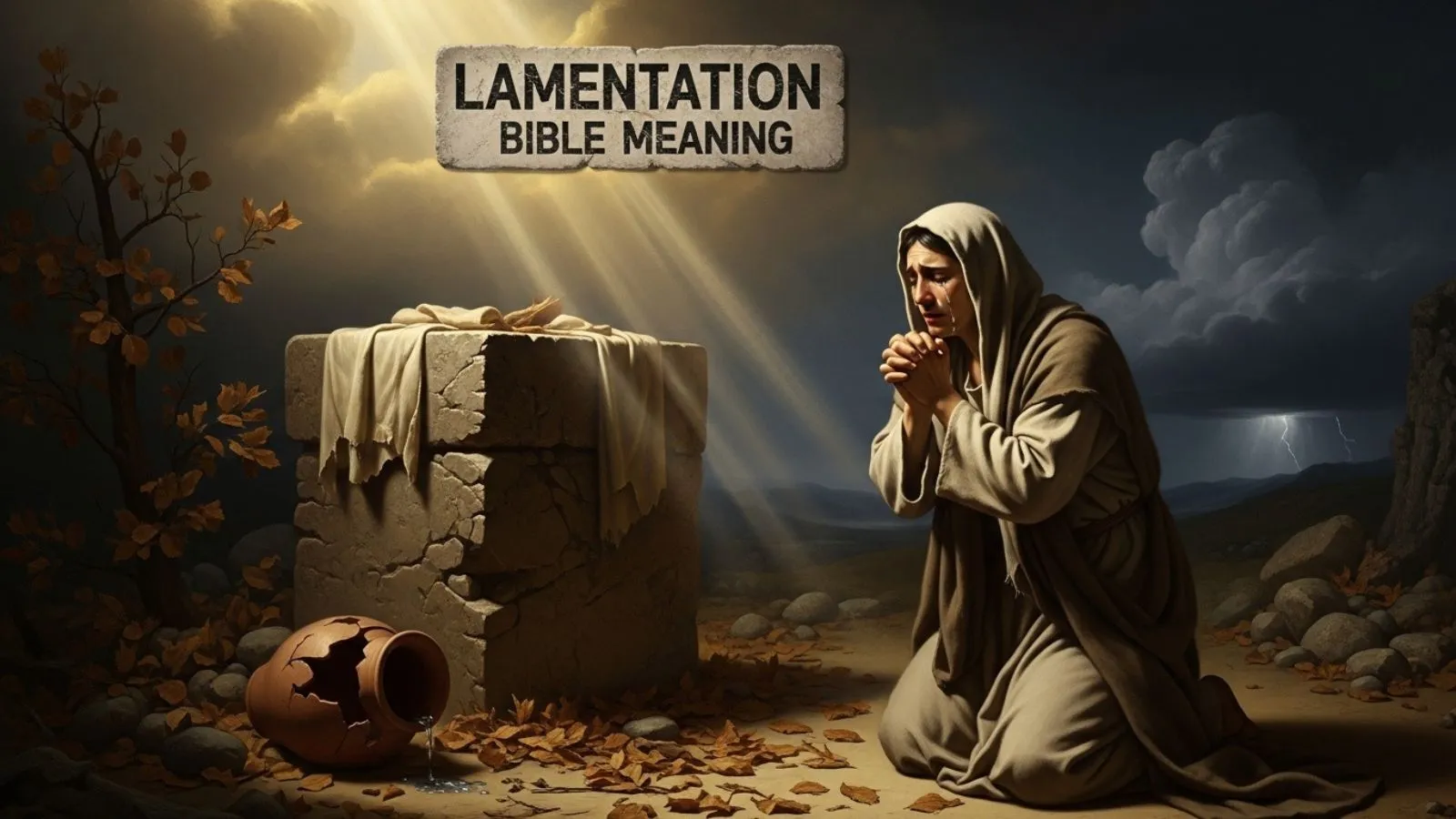
Have you ever felt a deep ache in your heart, a sense of loss, or a wave of sorrow that seems to linger?
Maybe it came after a difficult day, a personal loss, or even in a dream that left you unsettled. In the Bible, such feelings are often expressed through lamentation, a heartfelt cry to God during times of sorrow or struggle.
Lamentation is more than just sadness; it is a sacred moment where our hearts meet God’s presence.
The Bible shows us that even in tears, prayer, and heartfelt cries, God is listening.
Psalm 34:18 reminds us:
“The Lord is close to the brokenhearted and saves those who are crushed in spirit.”
But what does Lamentation Bible Meaning? Is it a sign of weakness, or a path to divine comfort and transformation?
In this guide, we will explore the biblical meaning of lamentation, its spiritual symbolism, and how it can appear in your dreams or real life.
By the end, you will see sorrow not as the end, but as a doorway to hope, faith, and God’s guidance.
Biblical Meaning of Lamentation
In the Bible, lamentation is a form of expression that connects the human heart to God. It often appears when people face trials, grief, or injustice.
The Book of Lamentations itself, written by the prophet Jeremiah, shows a city mourning its destruction, yet finding hope in God’s mercy.
Lamentation is both a cry and a prayer. It is a way to pour out sorrow honestly while acknowledging God’s presence.
In Lamentations 3:22-23, we read:
“Because of the Lord’s great love we are not consumed, for his compassions never fail. They are new every morning; great is your faithfulness.”
This passage teaches us that even in deep sorrow, God’s love remains constant. Biblical lamentation has several key meanings:
- Expression of Pain: It allows the heart to release grief, fear, and confusion before God.
- Seeking God’s Guidance: Lamentation is a form of prayer, inviting God’s intervention and wisdom.
- Hope in Faith: Through lamentation, we are reminded of God’s promise to restore, heal, and guide us.
Lamentation is not merely sadness, it is a spiritual act of honesty.
Psalm 6:6 shows the psalmist saying:
“I am worn out from my groaning. All night I flood my bed with weeping.”
This honesty before God is welcomed and even encouraged.
Positive meanings of lamentation include spiritual growth, deeper faith, and renewed hope.
Conversely, ignoring sorrow or pretending it doesn’t exist can lead to spiritual stagnation or emotional burden.
Lamentation, therefore, is a bridge between human vulnerability and divine comfort.
Spiritual Significance and Symbolism
Spiritually, lamentation teaches us humility, trust, and reliance on God. When we openly express our sorrow, we allow God to transform our pain into lessons of resilience and hope.
- Faith Growth: Lamentation reminds us that it’s okay to bring doubts and fears to God. Trust grows when we experience His response.
- Emotional Release: Spiritual healing often begins when emotions are acknowledged rather than suppressed.
- Divine Connection: Crying out in lamentation creates a sacred space where God’s presence is felt profoundly.
For example:
someone facing a personal loss may pray in lamentation each night, gradually feeling a peace that surpasses understanding.
Another may journal their grief, finding that their sorrow slowly transforms into gratitude for God’s presence.
Through lamentation, the Bible shows us that sorrow is not meaningless, it is a spiritual tool for renewal, prayer, and divine guidance.
Lamentation Bible Meaning: Biblical Interpretations in Dreams or Real Life
Lamentation can also appear in dreams or real-life experiences.
- Peaceful Lamentation: Dreams where you softly cry or pray may indicate a period of spiritual cleansing or preparation. God is helping you release emotional burdens.
- Intense or Fearful Lamentation: If dreams involve overwhelming grief, it may symbolize unresolved pain or a call to seek God’s guidance more actively.
In real life, noticing moments of deep sorrow or crying in prayer is often a sign that God is working through your emotions, helping you transform pain into faith.
By embracing lamentation with prayer and reflection, we open our hearts to divine comfort and hope.
Practical Lessons & Faith Insights
- Pray Honestly: Share your sorrow openly with God.
- Reflect and Release: Journaling or meditation can help process grief.
- Trust in God’s Timing: Lamentation is part of your spiritual journey and growth.
Faith-filled takeaway: Lamentation is not despair it is a sacred step toward healing, hope, and divine guidance.
Conclusion:
lamentation bible meaning is a sacred expression of human sorrow that meets God’s unwavering love.
It teaches us to be honest with our emotions, seek divine guidance, and trust in His mercy. By embracing lamentation, we open the door to healing, spiritual growth, and hope.
Remember, even in tears, God’s presence surrounds you, offering peace, comfort, and renewed faith.

Caleb Anderson is a passionate Christian writer who shares insights on faith, spirituality, and Biblical teachings. He contributes regularly to biblicaltribez.com, inspiring readers worldwide. His articles focus on practical applications of Biblical principles in daily life.