Skip to content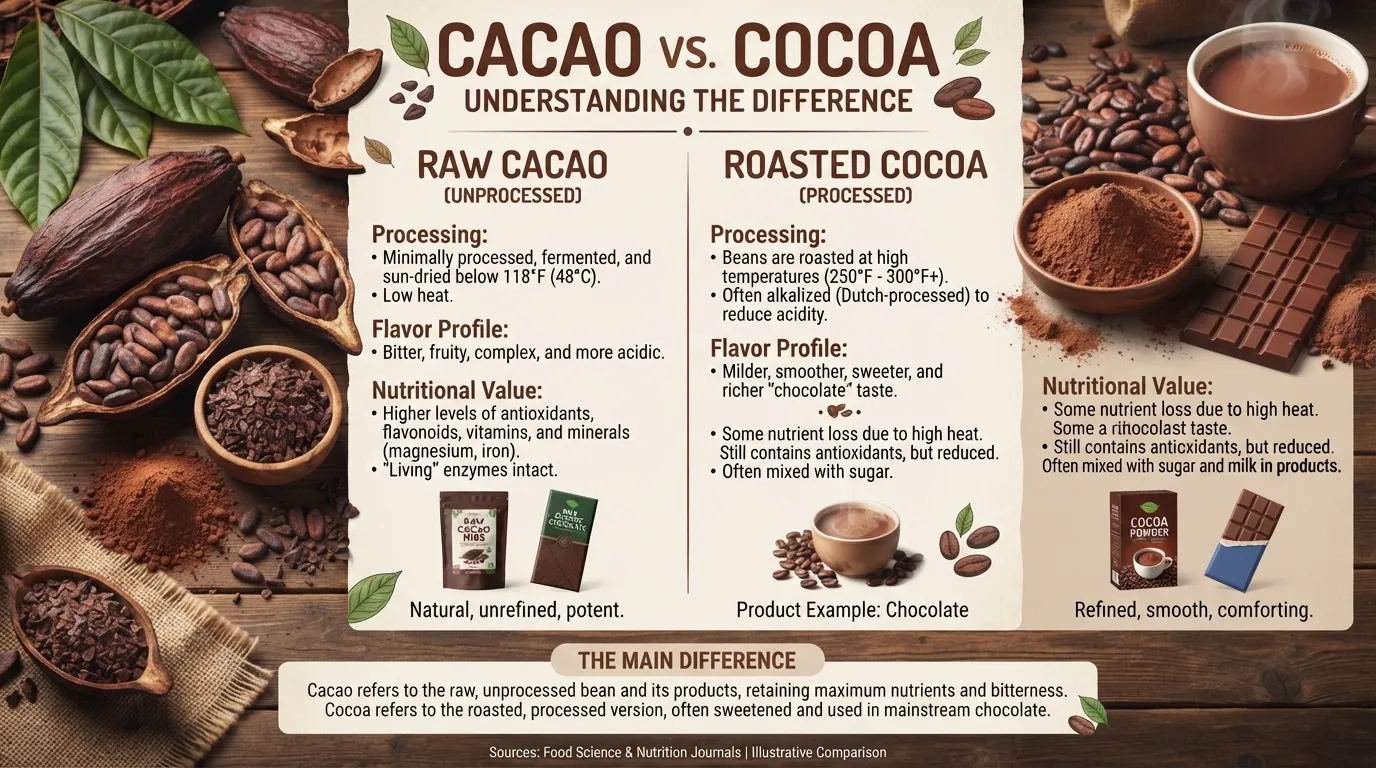
Cacao and cocoa come from the same plant, Theobroma cacao, but the terms are often used differently.
Cacao commonly refers to the beans, pods, nibs, or less-processed products, while cocoa often refers to roasted and processed products such as cocoa powder.
However, the terms are not a strict universal processing standard.
Key Takeaways
- Cacao and cocoa ultimately come from the same cacao plant.
- “Cacao” often describes the less-processed stage or products, while “cocoa” commonly describes processed products.
- Cocoa powder may be natural or Dutch-processed, and those products behave differently in recipes.
- Cacao is not automatically healthier simply because the package says “cacao.”
- For baking, follow the type of cocoa specified in the recipe when possible.
What Is the Difference Between Cacao and Cocoa?
The simplest answer is that cacao and cocoa come from the same plant and are closely related products.
The plant is called Theobroma cacao. It produces large pods filled with seeds commonly called cacao beans or cocoa beans. Those beans are fermented, dried, and processed into ingredients used to make chocolate, cocoa powder, cocoa butter, and other products.
The confusion starts because the words cacao and cocoa are used differently by farmers, manufacturers, chocolatiers, recipe writers, and food brands.
In everyday American food labeling, cacao often suggests a less-processed product, such as cacao nibs or cacao powder. Cocoa often refers to roasted and processed ingredients, especially cocoa powder.
But this is a useful convention, not a universal scientific rule.
Cacao vs Cocoa: Key Differences
| Feature | Cacao | Cocoa |
| Source | Theobroma cacao | Theobroma cacao |
| Common meaning | Beans, nibs, or less-processed products | Roasted or processed cocoa products |
| Flavor | Often more intense, bitter, or fruity | Often smoother and deeper |
| Common uses | Smoothies, energy bites, toppings, drinks | Baking, desserts, hot cocoa |
| Processing | May be minimally processed | Usually involves additional processing |
| Label meaning | Can vary by brand | Can vary by brand |
The most important point is this: the word on the package does not tell you everything about how the product was made.
If processing matters to you, check the ingredient label and product description. Look for terms such as “roasted,” “natural,” “Dutch-process,” or specific processing information.
How Cacao Becomes Cocoa
The journey from cacao pod to cocoa powder involves several stages.
First, cacao pods are harvested and opened. The seeds inside are surrounded by a sweet, sticky pulp. The seeds then undergo fermentation, followed by drying.
Fermentation is important because it helps develop the flavors associated with chocolate. The International Cocoa Organization explains that chocolate flavor develops through both fermentation and later processing, including roasting.
After drying, beans may be roasted. Roasting changes their aroma, color, and flavor. The beans can then be cracked and winnowed to remove their shells, leaving the nibs.
The nibs are ground into cocoa liquor. Despite its name, cocoa liquor does not mean alcohol. It is a thick paste made from ground cacao material.
The cocoa liquor can then be pressed to separate much of the cocoa butter from the cocoa solids. The remaining solids can be milled into cocoa powder.
So, instead of thinking of cacao and cocoa as two completely different foods, it is more useful to think of them as overlapping terms used at different points in the chocolate-making process.
Cacao Powder vs Cocoa Powder
This is where the distinction becomes especially useful for home cooks.
Cacao powder is generally marketed as a less-processed cacao product. It is commonly used in smoothies, oatmeal, energy balls, homemade chocolate treats, and no-bake recipes.
Cocoa powder is a more familiar baking ingredient. It is made from processed cacao beans and is available in different forms.
However, not all cocoa powder is the same.
Natural Cocoa Powder
Natural cocoa powder is acidic and has a strong chocolate flavor. It is commonly paired with baking soda in recipes because the acidity can help the leavening reaction.
Its color is usually lighter than Dutch-process cocoa.
Dutch-Process Cocoa Powder
Dutch-process cocoa has been treated with an alkaline ingredient. This process is called alkalization or Dutching.
The treatment changes the cocoa’s color, flavor, and acidity. The International Cocoa Organization notes that alkalization can be used to modify the flavor and color of cocoa products.
Dutch-process cocoa is usually darker and smoother tasting than natural cocoa.
Because its acidity is different, replacing one type with another can affect a recipe’s texture and rise.
Flavor and Texture Differences
Cacao products can have a stronger and more complex flavor. Depending on the product and bean, you may notice bitter, fruity, earthy, or nutty notes.
Cocoa powder often has a familiar roasted chocolate flavor. Dutch-process cocoa can taste especially smooth and mellow.
Processing plays a major role in these differences. Roasting creates many of the aroma compounds associated with chocolate flavor. Research reviews also show that fermentation, roasting, and alkalization can change the chemical composition of cocoa products.
That is why two chocolate powders can look similar but taste noticeably different.
Cacao vs Cocoa for Baking
If you are baking brownies, cakes, cookies, or chocolate muffins, cocoa powder is often the safer choice when the recipe specifically calls for cocoa powder.
The reason is not that cocoa is universally better. It is because baking recipes are designed around particular ingredients.
For example, a recipe using natural cocoa powder may also use baking soda. Changing to Dutch-process cocoa can alter the acidity balance.
Cacao powder can work in many recipes, especially no-bake recipes. But it may produce a different flavor, color, and texture.
Before making a substitution, check whether the recipe specifies:
- Natural cocoa powder
- Dutch-process cocoa powder
- Unsweetened cocoa powder
- Cacao powder
If the recipe does not specify a type, look at the other ingredients before substituting.
Is Cacao Healthier Than Cocoa?
This is one of the biggest questions surrounding cacao vs cocoa.
The answer is not simply yes.
Cacao and cocoa contain naturally occurring compounds called flavanols and other polyphenols. Research has examined cocoa flavanols for possible effects on cardiovascular and other health outcomes. However, the amount of these compounds can vary depending on the bean, processing method, and final product.
Processing can reduce certain flavanols. For example, research has found that alkalization can substantially reduce flavanol levels in cocoa powder.
But this does not mean every product labeled cacao automatically has a superior nutritional profile.
The FDA’s qualified health claim for certain high-flavanol cocoa products specifically states that the evidence for reducing cardiovascular disease risk is very limited, and the claim does not apply broadly to regular cocoa powder or all cacao products.
So, rather than choosing a product solely because it says “cacao,” consider the complete label, serving size, ingredients, and processing information.
Can You Substitute Cacao for Cocoa?
Usually, you can substitute cacao powder for cocoa powder in some recipes, but the result may not be exactly the same.
Cacao powder may have a stronger or more bitter flavor. It can also change the color and overall taste of baked goods.
The biggest concern is acidity and leavening.
If a recipe depends on natural cocoa powder and baking soda, switching ingredients can affect how the batter reacts. The same applies when replacing natural cocoa with Dutch-process cocoa.
For simple smoothies, oatmeal, sauces, and no-bake recipes, substitution is usually less complicated.
For cakes and other chemically leavened baked goods, it is better to follow the recipe’s specified cocoa type.
Which One Should You Buy?
Your choice depends on how you plan to use it.
- For baking: Choose the cocoa powder specified by your recipe.
- For smoothies: Cacao powder is a common choice if you like its stronger chocolate flavor.
For hot chocolate: Either can work, but cocoa powder often gives the familiar chocolate flavor associated with traditional cocoa drinks.
For no-bake desserts: Cacao powder can work well in energy bites, homemade bars, and similar recipes.
- For nutrition-focused shopping: Do not rely on the word “cacao” alone. Check the product’s ingredients, processing information, and nutrition label.
The best choice is the one that matches the recipe, flavor, and product characteristics you want.
FAQs:
Is cacao the same as cocoa?
Cacao and cocoa come from the same plant, Theobroma cacao, and the terms overlap. In modern food use, cacao often describes the beans or less-processed products, while cocoa commonly describes roasted or processed products.
However, there is no universal rule that every product labeled cacao is unprocessed or every product labeled cocoa is heavily processed.
Is cacao healthier than cocoa?
Not automatically. Both can contain flavanols and other plant compounds, but processing can change their levels. Product composition also varies. The word “cacao” alone does not prove that a product is nutritionally superior to cocoa.
Can I use cacao powder instead of cocoa powder?
You often can, especially in smoothies and no-bake recipes. In baking, however, the substitution can affect flavor, color, acidity, and how the leavening agents work. Follow the recipe’s specified type of cocoa when possible.
What is Dutch-process cocoa?
Dutch-process cocoa is cocoa that has been treated with an alkaline ingredient. This process reduces acidity and changes the powder’s color and flavor. It is often darker and smoother than natural cocoa powder.
Which is better for baking?
There is no single choice that works best for every recipe. Natural cocoa, Dutch-process cocoa, and cacao powder have different characteristics. For reliable results, use the type named in the recipe and pay attention to whether the recipe uses baking soda or baking powder.
Conclusion:
The difference between cacao vs cocoa is more complicated than one being “raw” and the other being “processed.”
Both come from Theobroma cacao, and the terms overlap. Cacao often refers to the plant, beans, nibs, or less-processed products, while cocoa commonly refers to roasted and processed ingredients such as cocoa powder.
For cooking, the processing details matter more than the name on the front of the package. Natural cocoa and Dutch-process cocoa can behave differently in baking, while cacao powder is often useful in smoothies and no-bake recipes.
And when it comes to health, avoid assuming that “cacao” automatically means better. Processing, ingredients, serving size, and the specific product all matter.

I am Samuel Brooks, a Christian author who enjoys breaking down complex Bible concepts into simple truths. At Biblicaltribez.com, I write content that inspires faith, hope, and spiritual growth. I aim to help readers connect Scripture with real life challenges in a meaningful way.