Skip to content
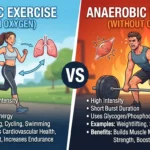
Anaerobic vs aerobic refers to two ways your body produces energy during exercise. Aerobic exercise mainly uses oxygen and supports longer activities such as walking, jogging, and swimming.
Anaerobic exercise provides energy quickly during short, intense efforts such as sprinting, jumping, and heavy weightlifting. Most workouts use a mix of both systems.
Key Takeaways
- Aerobic exercise mainly uses oxygen to make energy for longer activities.
- Anaerobic exercise provides quick energy during short, intense efforts.
- Walking, jogging, swimming, and steady cycling are mostly aerobic.
- Sprinting, heavy lifting, and short HIIT intervals are mostly anaerobic.
- You do not have to choose only one. A balanced routine can include both.
What Is the Difference Between Anaerobic and Aerobic Exercise?
The main difference is how your body supplies energy during physical activity.
The word aerobic means “with oxygen.” During aerobic exercise, your body uses oxygen to help produce the energy needed to keep your muscles working. This system is well suited to activities that last for several minutes or longer, such as walking, jogging, cycling, and swimming.
Anaerobic means “without oxygen.” During short, intense efforts, your muscles need energy faster than the aerobic system can supply it. Your body then relies more heavily on anaerobic energy pathways that can provide energy quickly.
The important point is that your body does not simply switch from one system to the other. Both systems can work at the same time. The main difference is which system contributes more energy based on the intensity and duration of the activity.
Aerobic Exercise Explained
Aerobic exercise is often called cardio or endurance exercise. It usually involves continuous, rhythmic movement that raises your heart rate and breathing for an extended period.
Examples include:
- Walking
- Jogging
- Running at a steady pace
- Cycling
- Swimming
- Rowing
- Dancing
- Hiking
During aerobic activity, your heart and lungs help deliver oxygen to working muscles. Your body uses that oxygen as part of its energy-producing process. Because this system can support activity for a longer time, it is important for endurance.
How Aerobic Exercise Works
Think about taking a 30-minute walk.
You are moving continuously, but you are not asking your muscles for maximum power every second. Your body has enough time to take in oxygen and deliver it to your muscles.
This allows you to keep going for a relatively long period.
Aerobic exercise can be done at different intensities. A brisk walk, easy jog, and longer bike ride can all be aerobic activities even though they feel different.
Benefits of Aerobic Exercise
Regular aerobic activity can help improve cardiovascular fitness and support the health of your heart, lungs, and circulatory system. It is also associated with a lower risk of several chronic diseases when performed as part of an active lifestyle.
For adults, the American Heart Association recommends at least 150 minutes of moderate-intensity aerobic activity per week, or 75 minutes of vigorous activity, with additional activity providing further benefits.
Anaerobic Exercise Explained
Anaerobic exercise involves short, intense efforts where your body needs energy very quickly.
Common examples include:
- Sprinting
- Heavy weightlifting
- Jumping
- Short hill sprints
- Some forms of HIIT
- Explosive movements
- Short, hard cycling intervals
These activities are difficult to maintain for a long time because they demand energy at a very high rate.
How Anaerobic Exercise Works
Imagine running as fast as you can for 20 seconds.
Your muscles need a large amount of energy immediately. Your aerobic system cannot supply all of that energy quickly enough on its own.
Your body therefore increases its use of faster anaerobic energy pathways.
This does not mean your body suddenly has zero oxygen. Instead, it means anaerobic energy production becomes more important because the exercise intensity is very high. This is a more accurate way to understand the term.
Anaerobic activity can also cause lactate to accumulate as exercise intensity rises. Lactate is part of normal energy metabolism during hard exercise; it should not simply be described as a waste product that causes all post-workout soreness.
Benefits of Anaerobic Exercise
Anaerobic training can help improve muscle strength, power, and high-intensity performance.
For example, strength training can challenge your muscles to produce more force. Sprint training can improve your ability to produce speed and power.
Anaerobic training can also complement aerobic exercise. Many sports require athletes to maintain endurance while producing repeated bursts of high effort.
Anaerobic vs Aerobic: Key Differences
| Feature | Aerobic | Anaerobic |
| Main energy process | Uses oxygen | Relies more on rapid energy pathways |
| Typical intensity | Low to moderate, sometimes vigorous | High to very high |
| Typical duration | Longer | Shorter |
| Main focus | Endurance | Strength, speed, and power |
| Examples | Walking, jogging, swimming | Sprinting, heavy lifting, jumping |
| Breathing | Faster but often sustainable | Rapid and difficult during hard efforts |
| Best known for | Cardiovascular endurance | Muscular power and high-intensity performance |
The table is a useful guide, but real exercise is more complicated. An activity is not always 100% aerobic or 100% anaerobic. Your body can use both systems during the same workout.
Is Running Aerobic or Anaerobic?
Running can be either aerobic or anaerobic. It depends on how you run.
A steady jog that you can maintain for a long time is mostly aerobic. Your body can use oxygen to support the energy demand.
A short, all-out sprint is mostly anaerobic because the intensity is much higher and your muscles need energy very quickly.
Even a longer run can include short anaerobic periods. For example, you may sprint up a hill or accelerate toward the finish line.
So, it is better to think about exercise on a spectrum rather than placing every activity into one strict category.
Is Weightlifting Aerobic or Anaerobic?
Traditional heavy weightlifting is generally considered anaerobic exercise.
A heavy set may last only a short time, but your muscles must produce a lot of force. This creates a high demand for fast energy.
However, the entire workout can involve both systems. Your aerobic system helps you recover between sets and supports longer periods of activity.
This is why calling weightlifting “completely anaerobic” is too simple.
Which Is Better for Weight Loss?
Neither aerobic nor anaerobic exercise is automatically the best choice for everyone.
Aerobic exercise can help you burn energy while improving cardiovascular fitness. Activities such as brisk walking, cycling, and swimming can also be easier to perform for longer periods.
Anaerobic exercise, especially resistance training, can help build and maintain muscle. It can also improve strength and power.
For many people, combining both is a better approach than choosing only one. Your food intake, total activity, exercise consistency, sleep, and individual goals also affect changes in body weight.
The best exercise for weight management is usually one you can perform safely and consistently.
Can an Exercise Be Both Aerobic and Anaerobic?
Yes.
This is one of the most important things to understand about aerobic vs anaerobic exercise.
Take a game of basketball. You may jog around the court for several minutes, which relies heavily on aerobic energy. Then you may suddenly sprint, jump, or change direction quickly. Those short bursts place a greater demand on anaerobic energy pathways.
The same thing can happen during cycling, running, soccer, swimming, and many other sports.
Your body constantly adjusts its energy production based on how hard and how long you are working.
Which Type of Exercise Should You Do?
For general fitness, you usually do not need to choose between aerobic and anaerobic exercise.
A balanced routine can include both.
Choose more aerobic activity if your main goal is to:
- Improve cardiovascular endurance
- Build stamina
- Stay active for longer periods
- Support heart and lung fitness
Include more anaerobic or resistance-based training if you want to:
- Build strength
- Improve power
- Train for short, intense efforts
- Develop muscular fitness
You can combine them throughout the week. The right mix depends on your current fitness level, goals, schedule, and health needs.
If you have been inactive for a long time or have a medical condition, start gradually and speak with a healthcare professional if you are unsure what type or intensity of exercise is appropriate.
FAQs:
Is walking aerobic or anaerobic?
Walking is generally aerobic exercise, especially when performed continuously at a comfortable or brisk pace. It raises your heart rate and breathing while allowing your body to use oxygen to support energy production. Walking uphill or very quickly can increase the intensity and make the activity more demanding.
Is HIIT aerobic or anaerobic?
HIIT can involve both aerobic and anaerobic energy systems. Short, intense intervals place a strong demand on anaerobic energy pathways, while the recovery periods and longer workout structure can involve substantial aerobic activity. The exact balance depends on the exercise, interval length, intensity, and fitness level.
Is cycling aerobic or anaerobic?
Cycling can be either. A steady bike ride is mostly aerobic and develops endurance. Short, powerful cycling sprints are more anaerobic. A cycling workout with repeated hard intervals can use both systems.
Do you need both aerobic and anaerobic exercise?
For general fitness, including both can be useful. Aerobic exercise supports cardiovascular endurance, while resistance and high-intensity training can improve strength and power. The American Heart Association recommends regular aerobic activity and also includes strength training as part of a healthy physical activity routine.
Final Thoughts:
The easiest way to remember anaerobic vs aerobic is to think about energy demand.
Aerobic exercise mainly uses oxygen and supports longer activities such as walking, jogging, swimming, and steady cycling.
Anaerobic exercise provides energy quickly during short, intense efforts such as sprinting, jumping, and heavy lifting.
Neither type is automatically better. They serve different purposes, and many real-world activities use both. A well-rounded exercise routine can include aerobic endurance work along with strength or high-intensity training.

I am Samuel Brooks, a Christian author who enjoys breaking down complex Bible concepts into simple truths. At Biblicaltribez.com, I write content that inspires faith, hope, and spiritual growth. I aim to help readers connect Scripture with real life challenges in a meaningful way.