Skip to content
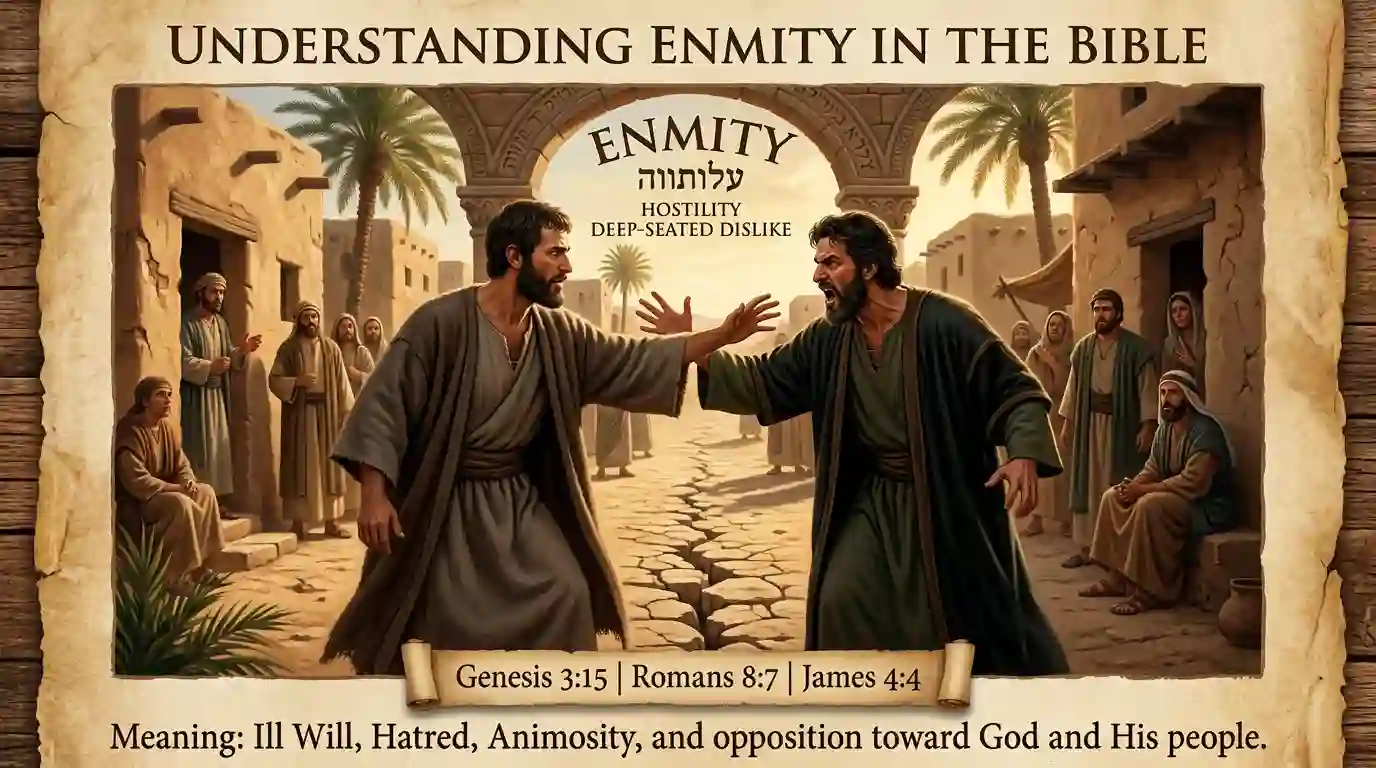
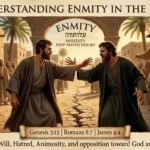
The enmity meaning in the Bible is deep hostility, hatred, or opposition between individuals, groups, or opposing spiritual forces. In Genesis 3:15, enmity describes the conflict between the serpent and the woman and their offspring. In Romans 8:7, it describes the hostility of a mind controlled by sinful desires toward God and His ways.
Key Takeaways
- Enmity means deep hostility or a state of being an enemy.
- Genesis 3:15 describes enmity between the serpent and the woman, including their offspring.
- Romans 8:7 connects enmity with opposition to God and His law.
- James 4:4 warns against choosing worldly values over loyalty to God.
- The Bible also teaches reconciliation, forgiveness, love, and peace.
What Does Enmity Mean in the Bible?
Enmity means deep-rooted hostility, hatred, or opposition. In the Bible, it can describe conflict between people, opposing spiritual forces, or an attitude that stands against God.
The word appears in important passages that discuss sin, human relationships, spiritual conflict, and reconciliation. Its exact meaning depends on the context in which it is used.
For example, Genesis 3:15 speaks about enmity between the serpent and the woman. Romans 8:7 describes the sinful mind as hostile toward God. Ephesians 2:15–16, meanwhile, discusses the removal of hostility and the creation of peace through Christ.
Bible Gateway
+1
Simple Definition of Enmity
In everyday English, enmity means a strong, lasting feeling of opposition toward someone or something.
Consider these examples:
- Personal enmity: Two people hold deep resentment toward each other.
- Spiritual enmity: A person’s attitudes or desires oppose God’s will.
- Biblical enmity: Scripture describes hostility between opposing people, forces, or ways of life.
Enmity is stronger than a temporary disagreement. It suggests a deeper state of hostility or opposition.
What Does Enmity Mean in Genesis 3:15?
Genesis 3:15 is one of the Bible’s most important passages about enmity. After Adam and Eve disobey God in the Garden of Eden, God speaks to the serpent and declares that He will put enmity between the serpent and the woman, and between their offspring.
In the King James Version (KJV), the verse says:
“And I will put enmity between thee and the woman, and between thy seed and her seed.”
The verse continues by describing a conflict involving the serpent’s head and the woman’s offspring’s heel.
Bible Gateway
+1
The Serpent, the Woman, and Their Offspring
At the most immediate level, Genesis 3:15 describes hostility between the serpent and the woman, extending to their offspring. In Christian interpretation, the serpent is commonly understood in connection with Satan, and the verse is often viewed as an early promise of victory over evil.
Many Christian traditions interpret the woman’s offspring as pointing ultimately to Jesus Christ. His suffering is associated with the wounded heel, while the serpent’s defeated head represents the decisive defeat of evil.
However, Christians differ in how they explain the details of the verse. The important point is that enmity describes an established conflict, not a simple personal disagreement.
Bible Gateway
+1
What this means for readers: Genesis 3:15 introduces a biblical theme of conflict between evil and God’s purposes. It should not be read as permission to hate other people. The passage concerns the serpent and its offspring, and its wider Christian interpretation focuses on God’s victory over evil.
What Does Enmity Against God Mean in Romans 8:7?
Romans 8:7 explains enmity in terms of a person’s relationship with God. The King James Version states:
“Because the carnal mind is enmity against God.”
In modern English, this means that a mind governed by sinful desires is hostile toward God and does not submit to His law. Other translations, including the New International Version (NIV), express the idea as the mind governed by the flesh being hostile to God.
Bible Gateway
+1
In this passage, Paul contrasts two ways of living: following sinful human desires and living according to the Spirit. The surrounding verses in Romans 8 discuss the difference between these ways of life.
For example, someone might consistently put greed, pride, dishonesty, or selfish ambition above honesty, compassion, and obedience to God. These examples illustrate the kind of conflict the passage addresses.
The verse does not mean that every person who struggles with temptation consciously hates God. Rather, it describes the opposition between a sinful way of thinking and God’s will.
The main lesson: Enmity against God involves more than negative feelings. It can describe a way of thinking and living that resists God’s authority.
What Does James 4:4 Teach About Enmity With God?
James 4:4 warns readers about the danger of friendship with the world becoming enmity with God.
Here, “the world” is not simply the planet or every person who lives on it. In this context, it refers to a way of life shaped by values that oppose faithfulness to God.
For example, a person might pursue wealth at any cost, manipulate others for personal gain, or choose popularity over integrity. These choices illustrate how worldly priorities can conflict with biblical teaching.
The passage challenges readers to examine what controls their decisions and loyalties. It asks whether they are following God’s purposes or allowing selfish desires to guide them.
This does not mean Christians should avoid non-Christians or treat people outside their faith as enemies. The focus is on spiritual loyalty and the values a person chooses to follow.
James 4:4 therefore connects enmity with a conflict of priorities. A person cannot consistently place opposing values at the center of life without facing a spiritual conflict.
Bible Gateway
+1
How Is Enmity Different From Hatred and Conflict?
Enmity, hatred, and conflict are related words, but they are not identical. Understanding the differences helps readers interpret biblical passages more accurately.
| Word | Meaning | Example |
|---|---|---|
| Enmity | Deep hostility or opposition | Two groups maintain a lasting state of hostility. |
| Hatred | A strong feeling of dislike or ill will | Someone feels intense hatred toward another person. |
| Conflict | A disagreement or struggle between opposing sides | Two friends disagree about an important decision. |
| Animosity | Strong ill will, often expressed through unfriendly behavior | A coworker treats another person with persistent resentment. |
| Reconciliation | The restoration of a broken relationship | Two people address past harm and work toward peace. |
Enmity often suggests an ongoing state of hostility, while conflict can be temporary. Hatred describes a feeling, although the words can overlap in particular situations.
For example, two friends can disagree without becoming enemies. However, if they develop lasting resentment and deliberately oppose each other, their relationship may develop into enmity.
This distinction matters when studying the Bible. A passage about enmity may describe a deep spiritual or relational opposition rather than an ordinary disagreement.
What Is the Opposite of Enmity in the Bible?
The opposite of enmity is generally peace, friendship, love, or reconciliation, depending on the passage.
Ephesians 2:15–16 describes Christ’s work in removing hostility and bringing people together in peace. In its immediate context, the passage discusses reconciliation between Jews and Gentiles through Christ.
This teaching highlights a central biblical theme: hostility does not have to be the final condition of a relationship. Through Christ, the New Testament presents reconciliation with God and peace between people as important parts of God’s work.
Bible Hub
+1
Other relevant passages include:
- Matthew 5:44: Jesus teaches His followers to love their enemies and pray for those who persecute them.
- Romans 12:18: Paul encourages believers to live peaceably with everyone as far as it depends on them.
- Ephesians 4:32: Christians are instructed to show kindness, compassion, and forgiveness.
These teachings do not suggest ignoring injustice or accepting harmful behavior. They encourage people to respond without allowing hatred and revenge to control them.
How Can Christians Overcome Enmity?
The Bible encourages believers to replace hostility with love, forgiveness, humility, and a desire for peace. Overcoming enmity does not always happen immediately, but Scripture offers practical guidance.
- Examine your heart. Romans 8:7 encourages readers to consider whether their attitudes and desires oppose God’s teachings.
- Practice forgiveness. Ephesians 4:32 teaches kindness, compassion, and forgiveness toward others.
- Love your enemies. Matthew 5:44 challenges believers to respond to hostility with love and prayer rather than revenge.
- Seek peace when possible. Romans 12:18 encourages peaceful relationships wherever this depends on the believer.
- Choose reconciliation over resentment. Ephesians 2:15–16 presents Christ as the source of reconciliation and peace.
These principles do not require someone to remain in an unsafe situation or excuse abuse. Peace and forgiveness can coexist with healthy boundaries, accountability, and appropriate protection.
The broader message is that Christians are called to resist evil without allowing personal hatred to determine how they treat others.
Frequently Asked Questions
What Is the Spiritual Meaning of Enmity?
The spiritual meaning of enmity is deep opposition between forces, attitudes, or choices that stand against one another. In the Bible, it can describe hostility toward God, conflict between good and evil, or opposition between people. Its meaning depends on the passage and should be understood within the surrounding Scripture.
Is Enmity Always Sinful?
Not every use of the word enmity automatically describes a person’s sin. Genesis 3:15, for example, describes hostility between the serpent and the woman. However, the Bible warns against sinful attitudes and actions that oppose God, encourage hatred, or harm other people. The context determines how enmity should be understood.
What Is an Example of Enmity in the Bible?
Genesis 3:15 is a key example because it describes enmity between the serpent and the woman and between their offspring. Romans 8:7 provides another example by describing the hostility of a mind governed by sinful desires toward God. James 4:4 discusses enmity associated with choosing worldly values over loyalty to God.
What Is the Opposite of Enmity?
The opposite of enmity is usually peace, love, friendship, or reconciliation. Ephesians 2:15–16 describes the removal of hostility and the making of peace through Christ. In practical terms, replacing resentment with forgiveness, treating others with compassion, and seeking peaceful solutions can help repair broken relationships.
Conclusion
The enmity meaning in the Bible centers on deep hostility, hatred, or opposition. Genesis 3:15 introduces the conflict between the serpent and the woman, Romans 8:7 describes hostility toward God, and James 4:4 warns against choosing worldly values over faithfulness to Him.
Yet the Bible’s message does not end with hostility. Through teachings about love, forgiveness, peace, and reconciliation, Scripture encourages believers to turn away from destructive opposition and pursue relationships shaped by God’s purposes.
Understanding enmity in its biblical context helps readers recognize both the seriousness of spiritual opposition and the importance of reconciliation.

I am Samuel Brooks, a Christian author who enjoys breaking down complex Bible concepts into simple truths. At Biblicaltribez.com, I write content that inspires faith, hope, and spiritual growth. I aim to help readers connect Scripture with real life challenges in a meaningful way.