Skip to content
The humility meaning in the Bible is having a modest, teachable heart that recognizes God’s authority, acknowledges personal limitations, and treats other people with kindness and respect. Biblical humility means putting aside pride, serving others, accepting correction, and depending on God’s wisdom. It does not mean thinking you have no worth or allowing others to mistreat you.
Key Takeaways
- Biblical humility means recognizing God’s greatness and your own limitations.
- Jesus Christ provides the clearest example of humility through His service and obedience.
- Scripture connects humility with wisdom, grace, gentleness, and love.
- Being humble does not require low self-esteem or accepting harmful behavior.
- You can practice humility by listening, admitting mistakes, serving others, and giving God credit.
What Does Humility Mean in the Bible?
Humility in the Bible describes a person’s attitude toward God, other people, and themselves. A humble person does not consider themselves better than others. Instead, they recognize their need for God’s guidance, remain willing to learn, and treat people with compassion.
In Colossians 3:12, Paul encourages believers to put on humility alongside compassion, kindness, gentleness, and patience. This shows that humility is more than a feeling. It should influence how people speak, make decisions, respond to criticism, and treat those around them.
For example, imagine that a coworker points out a mistake in your work. Pride might lead you to argue or blame someone else. Humility allows you to listen, consider the feedback, and correct the mistake when necessary.
Biblical humility also involves recognizing that your abilities, opportunities, and achievements do not make you more valuable than other people.
In simple words, humility means being honest about who you are, recognizing your dependence on God, and treating others without arrogance.
What Does the Bible Say About Humility?
Scripture presents humility as an important part of a faithful life. It connects humility with obedience to God, service to others, wisdom, and a willingness to receive correction.
Humility Means Putting God First
Micah 6:8 teaches that God calls people to act justly, love mercy, and walk humbly with Him. This verse connects humility with everyday conduct rather than outward appearances alone.
Walking humbly with God means recognizing that His wisdom is greater than your own. It involves seeking His guidance, taking His teachings seriously, and being willing to change when your actions do not reflect His principles.
For example, a person may pray for guidance before making an important decision and remain open to correcting a choice that harms someone else.
Humility does not mean that you can never ask questions or struggle with doubt. It means approaching God with sincerity rather than assuming that you already know everything.
Humility Means Valuing Others
Philippians 2:3–4 teaches believers to avoid selfish ambition and conceit, consider others, and look beyond their own interests.
This does not mean that your needs are unimportant. Instead, it encourages you to recognize that other people have needs, feelings, and perspectives that deserve consideration.
A humble parent listens to a child’s concerns. And a humble manager gives employees credit for their contributions. A humble friend apologizes after causing hurt.
These actions show humility because they place honesty, care, and relationships above the desire to appear superior.
Important Bible Verses About Humility
The following passages explain different aspects of biblical humility. The summaries describe each verse’s central message rather than reproduce a particular Bible translation.
| Bible verse | What it teaches |
|---|---|
| Micah 6:8 | Walk humbly with God, act justly, and love mercy. |
| Philippians 2:3–4 | Reject conceit and consider the interests of others. |
| James 4:10 | Humble yourself before the Lord. |
| 1 Peter 5:5–6 | Practice humility and trust God’s timing. |
| Proverbs 11:2 | Pride brings disgrace, while humility is associated with wisdom. |
| Colossians 3:12 | Practice humility alongside kindness, compassion, and patience. |
| Matthew 11:29 | Learn from Jesus, who describes Himself as gentle and humble in heart. |
| Proverbs 15:33 | Wisdom and humility are connected with honor. |
Together, these verses show that humility affects both faith and behavior. It is not simply about appearing modest. It involves choosing honesty over pride, service over selfish ambition, and teachability over arrogance.
Examples of Humility in the Bible
The Bible provides several examples that help readers understand what humility looks like in real life.
1. Jesus Christ
Jesus is the central example of biblical humility. Philippians 2:5–8 describes His willingness to take the form of a servant and humble Himself in obedience, even to death on a cross.
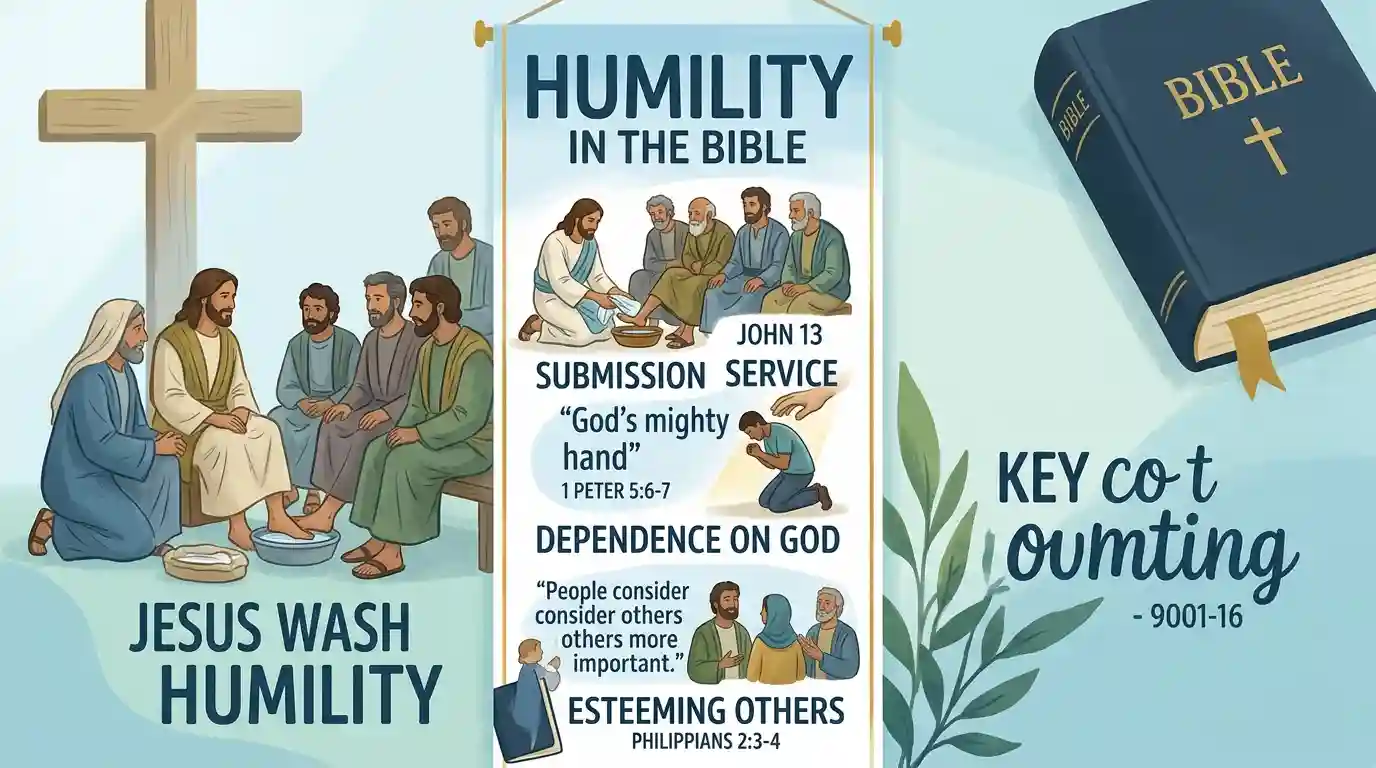
In John 13:1–17, Jesus washes His disciples’ feet. This act demonstrates that genuine leadership does not depend on demanding honor or recognition. A leader can use their position to serve others.
Jesus’ example teaches Christians to care for people, act with love, and use their abilities to help rather than dominate.
2. Moses
Numbers 12:3 describes Moses as very humble. His story includes moments when he faced opposition and difficult responsibilities while leading the Israelites.
Moses’ example is especially useful because humility does not mean having no responsibility or influence. A person can hold a leadership position and still recognize their dependence on God.
His story encourages readers to lead with patience, seek guidance, and avoid treating authority as proof of personal superiority.
3. The Tax Collector
In Luke 18:9–14, Jesus tells a parable about a Pharisee and a tax collector praying in the temple.
The Pharisee proudly compares himself with others, while the tax collector acknowledges his need for God’s mercy. Jesus concludes that the tax collector, rather than the self-exalting Pharisee, goes home justified before God.
The lesson is that sincere humility involves honest self-examination. It does not depend on comparing yourself with people you consider less righteous.
Humility vs. Pride: What Is the Difference?
Humility and pride often lead people to respond differently to the same situation.
| Situation | Humble response | Prideful response |
|---|---|---|
| Receiving criticism | Listen and consider the feedback. | Reject it without reflection. |
| Making a mistake | Admit it and try to correct it. | Blame someone else. |
| Achieving success | Feel grateful and share credit. | Claim all the recognition. |
| Meeting someone with different views | Listen respectfully. | Assume the other person is foolish. |
| Helping another person | Help without demanding praise. | Help mainly to gain admiration. |
Not every confident statement is prideful, and not every quiet person is humble. A person may speak confidently while respecting others. Another person may appear modest while secretly seeking praise.
The key difference is the attitude behind the behavior. Biblical humility rejects arrogance without requiring a person to deny their abilities or accomplishments.
Does Biblical Humility Mean Thinking Less of Yourself?
No. Biblical humility is not the same as self-hatred, constant self-criticism, or believing that you have no value.
Romans 12:3 encourages people to think of themselves with sober judgment. In context, Paul calls for an honest assessment rather than an inflated view of personal importance.
A humble person can recognize their strengths, celebrate a success, and accept a compliment without claiming to be superior to everyone else.
Humility also does not mean tolerating abuse or remaining silent when someone behaves unjustly. Micah 6:8 connects a humble walk with God to justice and mercy. Seeking help, setting reasonable boundaries, and speaking truthfully can be consistent with humility.
The goal is not to make yourself feel worthless. It is to see yourself honestly while recognizing the worth of other people.
How to Practice Humility in Everyday Life
You can develop humility through small, consistent choices. The following practices reflect biblical teachings and can help you apply them in ordinary situations.
- Listen before responding. Give people time to explain their thoughts before deciding that they are wrong.
- Admit your mistakes. When you cause harm or make an error, acknowledge it and take reasonable steps to correct it.
- Give credit to others. Recognize the people who helped you succeed instead of claiming every achievement for yourself.
- Serve without seeking attention. Help a family member, neighbor, or coworker because their needs matter, not because you expect praise.
- Accept correction. Consider advice carefully and learn from people who have useful experience.
- Pray with sincerity. Ask God for wisdom, guidance, forgiveness, and the strength to change.
- Treat everyone with respect. Show kindness regardless of a person’s job, income, social position, or influence.
You do not need to perform these actions perfectly to begin practicing humility. When you notice pride in your response, acknowledge it and make a better choice next time.
Frequently Asked Questions
What is the simple meaning of humility in the Bible?
Humility means recognizing God’s authority, being honest about your limitations, and treating other people with respect. It involves putting aside arrogance, accepting guidance, and serving others with a willing heart.
What is the most important Bible verse about humility?
Micah 6:8 is a helpful starting point because it connects humility with justice and mercy. Philippians 2:3–8 is also important because it teaches believers to reject selfish ambition and points to Jesus as an example of humble service.
Why does God want us to be humble?
Scripture connects humility with wisdom, obedience, and a proper relationship with God. James 4:6 teaches that God gives grace to the humble, while James 4:10 calls believers to humble themselves before the Lord. These teachings encourage people to depend on God rather than pride.
What does it mean to humble yourself before the Lord?
James 4:10 calls people to humble themselves before God. In the surrounding passage, James addresses pride, conflict, repentance, and submission to God. The instruction means recognizing your need for His guidance, turning away from wrongdoing, and approaching Him sincerely.
How can I become more humble according to the Bible?
Start by examining your actions honestly, listening to others, admitting mistakes, serving without demanding praise, and praying for wisdom. Philippians 2:3–4 encourages you to consider other people’s interests, while Colossians 3:12 emphasizes kindness, gentleness, patience, and humility.
Is humility the opposite of confidence?
No. Humility and confidence can exist together. A humble person can trust their abilities and make firm decisions without believing they are better than everyone else. Biblical humility challenges arrogance, not healthy confidence or an honest recognition of personal strengths.
Conclusion
The humility meaning in the Bible goes beyond modest words or a quiet personality. It describes a heart that recognizes God’s authority, treats others with respect, accepts correction, and chooses service over selfish ambition.
Jesus provides the clearest example through His life of service and obedience. Passages such as Micah 6:8, Philippians 2:3–8, and James 4:10 show how humility shapes a person’s faith and daily conduct.
You can begin practicing biblical humility today by listening carefully, admitting mistakes, helping others, and asking God for wisdom. The goal is not to think that you have no worth. It is to live with gratitude, honesty, and respect for God and the people around you.

I am Joseph Parker, a devoted Bible content writer dedicated to sharing God’s Word with clarity and purpose.
Through Biblicaltribez.com, I create inspirational and scripture-centered articles that strengthen faith.
My goal is to guide readers into a deeper understanding of biblical teachings and Christian living.