Skip to content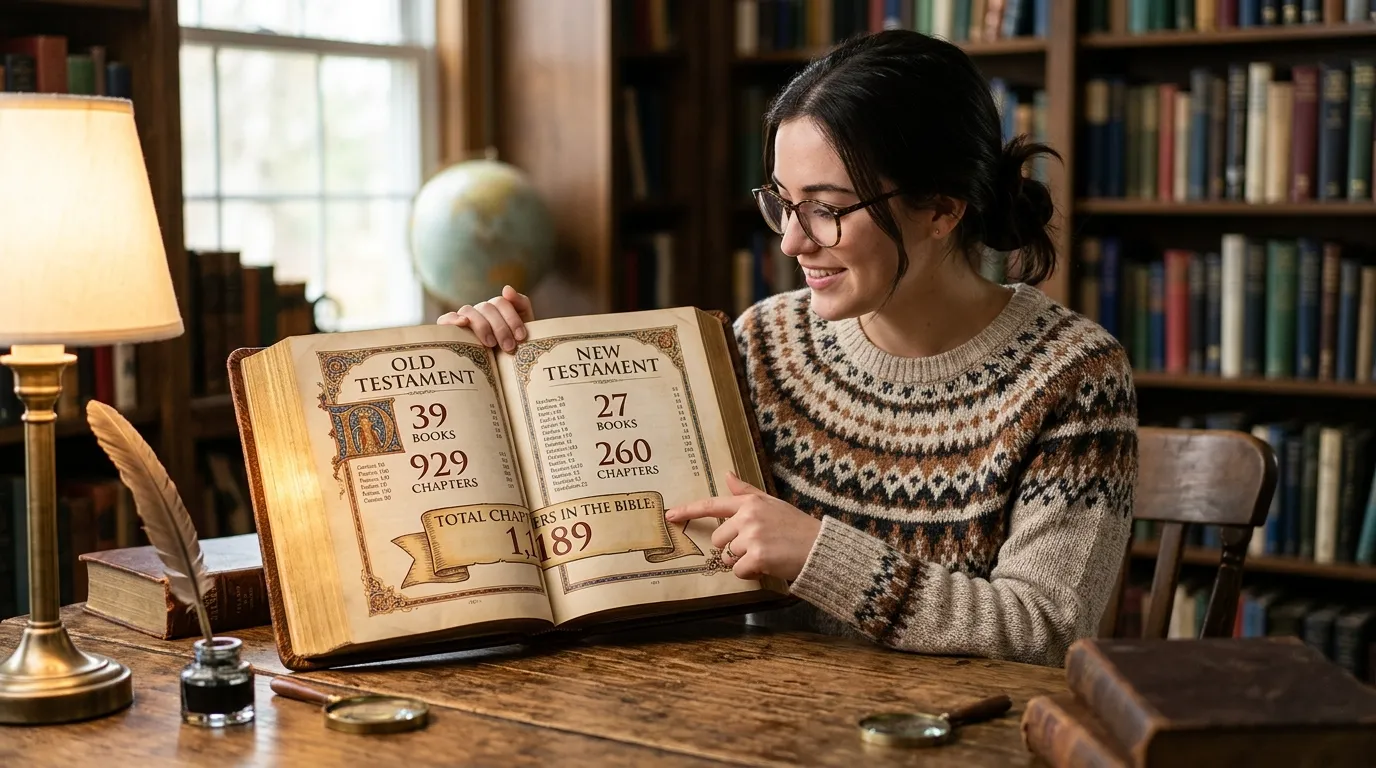
Have you ever opened a Bible and wondered, how many chapters are in the Bible? The answer is simple, but there is a little more to it than one number.
The standard Protestant Bible has 1,189 chapters. These chapters are found in 66 books, with 929 chapters in the Old Testament and 260 chapters in the New Testament.
But not every Christian Bible has the same number of books. Catholic Bibles contain 73 books, while some Orthodox traditions include even more books. This means the total number of chapters can vary by Bible tradition.
Still, when most people ask, “How many chapters are in the Bible?” they are usually asking about the common 66-book Protestant Bible.
Knowing the number of chapters can help you understand the size and structure of Scripture. More importantly, it can help you make a simple Bible reading plan and grow closer to God one chapter at a time.
How Many Chapters Are in the Bible?
The standard Protestant Bible contains 1,189 chapters.
These chapters are divided between two main sections:
- Old Testament: 929 chapters
- New Testament: 260 chapters
- Total: 1,189 chapters
- Books: 66
- Old Testament books: 39
- New Testament books: 27
The Old Testament makes up most of the Bible. It tells about creation, God’s covenant with Israel, the history of God’s people, wisdom, worship, and the messages of the prophets.
The New Testament focuses on Jesus Christ, His life and teaching, the early church, Christian living, and the hope of Christ’s return.
The 1,189-chapter count is the standard figure used for the 66-book Protestant Bible.
How Many Chapters Are in the Old Testament?
The Old Testament has 929 chapters in the standard Protestant Bible.
It contains 39 books, beginning with Genesis and ending with Malachi.
The Old Testament includes several types of writing. These include history, law, poetry, wisdom, and prophecy.
For example, Genesis begins with creation and the early story of God’s people. Exodus tells about Israel’s deliverance from Egypt. Psalms contains songs and prayers. Proverbs gives wisdom for daily life. Isaiah and the other prophets call God’s people back to faithfulness.
The Old Testament prepares the way for the coming of Christ and gives important background for understanding the New Testament.
What Are the Main Sections of the Old Testament?
The Old Testament can be grouped into broad sections:
- Law: Genesis, Exodus, Leviticus, Numbers, Deuteronomy
- History: Joshua through Esther
- Poetry and Wisdom: Job through Song of Solomon
- Major Prophets: Isaiah through Daniel
- Minor Prophets: Hosea through Malachi
The terms “Major” and “Minor” prophets refer mainly to the length of their books, not their importance.
How Many Chapters Are in the New Testament?
The New Testament has 260 chapters.
It contains 27 books. These books tell the story of Jesus and explain how Christians should live out their faith.
The New Testament begins with Matthew and ends with Revelation.
Its books include:
- Four Gospels
- Acts
- Paul’s letters
- General letters
- Revelation
The four Gospels:Matthew, Mark, Luke, and John:tell us about Jesus’ life, ministry, death, and resurrection.
Acts tells how the early Christian church grew after Jesus’ resurrection and ascension.
The letters teach Christians about faith, love, salvation, prayer, church life, and daily obedience to God.
Revelation gives a message of hope and points to God’s final victory.
How Many Books and Chapters Are in the Bible?
In the standard Protestant Bible, there are 66 books and 1,189 chapters.
The breakdown is:
- 39 books in the Old Testament
- 27 books in the New Testament
- 929 Old Testament chapters
- 260 New Testament chapters
- 1,189 chapters in total
It is helpful to remember that a chapter is not a separate book. A book can have many chapters, while some books have only one chapter.
For example, Psalms has 150 chapters, while Obadiah has only one chapter.
This structure makes it easier to find specific passages. When someone says “John 3:16,” they mean the book of John, chapter 3, verse 16.
How Many Chapters in the Bible From Genesis to Revelation?
The Bible begins with Genesis and ends with Revelation.
Genesis has 50 chapters. It introduces creation, humanity, sin, God’s promises, and the families of Abraham, Isaac, Jacob, and Joseph.
The story then moves through the history and writings of God’s people.
The New Testament begins with Matthew. It brings the story to Jesus Christ and the message of salvation.
Revelation closes the Bible with a vision of God’s final victory and the hope of a new heaven and new earth.
This gives the Bible a broad story that moves from creation and humanity’s fall to redemption and restoration.
Why Does the Bible Have Chapters?
The original biblical manuscripts did not have the chapter and verse system that most modern Bibles use today.
Chapters were added later to make Scripture easier to organize, read, study, and reference. Verse numbers were also added later.
This is important to understand.
The chapter numbers are useful tools, but they are not the main message of Scripture. They help us locate a passage, but we should still read the surrounding verses to understand the full meaning.
For example, reading only one verse can sometimes make it easy to miss the writer’s main point. Reading the whole chapter often gives better context.
What Is the Longest Chapter in the Bible?
Psalm 119 is the longest chapter in the Bible.
It contains 176 verses.
Psalm 119 focuses strongly on God’s Word, His commands, His promises, and the value of following Him.
One well-known verse says:
“Your word is a lamp for my feet, and a light for my path.” : Psalm 119:105
This verse uses the picture of a lamp to show how God’s Word guides us.
A person walking at night needs light to see where to go. In the same way, Scripture gives wisdom and direction when life feels unclear.
For children, teens, and adults, this is a simple reminder: God’s Word can help us choose a wise path.
What Is the Shortest Chapter in the Bible?
Psalm 117 is the shortest chapter in the Bible.
It has only two verses.
Even though it is very short, its message is powerful. It calls all nations to praise the Lord and points to God’s steadfast love and faithfulness.
This teaches us something important.
A chapter does not need to be long to have great meaning. Even a short passage of Scripture can encourage our faith and lead us to worship God.
What Is the Longest Book in the Bible?
Psalms is the longest book in the Bible by number of chapters.
It contains 150 chapters.
Psalms includes songs, prayers, praise, sorrow, confession, thanksgiving, and trust in God.
People often turn to Psalms during hard times because its words express many human emotions.
You can find Psalms about joy, fear, sadness, forgiveness, protection, worship, and hope.
That makes Psalms useful for Bible study and personal prayer.
What Is the Shortest Book in the Bible?
Several books have only one chapter.
These include:
- Obadiah
- Philemon
- 2 John
- 3 John
- Jude
Because these books are short, they can be helpful for someone who is beginning to read the Bible.
A person who feels overwhelmed by a large book can start with a one-chapter book and read it slowly.
The goal is not simply to finish chapters. The goal is to understand God’s Word and live by it.
How Many Chapters Should You Read Each Day?
There is no Bible command that says you must read a certain number of chapters each day.
A good Bible reading plan should fit your life and help you understand Scripture.
If you read three chapters a day, you can move through 1,189 chapters in about 13 months. If you read four chapters a day, you can finish in about 10 months.
But speed is not the main goal.
You might read one chapter and spend time thinking about what it teaches. You can pray about it, write down a lesson, and ask how you can live it out.
For a child, one short passage may be enough. A teenager may prefer a chapter each day. An adult may enjoy several chapters during a longer study time.
Choose a pace that helps you stay consistent.
Does Reading the Bible Chapter by Chapter Help?
Yes, reading chapter by chapter can be very helpful.
It gives you a clear path through Scripture and helps you see how different passages fit together.
However, do not treat the Bible like a race.
The Bible is not a book you read just to reach the last page. It is Scripture that Christians read to know God, understand His truth, grow in faith, and learn how to live.
Paul explains the value of Scripture in 2 Timothy 3:16–17. He teaches that Scripture is useful for teaching, correction, training, and preparing God’s people for good work.
The point is not simply to count chapters.
The point is to let God’s Word shape your life.
What Does the Bible Say About God’s Word?
The Bible gives a high view of God’s Word.
Psalm 119:105 describes God’s Word as a lamp for our feet and a light for our path.
This means Scripture gives guidance. It helps us think about life through God’s truth.
Hebrews 4:12 also describes the word of God as living and active. The verse shows that God’s Word reaches deeply into the human heart.
These passages remind us that Bible reading is more than collecting facts.
It can challenge us, comfort us, correct us, and help us grow.
Why Are Bible Chapters Important for Christians?
Bible chapters make Scripture easier to use.
Imagine trying to tell someone where to find a story without chapters or verses. It would take much longer.
Chapters help Christians:
- Find Bible passages quickly
- Follow a reading plan
- Study a whole section of Scripture
- Share passages with others
- Prepare Bible lessons
- Memorize Scripture
- Discuss God’s Word with family and friends
Still, chapters should serve Scripture, not replace careful reading.
Always look at the verses before and after an important passage. Consider who wrote the book, who received it, and what the larger section teaches.
How Many Chapters Are in a Catholic Bible?
A Catholic Bible has 73 books, rather than the 66 books found in the standard Protestant Bible.
Catholic Bibles contain 46 Old Testament books and 27 New Testament books.
Because Catholic Bibles include additional Old Testament books and sections, their chapter count is different.
One Bible Gateway reference gives the Catholic Bible’s Old Testament as 1,074 chapters, compared with 929 in the standard Protestant Old Testament. Adding the 260 New Testament chapters gives 1,334 chapters in that counting system. Chapter numbering can also differ between editions.
So, if someone asks, “Does every Bible have 1,189 chapters?” the answer is no.
The number 1,189 refers to the common 66-book Protestant Bible.
Why Do Some Bibles Have Different Numbers of Books?
Christian traditions do not all use exactly the same biblical canon.
The Protestant Bible normally has 66 books.
The Catholic Bible has 73 books.
Some Orthodox traditions contain additional books as well. Bible Gateway notes that Greek and Russian Orthodox Bibles commonly have 79 books, while the Ethiopian Orthodox Bible has 81.
These differences mainly concern the Old Testament.
The New Testament has the same 27 books across the major Protestant, Catholic, and Orthodox traditions.
This is why it is important to know which Bible tradition someone means when asking about the total number of books or chapters.
Can You Read the Whole Bible in One Year?
Yes.
A one-year Bible reading plan is a common way to read all of Scripture.
Since the standard Protestant Bible has 1,189 chapters, reading about three to four chapters each day can take you through the Bible in roughly one year.
But a successful Bible plan is not only about daily numbers.
Try these simple habits:
- Choose a regular time.
- Read in a quiet place when possible.
- Pray before you read.
- Read the whole passage for context.
- Write down one lesson.
- Ask how you can apply it.
- Do not give up if you miss a day.
If you miss a day, simply begin again.
God is not measuring your faith by how many chapters you finish. Faith grows as we hear, understand, trust, and obey His Word.
How Bible Reading Can Help Your Daily Life
Bible reading can become part of everyday Christian life.
For Children
Children can learn simple truths about God through Bible stories.
They can read short passages with a parent, teacher, or church leader. After reading, ask simple questions such as, “What happened?” and “What does this teach us about God?”
For Teenagers
Teenagers face many questions about friendship, identity, choices, pressure, and the future.
Scripture can provide wisdom and a strong foundation.
Proverbs is a useful place to learn about wisdom, while the Gospels help young people learn directly about Jesus.
For Adults
Adults may face work pressure, family duties, marriage concerns, parenting challenges, and many other responsibilities.
Regular Bible reading can create a quiet time to focus on God.
Romans, Psalms, Proverbs, the Gospels, and the letters of the New Testament can all provide rich material for study.
For Families
Families can read a short passage together.
You do not need a long study.
Even 10 or 15 minutes can create a valuable habit. Read a passage, talk about its meaning, and pray together.
For Prayer
The Bible can also shape your prayers.
For example, after reading Psalm 23, you might thank God for His care. After reading Philippians 4:6–7, you might bring your worries to God in prayer.
Scripture gives us words and truths that can guide our conversations with God.
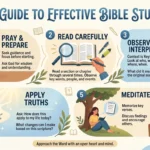
A Simple Way to Study Any Bible Chapter
You can use four simple questions when reading a chapter.
1. What does the chapter say?
Start with the facts. Notice people, events, commands, promises, and repeated ideas.
2. What does the chapter mean?
Look at the context. Ask what the writer was teaching the original readers.
3. What does it teach about God?
Look for God’s character, His promises, His holiness, His mercy, His wisdom, and His work.
4. How should I respond?
Think about how the passage should shape your faith, choices, relationships, prayer, or worship.
This approach works for children, teenagers, and adults.
Does the Number of Bible Chapters Matter?
The number of chapters can be useful, but it is not the heart of the Bible.
Knowing that there are 1,189 chapters can help you understand the Bible’s size and create a reading plan.
But Scripture is not valuable because it has a certain number of chapters.
Its value comes from the truth it communicates about God and His work.
Jesus said in Matthew 4:4, quoting Deuteronomy 8:3, that people do not live by bread alone but by every word that comes from God.
The Bible calls us to listen, believe, and respond.
So whether you read one verse, one chapter, or several chapters, read with care and a willing heart.
FAQs:
How many chapters are in the Bible?
The standard Protestant Bible has 1,189 chapters. It contains 929 chapters in the Old Testament and 260 chapters in the New Testament.
How many chapters are in the Old Testament?
The standard Protestant Old Testament has 929 chapters across 39 books.
How many chapters are in the New Testament?
The New Testament has 260 chapters across 27 books. This chapter count is shared across the major Christian traditions.
How many chapters should I read each day?
There is no required number. Reading three to four chapters a day can help you complete the standard Protestant Bible in about a year, but slower reading can be better if it helps you understand and apply Scripture.
What is the longest chapter in the Bible?
Psalm 119 is the longest chapter in the Bible, with 176 verses. Psalm 117 is the shortest chapter, with only two verses.
Conclusion:
So, how many chapters are in the Bible? The standard Protestant Bible has 1,189 chapters, made up of 929 chapters in the Old Testament and 260 chapters in the New Testament. It contains 66 books in total.
The number can change when you look at Catholic or Orthodox Bible traditions because they include additional Old Testament books.
But the most important thing is not the number of chapters. It is the message of Scripture.
The Bible teaches us about God, sin, grace, faith, salvation, wisdom, love, and hope. Whether you are a child reading your first Bible story or an adult who has studied Scripture for years, each chapter can help you know God better.
Start small. Read with prayer. Think about what you learn. Then put God’s truth into practice.
I am Caleb Anderson, a Christian writer passionate about exploring deep biblical meanings and spiritual truths.
On Biblicaltribez.com, I share faith based insights to help readers grow closer to God through Scripture.
My writing focuses on making the Bible easy to understand, meaningful, and relevant to everyday life.