Skip to content
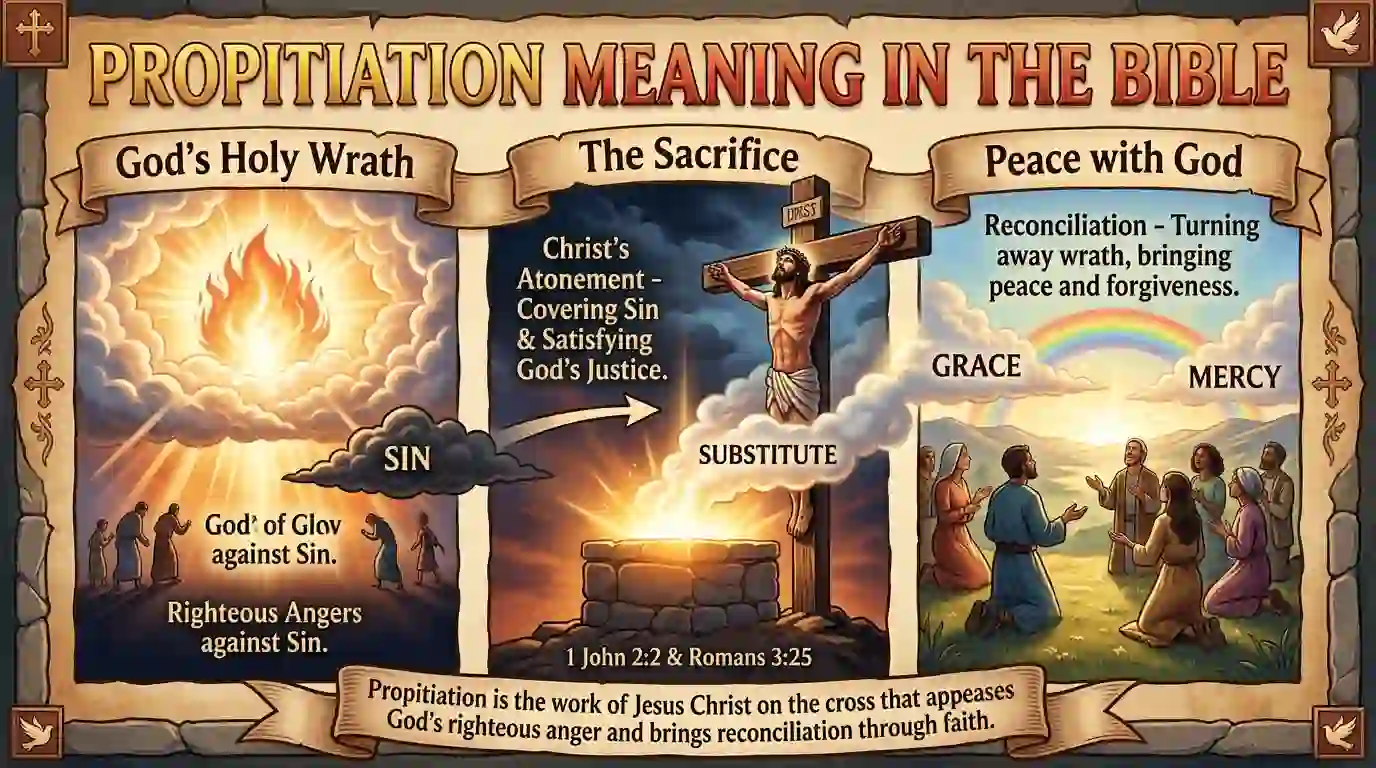
The propitiation meaning in the Bible refers to God’s provision through Jesus Christ to deal with human sin and satisfy the demands of divine justice. Through Jesus’ sacrificial death, believers can receive forgiveness and reconciliation with God. The Bible presents propitiation as an expression of God’s love and mercy, not an attempt by humans to earn His favor.
Key Takeaways
- Propitiation describes how Jesus’ sacrifice deals with sin and God’s righteous judgment.
- Romans 3:25, 1 John 2:2, and 1 John 4:10 are key Bible passages about propitiation.
- God provided the means of salvation because of His love for humanity.
- Propitiation is closely related to atonement, expiation, and reconciliation, but each term highlights a different aspect of salvation.
- Some Bible translations use “atoning sacrifice” or “sacrifice of atonement” instead of “propitiation.”
Bible Gateway+1
What Does Propitiation Mean in the Bible?
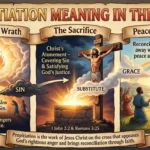
Propitiation is a theological term that describes a sacrifice or act that deals with an offense and turns away righteous anger. In the Bible, it refers especially to Jesus Christ’s sacrifice for human sin.
Christians believe that God is holy and just, and that sin damages humanity’s relationship with Him. Rather than leaving people to deal with sin on their own, God provided Jesus as the means of redemption.
In simple terms, propitiation means that Jesus’ sacrifice deals with the problem of sin so that people can be forgiven and restored to a right relationship with God.
The term appears in several New Testament passages. Romans 3:25 connects propitiation with Christ’s blood, while 1 John 2:2 describes Jesus as the propitiation for our sins.
Bible Gateway
+1
This meaning also helps explain why Christians connect the cross with God’s justice, mercy, forgiveness, and salvation.
What Does the Bible Say About Propitiation?
Three important passages help explain the biblical meaning of propitiation.
Romans 3:25: Christ as the Propitiation
Romans 3:25 teaches that God presented Jesus as a propitiation through His blood, received by faith. Some translations use the phrase “sacrifice of atonement” instead.
Paul places this teaching in a discussion about humanity’s sin and God’s righteousness. Romans 3:23 says that all have sinned and fall short of God’s glory. The following verses explain that people receive justification by God’s grace through the redemption found in Christ.
Bible Gateway
+1
This passage highlights two important truths:
- God takes sin seriously. His forgiveness does not mean that sin has no moral consequences.
- God provides salvation through Christ. People do not earn forgiveness by performing enough good deeds.
For Christians, Jesus’ death demonstrates how God’s justice and mercy work together in salvation.
1 John 2:2: Propitiation for Our Sins
First John 2:2 describes Jesus as the propitiation for our sins and extends the statement beyond the immediate community of believers to the whole world.
The verse emphasizes the importance of Christ’s saving work. Jesus does not merely teach people how to live better lives. In Christian belief, His sacrifice addresses the deeper problem of sin.
The verse also raises a question about the scope of salvation. Christians agree that the passage presents Christ’s work as having significance beyond one small group, but traditions differ on how this relates to the final salvation of every individual.
Therefore, the verse should not automatically be treated as proof that all people will ultimately be saved, nor should its reference to the whole world be ignored.
Bible Gateway
+1
1 John 4:10: God’s Love and Propitiation
First John 4:10 connects propitiation directly with God’s love. The verse explains that God loved humanity and sent His Son to be the propitiation for our sins.
This is an important part of the biblical message. God did not wait for people to become perfect or earn His affection before providing a way of salvation.
Instead, God’s love motivated His action.
Propitiation, therefore, should not be understood as a situation in which an unwilling God becomes loving because Jesus persuades Him to care about humanity. The passage presents God’s love as the reason He sent His Son in the first place.
ESV Bible
+1
Why Is Propitiation Important in Christianity?
Propitiation helps Christians understand why Jesus’ death is central to the gospel.
First, it explains how God deals with sin without treating wrongdoing as unimportant. God’s justice and holiness remain central to the biblical account of salvation.
Second, it highlights God’s initiative. Human beings do not provide a sacrifice that forces God to love them. God provides the means of salvation through Jesus Christ.
Third, propitiation helps explain the Christian hope of forgiveness. Through Christ, believers can approach God with confidence rather than relying on their own moral perfection.
For example, imagine someone who has seriously wronged a friend. A sincere apology matters, but the apology alone does not erase the harm or automatically rebuild trust. Repair requires that the wrong be addressed and that the relationship be restored.
This illustration is limited because human relationships do not fully explain God’s work. However, it helps show why forgiveness and dealing with wrongdoing belong together.
In Christian teaching, Jesus’ sacrifice addresses sin and opens the way for reconciliation with God.
Propitiation in the Old Testament
Although the New Testament explains propitiation through Jesus Christ, the idea connects with the Old Testament sacrificial system.
In the Old Testament, God gave Israel instructions for sacrifices that addressed sin and ritual impurity. These practices taught the people about God’s holiness, the seriousness of wrongdoing, and the need for cleansing.
Leviticus 16 describes the Day of Atonement, an important annual observance in which the high priest performed specific rituals for the people’s sins.
The Day of Atonement and the Mercy Seat
The mercy seat was the cover of the ark of the covenant. In the Day of Atonement ritual, the high priest sprinkled sacrificial blood in connection with this sacred place (Leviticus 16:14–16).
This background helps explain Romans 3:25. The Greek word translated as “propitiation” in that verse, hilastērion, can also refer to the mercy seat. Bible translations reflect this connection in different ways.
Bible Study Tools
+1
The Old Testament ritual and Jesus’ sacrifice are not identical events. Rather, Christians understand the earlier sacrificial system as part of the biblical background for understanding Christ’s work.
Hebrews 9:11–14 develops this connection by describing Christ’s superior priestly ministry and the cleansing power of His sacrifice.
Propitiation vs. Atonement, Expiation, and Reconciliation
These four terms describe closely related aspects of how the Bible explains salvation, but they do not have exactly the same emphasis.
| Term | Simple meaning | Main emphasis |
|---|---|---|
| Propitiation | Dealing with righteous anger through an atoning sacrifice | God’s judgment against sin |
| Atonement | Dealing with sin to restore a right relationship with God | The broader work of dealing with sin |
| Expiation | Removing or covering guilt and sin | The offense being removed |
| Reconciliation | Restoring a broken relationship | Peace between God and humanity |
These distinctions are useful, although Christian theologians do not always use the terms in precisely the same way. Some translations and theological traditions emphasize the removal of sin, while others emphasize the turning away of God’s righteous anger.
Bible Study Tools
+1
For example, Romans 3:25 emphasizes Christ’s sacrificial work, while Romans 5:10–11 describes reconciliation with God through Christ.
The terms complement one another. Propitiation highlights one aspect of Christ’s sacrifice, while atonement can describe the wider work through which God deals with sin and brings people back into fellowship with Him.
Does Propitiation Mean God Only Loves Us After Jesus’ Death?
No. The Bible does not present God’s love as something Jesus had to create.
First John 4:10 makes the relationship clear: God’s love comes first, and He sends His Son as the propitiation for our sins.
The cross is therefore not a way to persuade an uncaring God to show mercy. It is God’s provision for dealing with sin while demonstrating His love for humanity.
Romans 5:8 expresses a similar message by teaching that God demonstrates His love through Christ’s death for sinners.
Christians may explain the relationship between God’s wrath, justice, and the cross differently according to their theological traditions. However, the connection between God’s love and Christ’s sacrifice is explicit in the biblical text.
Understanding this point helps prevent a common misunderstanding: propitiation does not mean that God begins to love people only after Jesus dies. It means that God provides a way to deal with sin because of His love.
Frequently Asked Questions
What is a simple example of propitiation?
A simple illustration is a person taking responsibility for a serious wrong and making a meaningful effort to address it so a damaged relationship can be restored. In Christian teaching, Jesus’ sacrifice goes beyond a human apology because it deals with the problem of sin before God.
What is the difference between propitiation and expiation?
Propitiation focuses on dealing with righteous anger against sin, while expiation focuses on removing or covering the sin and guilt itself. The concepts are closely connected in Christian explanations of salvation. Many theologians understand Jesus’ sacrifice as accomplishing both.
Is Jesus the propitiation for the whole world?
First John 2:2 explicitly describes Jesus as the propitiation for the sins of the whole world. Christians differ over how this statement relates to the extent of Christ’s atonement and the final salvation of individuals. The verse clearly emphasizes that Christ’s saving work is not limited to the immediate community addressed by the letter.
What is another word for propitiation in the Bible?
Depending on the passage and Bible translation, related expressions include “atoning sacrifice,” “sacrifice of atonement,” and “means of reconciliation.” These phrases overlap in meaning but may emphasize different aspects of Christ’s work. Always consider the surrounding passage when comparing translations.
Bible Gateway
+1
Conclusion: Understanding Propitiation in the Bible
The propitiation meaning in the Bible centers on God’s provision through Jesus Christ to deal with human sin and uphold divine justice. Romans 3:25, 1 John 2:2, and 1 John 4:10 explain how Christ’s sacrifice connects forgiveness, salvation, and God’s love.
Propitiation is closely related to atonement, expiation, and reconciliation, but each term offers a different perspective on the biblical message.
Most importantly, the Bible presents propitiation as God’s initiative, not humanity’s attempt to earn His affection. For Christians, Jesus’ sacrifice reveals both the seriousness of sin and the depth of God’s love.

I am Samuel Brooks, a Christian author who enjoys breaking down complex Bible concepts into simple truths. At Biblicaltribez.com, I write content that inspires faith, hope, and spiritual growth. I aim to help readers connect Scripture with real life challenges in a meaningful way.