Skip to content
The main difference between a yukata and a kimono is their fabric, formality, layering, and typical use. A yukata is a lightweight, unlined garment usually made from cotton and strongly associated with summer.
A kimono covers a wider range of garments, from casual to highly formal, and may use silk or other fabrics with more layers and accessories.
Key Takeaways
- A yukata is technically a type of kimono, but the two terms are usually distinguished in everyday use.
- Yukata are lightweight, casual, and strongly associated with summer.
- Kimono can be casual, semi-formal, or highly formal depending on the type.
- Yukata usually require fewer layers and accessories than kimono.
- A yukata is a good choice for summer festivals, fireworks, and relaxed outings, while the appropriate kimono depends on the occasion.
What Is the Difference Between a Yukata and a Kimono?
At first glance, a yukata and kimono can look almost identical. Both are traditional Japanese garments with a similar wrap-front shape.
The biggest difference is how they are made and when they are worn.
A yukata is lightweight and usually made from cotton. It is unlined and designed for comfort, especially in warm weather. Japan’s National Tourism Organization describes yukata as a type of kimono used in summer, including at festivals and other seasonal events.
Kimono is a broader category. Some kimono are casual, while others are formal. They can be made from materials such as silk, cotton, wool, or synthetic fabrics, depending on the garment and its purpose.
There is also an important language point. In Japanese, kimono (着物) broadly means clothing or a thing to wear. In modern everyday English, however, “kimono” often refers to the more structured traditional garments that people contrast with yukata.
So, saying that a yukata is completely unrelated to a kimono is misleading. It is better to think of a yukata as a casual, lightweight member of the wider kimono tradition.
Yukata vs Kimono: Key Differences
| Feature | Yukata | Kimono |
| Typical fabric | Cotton or other lightweight fabrics | Silk, cotton, wool, synthetic fabrics, and others |
| Lining | Usually unlined | May be lined or unlined, depending on type |
| Main season | Especially summer | Different types can be worn throughout the year |
| Formality | Casual | Casual to highly formal |
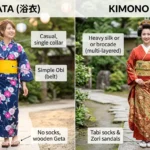
| Underlayer | Usually no nagajuban | Often worn with a nagajuban |
| Footwear | Often geta | Often zori with tabi |
| Obi | Usually simpler and narrower | Can be wider and more structured |
| Common occasions | Festivals, fireworks, casual outings | Ceremonies, weddings, tea gatherings, outings, and other occasions |
| Ease of dressing | Generally easier | Often more complex |
The table shows the general difference, but there are exceptions. Kimono is not one single style, so its materials and accessories can vary.
1. Fabric and Construction
Yukata Fabric
Yukata are known for their light construction. Traditional yukata are commonly made from cotton, which makes them comfortable in hot weather.
Their history also helps explain this design. Yukata developed from garments associated with bathing and later became casual clothing. Cotton became especially common as the garment evolved.
Today, yukata are especially easy to associate with summer festivals. The Himeji Yukata Festival, for example, celebrates this traditional cotton garment and attracts people wearing yukata.
Kimono Fabric
Kimono use a much wider range of materials and construction methods.
Silk is strongly associated with traditional formal kimono, but modern kimono can also be made from cotton, wool, polyester, and other fabrics. The type of kimono, its purpose, and its level of formality all affect the choice of material.
This is one reason you should not assume that every kimono is heavy, expensive, or formal.
2. Season and Weather
The yukata has a strong connection with summer.
You will often see people wearing yukata at Japanese festivals, fireworks events, and summer evening activities. The Japan National Tourism Organization specifically describes yukata as summer kimono and notes their common use at matsuri.
Kimono, by contrast, can be worn in different seasons. Different fabrics, layers, colors, and patterns can be selected according to the weather and occasion.
This means “summer clothing” does not automatically mean yukata. There are also lightweight summer kimono. What separates them is not simply the temperature but the garment’s construction, styling, and dressing system.
3. Formality and Occasions
This is one of the most important differences in the yukata vs kimono comparison.
A yukata is generally casual. It works well for summer festivals, fireworks, casual walks, and relaxed settings. JNTO lists yukata as common clothing at Japanese summer festivals and describes it as a casual form of traditional dress.
Kimono covers a much wider range.
Some kimono are suitable for everyday or casual activities. Others are designed for important events such as weddings, ceremonies, or tea-related occasions.
That means you cannot judge a kimono’s formality from the word “kimono” alone. The specific type, fabric, pattern, accessories, and styling matter.
When to Wear a Yukata
A yukata is a natural choice for:
- Summer festivals
- Fireworks displays
- Bon odori and other summer events
- Casual evening outings
- Some hot spring or ryokan settings
JNTO also notes that yukata are commonly seen at summer festivals and can be worn by visitors who want to take part in the atmosphere.
When to Wear a Kimono
A suitable kimono may be worn for:
- Formal ceremonies
- Weddings
- Traditional cultural events
- Tea-related occasions
- Certain celebrations
- Casual outings, depending on the kimono type
The key is to match the specific kimono to the occasion.
4. Layers and What You Wear Underneath
A traditional kimono outfit can involve several layers and accessories.
One important item is the nagajuban, an undergarment worn beneath a kimono. Its collar may be visible around the neckline.
A yukata is much simpler. It is generally worn without the same under-kimono layering system.
This creates one of the easiest visual clues for beginners: look at the neckline.
If you see an additional collar layer underneath the main garment, you may be looking at a kimono outfit rather than a simple yukata outfit.
Still, clothing practices can vary, especially in modern casual settings.
5. Obi and Other Accessories
Both garments are secured with an obi, or sash, but the styling can differ.
Yukata usually use a simpler obi arrangement. Because the garment is casual, the overall outfit needs fewer formal accessories.
Kimono outfits can involve more structured obi styles and additional pieces. Depending on the type of kimono, you may also see items such as an obi-jime, obi-age, or other traditional accessories.
For someone new to Japanese clothing, this is another reason a yukata is often easier to wear.
6. Footwear
Footwear provides another useful clue.
Yukata are commonly paired with geta, traditional wooden sandals, and they are often worn without tabi socks. JNTO describes yukata as casual summer clothing, while traditional kimono dressing uses additional items such as tabi socks.
Kimono outfits are often paired with zori and tabi, the traditional split-toe socks.
There can be variations, so footwear should not be treated as an absolute rule. However, when you are trying to identify an outfit quickly, it is a helpful clue.
7. How to Tell a Yukata From a Kimono
If you see someone wearing one and need to tell the difference, check these features:
1. Look at the fabric.
A light cotton garment with a relaxed summer appearance is likely a yukata.
2. Check the neckline.
A visible under-collar can suggest a layered kimono outfit.
3. Look at the feet.
Bare feet with geta are strongly associated with yukata, while tabi and zori are common with kimono.
4. Look at the occasion.
A summer festival or fireworks event makes yukata more likely.
5. Consider the overall formality.
A highly structured outfit with multiple accessories is more likely to be a formal or semi-formal kimono ensemble.
Is a Yukata a Type of Kimono?
Yes. In the broad sense, a yukata is a type of kimono.
The confusion comes from everyday terminology. In modern English discussions, people often use “kimono” to mean the more formal or traditionally layered garments and “yukata” for the casual summer version.
Japan’s National Tourism Organization directly describes the yukata as a type of kimono and calls it “the Kimono in Summer.”
So both statements can be true:
- A yukata is part of the broader kimono tradition.
- A yukata and a formal kimono are different types of Japanese clothing.
Which Should You Wear?
Choose a yukata if you want something casual, lightweight, and suited to a summer event.
For example, if you are visiting Japan during summer and want to attend a fireworks display or festival, a yukata can be an appropriate and comfortable choice. JNTO highlights yukata at events such as the Sumidagawa Fireworks Festival and other summer festivals.
Choose a kimono when the occasion calls for a more formal or specific style of traditional dress. The exact kimono should match the event.
If you are a beginner, a yukata is usually the simpler place to start. It requires fewer layers and is strongly associated with relaxed summer wear.
FAQs:
Can you wear a yukata to a wedding?
Generally, a yukata is not the right choice for a formal wedding ceremony. Yukata are casual garments, while weddings may require a kimono appropriate to the formality of the event. Always follow the dress expectations for the specific wedding.
Is a yukata only for summer?
Yukata are strongly associated with summer, and that is when they are most commonly worn. They are especially popular for festivals, fireworks, and warm-weather outings. Their lightweight construction makes them well suited to hot weather.
Do you wear socks with a yukata?
Yukata are traditionally often worn with bare feet and geta sandals. Kimono outfits more commonly include tabi socks. Modern outfits can vary, but this difference is a useful way to identify the two.
Is a yukata easier to wear than a kimono?
Yes, generally. A yukata uses fewer layers and accessories than many traditional kimono outfits. This makes it more approachable for beginners and casual summer events.
Can men wear yukata and kimono?
Yes. Both yukata and kimono are worn by men as well as women. Men’s versions differ in styling, patterns, sleeves, obi, and overall fit, but the basic distinction between casual yukata and the broader range of kimono still applies.
Final Thoughts:
The easiest way to remember the yukata vs kimono difference is to think about purpose, construction, and formality.
A yukata is lightweight, usually cotton, generally unlined, and strongly connected with casual summer wear. A kimono is a broader category that includes garments ranging from casual to highly formal.
Most importantly, a yukata is not simply a completely separate type of clothing. It belongs to the wider Japanese kimono tradition. Understanding that distinction makes it much easier to recognize both garments and choose the right one for a particular occasion.

I am Joseph Parker, a devoted Bible content writer dedicated to sharing God’s Word with clarity and purpose.
Through Biblicaltribez.com, I create inspirational and scripture-centered articles that strengthen faith.
My goal is to guide readers into a deeper understanding of biblical teachings and Christian living.