Skip to content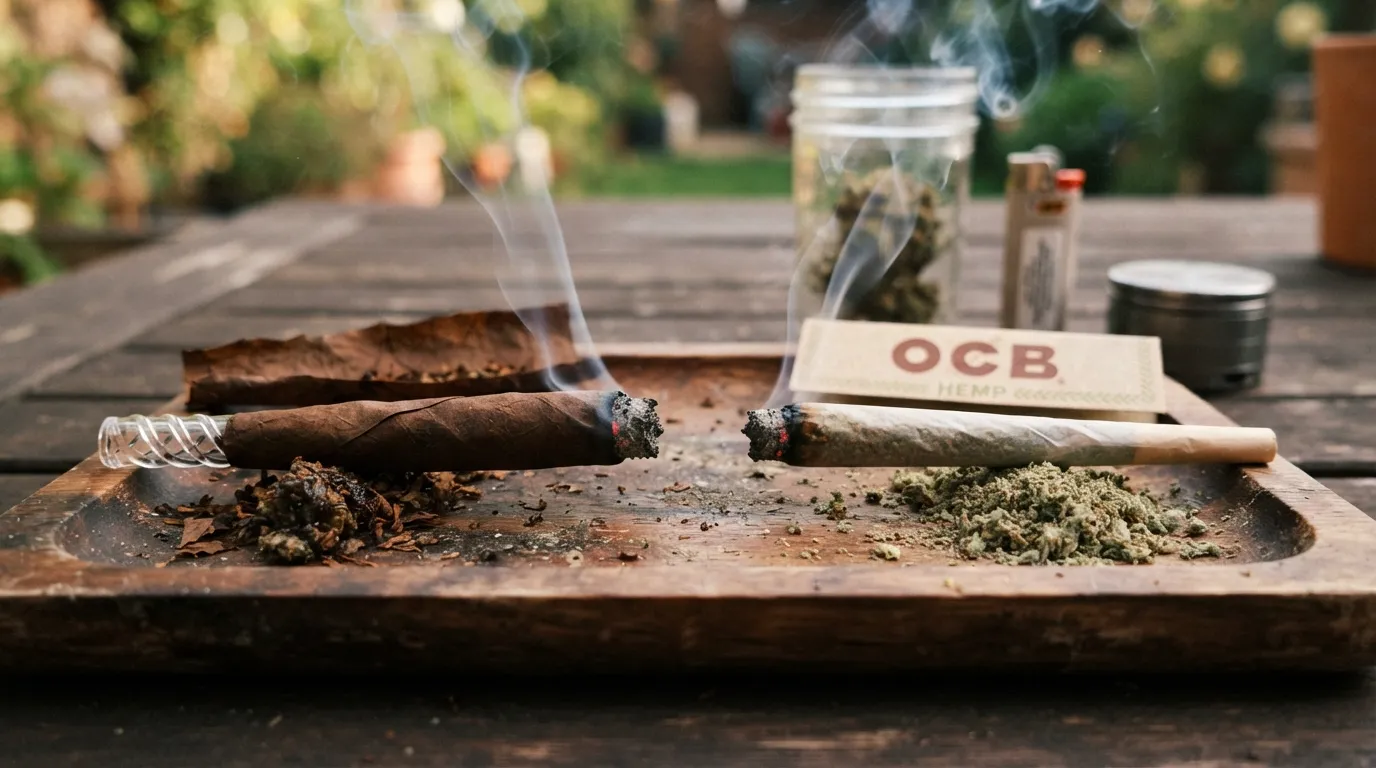
The main difference between a blunt and a joint is the wrapping material. A joint typically uses thin rolling paper around cannabis flower, while a traditional blunt uses a cigar or tobacco-leaf wrap.
This can affect flavor, burn characteristics, and tobacco or nicotine exposure. Modern tobacco-free blunt wraps also exist, so the term “blunt” does not always mean tobacco is present.
Key Takeaways
- A joint is usually cannabis flower wrapped in thin rolling paper.
- A traditional blunt uses a cigar or tobacco-leaf wrap.
- Tobacco-based blunts can expose users to nicotine and additional smoke chemicals.
- Size does not determine whether something is a blunt or a joint.
- Tobacco-free wraps are sometimes marketed as blunt wraps.
- Smoking cannabis itself can expose the lungs to harmful chemicals.
What Is a Joint?
A joint is cannabis flower rolled inside thin rolling paper. The paper may be made from materials such as hemp, rice, or other plant fibers.
The defining feature is the paper wrapper. A joint does not traditionally use a cigar or tobacco-leaf wrapper.
Joints are often smaller and lighter than traditional blunts, although size can vary widely. A large joint and a small joint are still joints because the wrapping material is different.
The cannabis inside can be the same flower that is used in a blunt. Therefore, the wrap:not the type of cannabis itself:is the basic distinction.
What Is a Blunt?
A traditional blunt is cannabis placed inside a cigar shell or tobacco-leaf wrap. The tobacco material gives a blunt a different character from a joint.
The term is commonly associated with cigars or cigarillos that are used as the outer wrap. NIDA also describes blunts as cigars or cigar wrappers that have been partly or completely refilled with cannabis.
Modern cannabis terminology is less simple, though. Some products sold as blunt wraps are made from hemp or other non-tobacco materials.
That means you should check the actual wrapper if tobacco or nicotine exposure matters to you.
Blunt vs Joint: Key Differences
| Feature | Joint | Traditional Blunt |
| Main wrap | Thin rolling paper | Cigar or tobacco-leaf wrap |
| Cannabis inside | Cannabis flower | Cannabis flower |
| Traditional tobacco | No | Yes |
| Nicotine exposure | Not from the paper itself | Possible with tobacco wraps |
| Wrapper thickness | Usually thin | Usually thicker |
| Flavor | More influenced by cannabis | Can include tobacco-wrapper flavor |
| Burn characteristics | Often quicker | Often slower |
| Modern alternatives | Hemp and other papers | Tobacco-free blunt-style wraps |
Wrap Material
The wrapper is the simplest way to tell the two apart.
A joint uses thin rolling paper. A traditional blunt uses a tobacco-based cigar or leaf wrapper.
Because the materials are different, they can also change how the smoke tastes and behaves.
It is important not to define a blunt only by its size. A large joint is still a joint, while a small traditional blunt is still a blunt.
Tobacco and Nicotine
This is one of the most important differences.
Traditional blunt wraps can contain tobacco. Tobacco naturally contains nicotine, so a tobacco-based blunt can expose a person to nicotine even when the filling itself is cannabis.
A joint made with ordinary tobacco-free rolling paper does not add tobacco to the cannabis.
However, modern tobacco-free blunt wraps complicate the comparison. A wrap can be designed to resemble the traditional blunt format without using tobacco. Always check the product material rather than assuming that every blunt contains tobacco.
Size and Burn Time
Blunts are often larger and use thicker wraps than typical joints. This can make them burn differently and last longer.
However, there is no universal size or burn time for either one. The amount of cannabis, wrapper material, moisture, construction, and smoking conditions can all affect how long something burns.
So “blunt equals long-lasting” and “joint equals short-lasting” are general descriptions, not fixed rules.
Flavor and Smoke
The wrapper can influence flavor.
A thin rolling paper usually contributes less flavor than a tobacco-based cigar wrap. With a traditional blunt, the wrapper can add its own tobacco-like character to the smoke.
This means the same cannabis flower can taste different when used in different formats.
Smoke itself is also important. The CDC states that smoked cannabis can expose users to many of the same toxins, irritants, and carcinogens found in tobacco smoke.
Is a Blunt Stronger Than a Joint?
Not necessarily.
It is a common assumption that a blunt must be stronger because it often looks larger. But the intensity of cannabis effects depends on factors such as THC concentration, the amount consumed, individual biology, and how cannabis is used.
The wrapping material alone does not determine THC potency.
Interestingly, a controlled 2009 study directly compared marijuana smoked in joints and blunts. Under that study’s specific conditions, joints produced greater increases in plasma THC and stronger subjective ratings of intoxication, while blunts produced higher carbon monoxide levels and similar increases in heart rate.
That study involved a small sample and controlled laboratory conditions, so its results should not be treated as a universal rule for every blunt or joint.
Blunt vs Joint vs Spliff
These three terms are often confused.
A joint traditionally means cannabis rolled in paper.
A blunt traditionally means cannabis wrapped in a cigar or tobacco-leaf material.
The exact terminology can vary by region and cannabis culture, so people may use these words differently in casual conversation.
The key point is that a spliff traditionally contains tobacco mixed with the cannabis, while a traditional joint does not.
Are Tobacco-Free Blunts Different?
Yes.
The word “blunt” historically points toward a cigar or tobacco-based wrapper, but tobacco-free blunt-style wraps are now available.
These products may use materials such as hemp or other plant-based fibers. They can preserve some features associated with the blunt format without necessarily adding tobacco.
Because product terminology is not always consistent, the label is more useful than the name alone.
If avoiding nicotine is important, check whether the wrapper is actually tobacco-free rather than assuming that a product called a “blunt wrap” contains or does not contain tobacco.
Health Considerations
The blunt-versus-joint comparison should not be viewed only as a question of taste or burn time.
Smoking cannabis exposes the respiratory system to smoke. According to the CDC, smoked cannabis can harm lung tissue and is associated with respiratory symptoms such as coughing, mucus production, and bronchitis.
Traditional tobacco-based blunts add another concern because tobacco exposure can introduce nicotine and other tobacco-related chemicals.
A controlled comparison found higher carbon monoxide levels after blunt smoking than after joint smoking under the study conditions.
Cannabis itself can also affect reaction time, coordination, attention, memory, and decision-making. The CDC advises that cannabis can impair skills needed for safe driving.
There is also a concern for people nearby. Secondhand cannabis smoke contains many of the same toxic and cancer-causing chemicals found in tobacco smoke and can contain THC.
Common Misconceptions About Blunts and Joints
Misconception 1: A blunt is simply a bigger joint.
Not exactly. Size can differ, but the traditional distinction is the wrapper.
Misconception 2: Every blunt contains tobacco.
Traditional blunts use tobacco-based wraps, but tobacco-free blunt-style wraps also exist.
Misconception 3: A joint is always weaker.
There is no rule that makes one format automatically more potent. THC concentration and the amount consumed matter more than the name of the format.
Misconception 4: Cannabis smoke is harmless because it is not cigarette smoke.
Cannabis smoke contains many of the same toxins, irritants, and carcinogens found in tobacco smoke.
Misconception 5: The wrap is the only health consideration.
The wrapper matters, especially when tobacco is involved, but smoking cannabis itself also carries respiratory and other health risks.
FAQs:
Is a blunt the same as a joint?
No. A traditional joint uses thin rolling paper, while a traditional blunt uses a cigar or tobacco-leaf wrapper. Both can contain cannabis flower, but their wrapping materials and potential tobacco exposure are different.
Does a blunt always contain tobacco?
No. Traditional blunts generally use tobacco-based cigar or leaf wraps, but tobacco-free blunt-style wraps are also available. The safest way to know is to check the wrapper’s material rather than relying only on the word “blunt.”
Does a joint contain nicotine?
A traditional joint made with tobacco-free rolling paper does not contain tobacco or nicotine from the wrapper. However, the contents and products used with cannabis can vary, so the specific product should always be checked.
Which burns longer, a blunt or a joint?
Traditional blunts often burn more slowly because their wraps are generally thicker than joint papers. However, burn time varies based on size, wrapper material, moisture, and other factors, so there is no fixed duration for either format.
Is a blunt stronger than a joint?
Not automatically. The effects of cannabis depend on factors such as THC concentration, amount consumed, individual response, and other conditions. A blunt’s larger appearance does not by itself mean that it contains stronger cannabis.
Conclusion:
The main difference in the blunt vs joint comparison is the wrapper. A joint typically uses thin rolling paper, while a traditional blunt uses a cigar or tobacco-leaf wrapper.
That distinction can affect flavor, burn characteristics, and tobacco or nicotine exposure. Modern tobacco-free blunt wraps mean that the traditional definition does not apply to every product sold today.
Most importantly, neither format should be assumed to be risk-free. The CDC notes that smoking cannabis can harm lung tissue, while tobacco-based wraps can add tobacco exposure.
Understanding the terminology makes the comparison much clearer: joint usually means cannabis in rolling paper, while traditional blunt means cannabis in a cigar or tobacco-leaf wrap.

I am Samuel Brooks, a Christian author who enjoys breaking down complex Bible concepts into simple truths. At Biblicaltribez.com, I write content that inspires faith, hope, and spiritual growth. I aim to help readers connect Scripture with real life challenges in a meaningful way.