Skip to content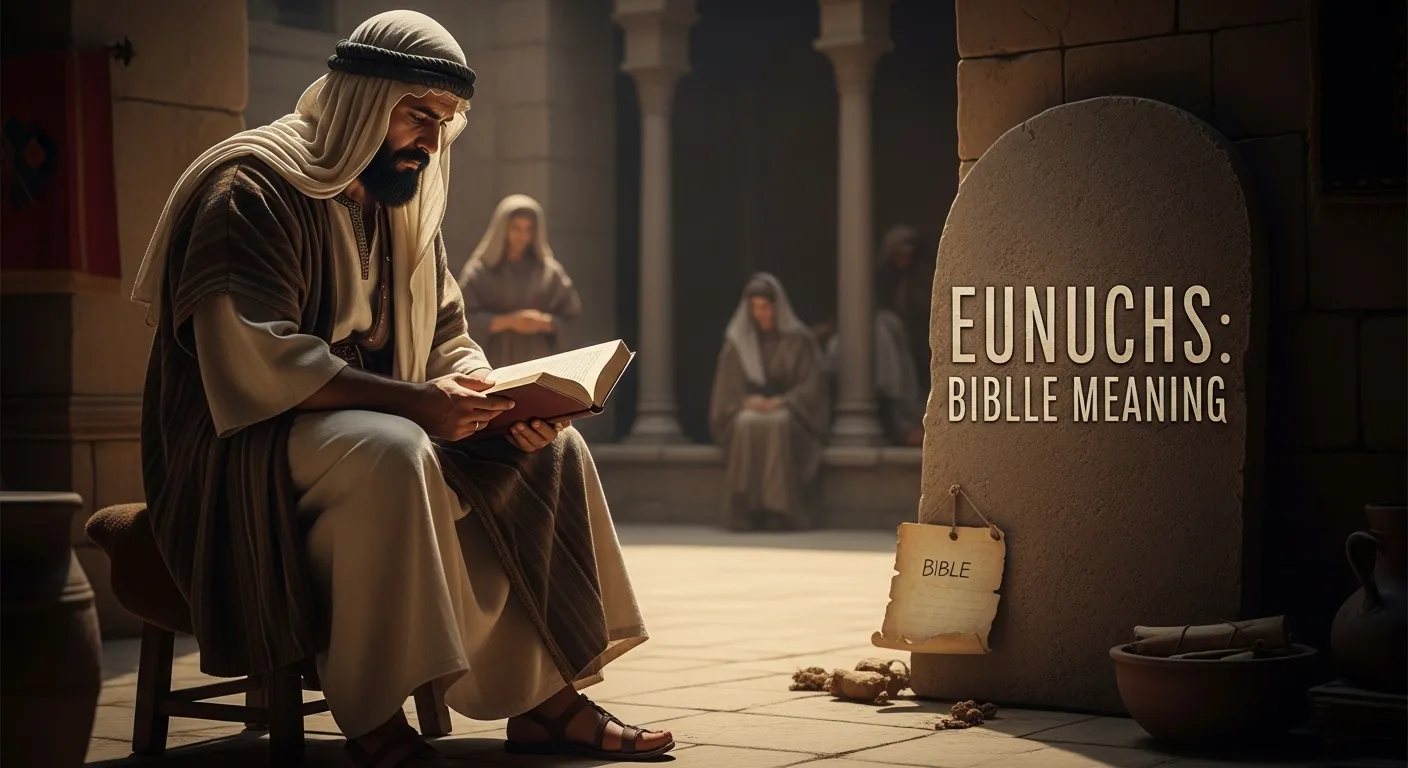
Have you ever wondered about the story of Eunuchs Bible Meaning? Maybe you came across this word in a dream, scripture, or conversation, and it left you curious.
Eunuchs are often seen as mysterious figures who lived differently from society’s norms, yet they hold a special place in God’s Word.
Imagine a man in the king’s court, devoted to service, yet separated from family life. Or picture someone dreaming of a eunuch, standing quietly, observing life with wisdom and patience.
What could God be trying to tell you through this image?
In the Bible, eunuchs are not just historical characters; they carry deep spiritual symbolism.
They teach lessons about devotion, faith, and God’s transformative power. Understanding their story can offer comfort, guidance, and hope, especially when you feel different, isolated, or uniquely called by God.
So, what does it mean when the Bible mentions eunuchs? How can their story speak to your spiritual journey today?
Let’s explore the biblical meaning, spiritual symbolism, and practical insights behind eunuchs in Scripture.
Eunuch Meaning
In the Bible, a eunuch is a man who was physically unable to father children, often because he had been castrated. However, the word can also refer more broadly to a royal official or court servant, depending on the context.
One important example is Matthew 19:12, where Jesus mentions three kinds of eunuchs:
“For there are eunuchs, which were so born from their mother’s womb: and there are eunuchs, which were made eunuchs of men: and there be eunuchs, which have made themselves eunuchs for the kingdom of heaven’s sake.” Matthew 19:12 (KJV)
What Does “Eunuch” Mean in Matthew 19:12?
Jesus describes three situations:
- “Born eunuchs” : Some people were born with physical conditions that prevented normal reproduction.
- “Made eunuchs of men” : Some men were physically castrated by others, often in ancient royal or household settings.
- “Made themselves eunuchs for the kingdom of heaven” : This does not necessarily mean physically castrating themselves.
- Jesus is commonly understood here as describing people who voluntarily remain unmarried and sexually celibate so they can devote themselves to serving God.
Eunuchs in the Bible
In the Bible, eunuchs were men who were either physically unable to father children or, in some contexts, served in royal or government positions. The word can also have a broader symbolic meaning, especially in Jesus’ teaching in Matthew 19.
1. What Does “Eunuch” Mean in the Bible?
A eunuch generally referred to a man who had been castrated or was unable to reproduce. In ancient kingdoms, eunuchs sometimes served as trusted officials in royal courts because they were considered less likely to establish competing family lines.
The Hebrew and Greek words translated as “eunuch” can sometimes refer to a court official, so the word does not always prove that a person had been physically castrated.
2. The Ethiopian Eunuch
One of the best-known eunuchs in the New Testament is the Ethiopian eunuch in Acts 8:26–40.
He was an important official serving Candace, queen of the Ethiopians. He had traveled to Jerusalem to worship and was reading the prophet Isaiah while returning home.
Philip explained the passage to him and taught him about Jesus. The eunuch then believed and asked to be baptized.
“See, here is water! What hinders me from being baptized?” — Acts 8:36
Philip baptized him, and the eunuch continued his journey rejoicing.
3. Jesus’ Teaching About Eunuchs
Jesus mentioned eunuchs in Matthew 19:12. He described three categories:
- Those who were born unable to marry or reproduce.
- Those who were made eunuchs by other people.
- Those who chose a single life “for the sake of the kingdom of heaven.”
Jesus was teaching that marriage is not the only way a person can serve God. His statement also recognizes different circumstances in which people may live without marriage.
4. Eunuchs and God’s Kingdom
The Old Testament contains an especially meaningful passage about eunuchs in Isaiah 56:3–5.
God promises faithful eunuchs that they will receive a name and memorial within His house, even though they could not have children in the traditional sense.
This is important because having descendants was highly significant in ancient Israel. God shows that a person’s relationship with Him is not determined by their ability to have children.
5. Were Eunuchs Allowed in the Temple?
Deuteronomy 23:1 contains a restriction concerning men who had been physically mutilated or castrated. However, Isaiah 56 later gives a powerful picture of faithful eunuchs being welcomed into God’s house.
This creates an important biblical theme: God’s purposes and covenant blessings are not ultimately limited by physical status.
6. Eunuchs in the Book of Esther
The Book of Esther mentions several eunuchs or royal officials serving in the Persian palace.
For example, Hegai was responsible for the women in King Ahasuerus’s palace (Esther 2:3), and other palace officials appear throughout the story.
These references show that eunuchs could hold trusted positions in royal households.
What Can We Learn From Eunuchs in the Bible?
The biblical references to eunuchs teach several important lessons:
- Physical limitations do not determine a person’s value before God.
- God welcomes faithful people who may be socially or physically marginalized.
- A person does not need to have children to have a meaningful purpose.
- Faithful service to God can take different forms.
- God’s kingdom is concerned with the heart and faithfulness, not merely social status.
The Ethiopian eunuch is especially significant because he moved from seeking God through Scripture to openly believing in Christ and being baptized.
Biblical Meaning of Eunuchs
In biblical times, eunuchs were men who were often castrated to serve in royal courts (Isaiah 56:4-5).
But God’s Word goes beyond their physical condition and emphasizes their spiritual role and devotion.
Eunuchs were entrusted with important responsibilities, often serving kings and queens faithfully. Their story teaches us about dedication, discipline, and obedience to God.
1. Eunuchs in the Old Testament
Isaiah 56:3-5 (ESV) says:
“Let not the foreigner who has joined himself to the Lord say, ‘The Lord will surely separate me from his people.’ … To them I will give in my house and within my walls a monument and a name better than sons and daughters; I will give them an everlasting name that shall not be cut off.”
Here, God shows that eunuchs, despite societal exclusion, are honored in His presence. They symbolize faithfulness and inclusion in God’s covenant.
- Esther 2:3-4 mentions eunuchs like Hegai, who served in King Ahasuerus’ court. Their role emphasizes service, loyalty, and wisdom.
2. Eunuchs in the New Testament
Matthew 19:12 presents a spiritual perspective:
“For there are eunuchs who have been so from birth, and there are eunuchs who have been made eunuchs by men, and there are eunuchs who have made themselves eunuchs for the sake of the kingdom of heaven.”
This verse teaches that eunuchs can symbolize those who sacrifice personal desires for God’s kingdom.
If through literal or figurative dedication, they reflect spiritual commitment and purity of heart.
3. Positive and Warning Meanings
- Positive: Eunuchs represent faithful service, spiritual focus, and God’s acceptance, even when society rejects you.
- Warning: Dreams or visions of eunuchs may also suggest feelings of isolation, sacrifice, or separation, reminding you to seek God’s comfort and strength.
In essence, eunuchs in the Bible are symbols of devotion, faithfulness, and inclusion in God’s plan, regardless of worldly limitations.
Eunuchs Bible Meaning: Spiritual Significance and Symbolism
The spiritual symbolism of eunuchs goes beyond historical facts. They teach us about transformation, faith, and divine purpose.
- Faithful Service: Eunuchs devoted their lives to service. Spiritually, this mirrors how we should dedicate ourselves to God’s work, even if it requires sacrifice.
- Overcoming Limitations: Just as eunuchs were physically and socially distinct, we may face challenges that make us feel “different.” Yet, God can use these situations for spiritual growth and divine purpose.
- Purity of Heart: By focusing on God rather than worldly desires, eunuchs exemplify inner devotion, prayerful living, and spiritual clarity.
For example:
If you feel called to serve in a unique or overlooked way like volunteering, mentoring, or praying for others you embody the spiritual essence of a biblical eunuch: devoted, faithful, and accepted in God’s eyes.
Eunuchs Bible Meaning: Biblical Interpretations in Dreams or Real Life
Seeing a eunuch in a dream or real-life experience can carry different messages depending on context:
- Peaceful and Respectful Scenario: If the eunuch is calm and dignified, it may indicate spiritual guidance, faithfulness, and God’s favor in your life.
- Anxious or Isolated Scenario: If the eunuch appears lonely or troubled, it may reflect feelings of sacrifice, isolation, or challenges in your spiritual journey, encouraging you to pray and seek God’s comfort.
Remember, God often uses symbols to communicate deeper truths, inspire faith, and remind you of His presence in every situation.
Dreaming of or encountering a eunuch can invite reflection on your dedication, spiritual priorities, and trust in God’s plan.
Practical Lessons & Faith Insights
- Reflect on Your Spiritual Dedication: Are you serving God faithfully in your life?
- Embrace Your Unique Path: God honors all who devote themselves sincerely.
- Seek God’s Guidance in Challenges: Like eunuchs, find purpose in service, prayer, and faith.
Conclusion:
Eunuchs in the Bible are more than historical figures; they symbolize faithful service, spiritual devotion, and God’s inclusive love.
If in scripture, dreams, or reflections, they remind us that God honors commitment, embraces uniqueness, and transforms sacrifice into purpose.
Let this lesson inspire you to trust God’s guidance, embrace your spiritual journey, and serve with a devoted heart.
Read More Posts
- Bible Meaning in Urdu: Simple Guide for Every Believer
- Faith in Bible Meaning Explained: A Guide for Today’s Believer
- Discernment Bible Meaning: Unlock Spiritual Wisdom Today

I am Caleb Anderson, a Christian writer passionate about exploring deep biblical meanings and spiritual truths.
On Biblicaltribez.com, I share faith based insights to help readers grow closer to God through Scripture.
My writing focuses on making the Bible easy to understand, meaningful, and relevant to everyday life.