Skip to content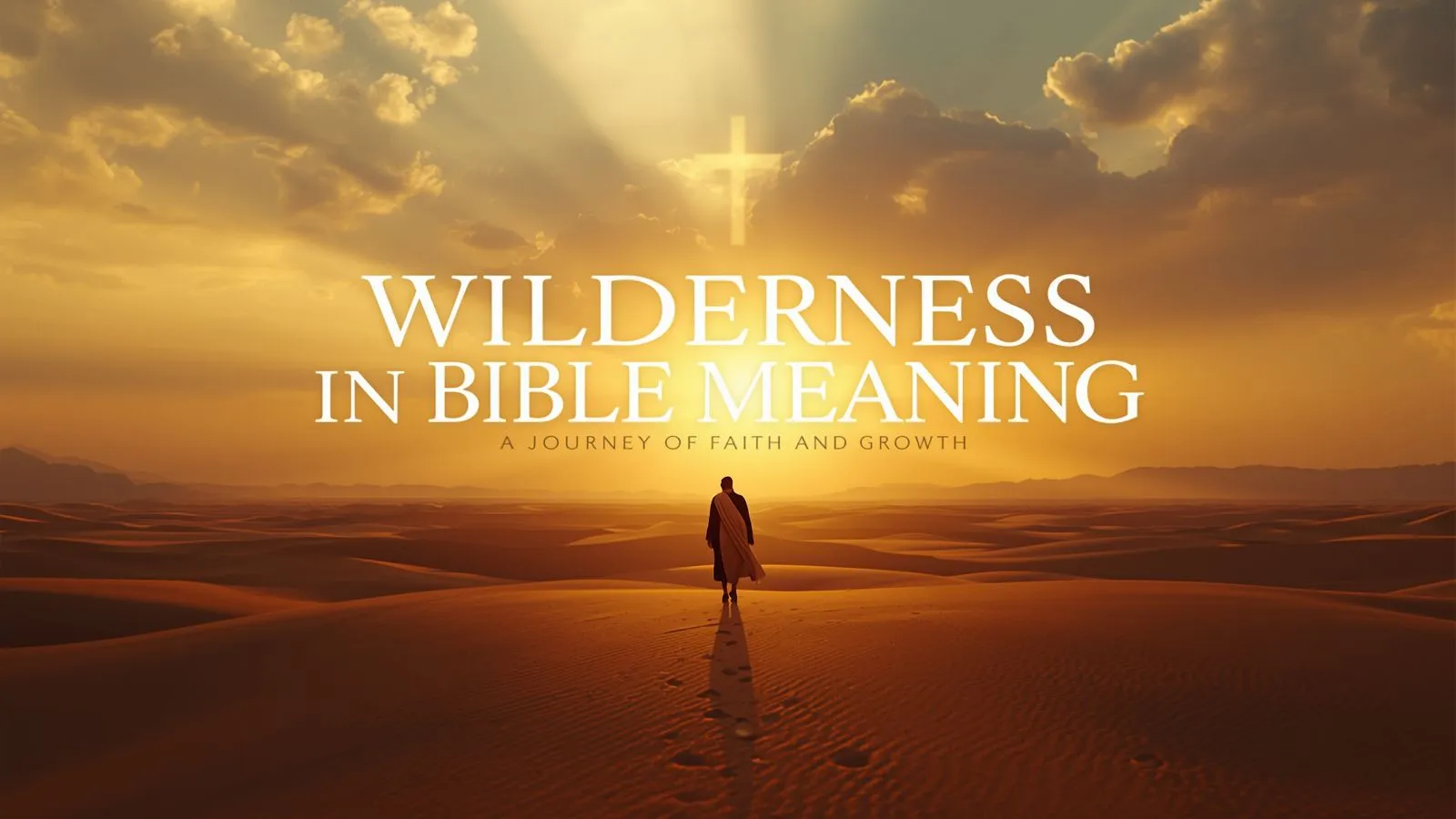
Have you ever felt lost, tired, or far from peace? Life can sometimes feel like a long road through a dry and empty place.
May be you prayed for answers but heard silence instead. In those moments, many Christians think about the wilderness in Bible meaning and wonder what God may be teaching them.
In the Bible, the wilderness is more than just a desert or lonely land. It is a place where people faced testing, fear, waiting, and change.
Yet it was also the place where they experienced the presence of God in powerful ways. Moses walked through the wilderness.
The Israelites wandered there for years. Even Jesus spent time in the wilderness before beginning His ministry.
Many believers today connect the wilderness with hard seasons in life. It may feel like confusion, delay, sadness, or spiritual dryness.
But the Bible shows that God often uses wilderness seasons to build faith, give direction, and prepare His people for something greater.
So, what is the true wilderness in Bible meaning? Is it a warning, a lesson, or a spiritual message from God? Let’s explore what Scripture says and discover the hope hidden inside the wilderness journey.
Biblical Meaning of Wilderness
The wilderness in Bible meaning often points to a season of testing, growth, and dependence on God. In Scripture, the wilderness was usually a lonely and difficult place.
People faced hunger, fear, and uncertainty there. Yet it was also where God spoke clearly and showed His power.
One of the most well-known wilderness stories is found in the journey of the Israelites. After leaving Egypt, they wandered in the desert for 40 years.
“Remember how the Lord your God led you all the way in the wilderness these forty years.” — Deuteronomy 8:2
God used the wilderness to teach His people trust and obedience. Even though the journey was hard, He still provided food, water, and guidance. This shows that the wilderness can be a place of both struggle and divine care.
A Place of Testing
The wilderness often represents spiritual testing. God allows difficult seasons to reveal what is inside the heart. In the Bible, trials were not meant to destroy faith but to strengthen it.
Jesus Himself entered the wilderness before starting His ministry.
“Then Jesus was led by the Spirit into the wilderness to be tempted by the devil.” — Matthew 4:1
During this time, Jesus fasted, prayed, and resisted temptation. His wilderness season became a time of preparation and victory. This teaches Christians that hard seasons can lead to spiritual growth and deeper trust in God.
A Place of God’s Presence
Even in lonely places, God stayed close to His people. The wilderness was not a sign that God had abandoned them. Instead, it became a place where His guidance was clearer.
The Israelites followed a cloud by day and fire by night. God showed them where to go and protected them during the journey.
This carries a strong spiritual message for believers today. When life feels empty or confusing, God may still be working quietly behind the scenes. Many Christians discover deeper faith during difficult seasons because they learn to depend on Him fully.
A Place of Transformation
The wilderness also symbolizes change and spiritual awakening. People entered the wilderness one way and came out different.
Moses met God through the burning bush in the wilderness. Elijah heard God’s gentle voice there. John the Baptist preached in the wilderness to prepare hearts for Jesus.
These stories show that wilderness seasons often come before a new beginning. God may use waiting, silence, or hardship to shape character and prepare someone for His purpose.
Warning Meanings in the Wilderness
While the wilderness can be a place of blessing, the Bible also gives warnings connected to it. Some people stayed stuck because of fear, doubt, or disobedience.
The Israelites often complained and stopped trusting God, even after seeing miracles. Because of this, many missed the Promised Land.
This part of the biblical symbolism reminds believers to keep faith alive during hard times. The wilderness should lead people closer to God, not farther away from Him.
Hope in the Wilderness
The Bible never presents the wilderness as permanent. God always had a purpose beyond it. Seasons of dryness eventually led to renewal, healing, and promise.
Isaiah 43:19 says:
“I am making a way in the wilderness and streams in the wasteland.”
This verse gives hope to anyone feeling spiritually tired or lost. God can bring life, peace, and direction even in the hardest moments.
Spiritual Significance and Symbolism (Wilderness in Bible Meaning)
The wilderness in Bible meaning carries deep spiritual symbolism. It often represents a season where God removes distractions so people can focus fully on Him. During these moments, faith becomes stronger and prayer becomes more meaningful.
Many Christians experience wilderness seasons after loss, change, or disappointment. A person may feel alone, confused, or emotionally drained. Yet these times can also lead to spiritual awakening and transformation.
For example, someone may lose a job and feel uncertain about the future. Another person may go through heartbreak or struggle with waiting for answered prayers. In those moments, the wilderness teaches patience, trust, and dependence on God’s timing.
The wilderness also reminds believers that growth does not always happen during comfort. Sometimes God uses quiet and difficult places to shape the heart.
A strong Christian meaning behind the wilderness is surrender. It teaches people to let go of fear and trust God even when the path is unclear.
Through prayer, worship, and faith, many believers discover peace in the middle of their wilderness journey. They begin to understand that God never leaves them alone.
Biblical Interpretations in Dreams or Real Life (Wilderness in Bible Meaning)
In dreams or real-life experiences, the wilderness can hold different meanings depending on the situation. In dream interpretation, a peaceful wilderness may symbolize a spiritual journey, quiet reflection, or a season where God is guiding someone gently.
If the wilderness feels dark, fearful, or confusing, it may reflect emotional struggles, spiritual dryness, or uncertainty in life.
However, it does not mean God has abandoned the person. Instead, it may be a call to pray more deeply and trust Him during difficult times.
Walking safely through a wilderness in a dream can symbolize protection and faith during trials. Being lost in the wilderness may point to confusion or the need for spiritual direction.
Some believers also connect wilderness dreams with preparation for change. Just as Jesus and Moses experienced transformation in the wilderness, modern Christians may see it as a sign that God is preparing them for a new season.
The Bible encourages believers to seek wisdom through prayer and Scripture rather than fear. God can bring comfort and guidance even during uncertain moments.
Practical Lessons & Faith Insights
The wilderness teaches believers to trust God even when life feels unclear. Hard seasons can strengthen faith, build patience, and lead to spiritual growth.
Instead of losing hope, Christians can pray, reflect on Scripture, and remember that God always has a purpose. The wilderness may feel lonely, but it can also become the place where faith grows deepest and God’s guidance becomes clearer.
Conclusion:
The wilderness in Bible meaning reveals a powerful spiritual truth. The wilderness is not only a place of struggle but also a place of growth, faith, and transformation.
Throughout Scripture, God used wilderness seasons to guide, prepare, and strengthen His people.
If you are walking through a difficult season today, remember that God is still with you. He can bring hope, wisdom, and peace even in the driest places.
Trust His timing, stay close in prayer, and believe that every wilderness journey can lead to a greater purpose.

I am Joseph Parker, a devoted Bible content writer dedicated to sharing God’s Word with clarity and purpose.
Through Biblicaltribez.com, I create inspirational and scripture-centered articles that strengthen faith.
My goal is to guide readers into a deeper understanding of biblical teachings and Christian living.