Skip to content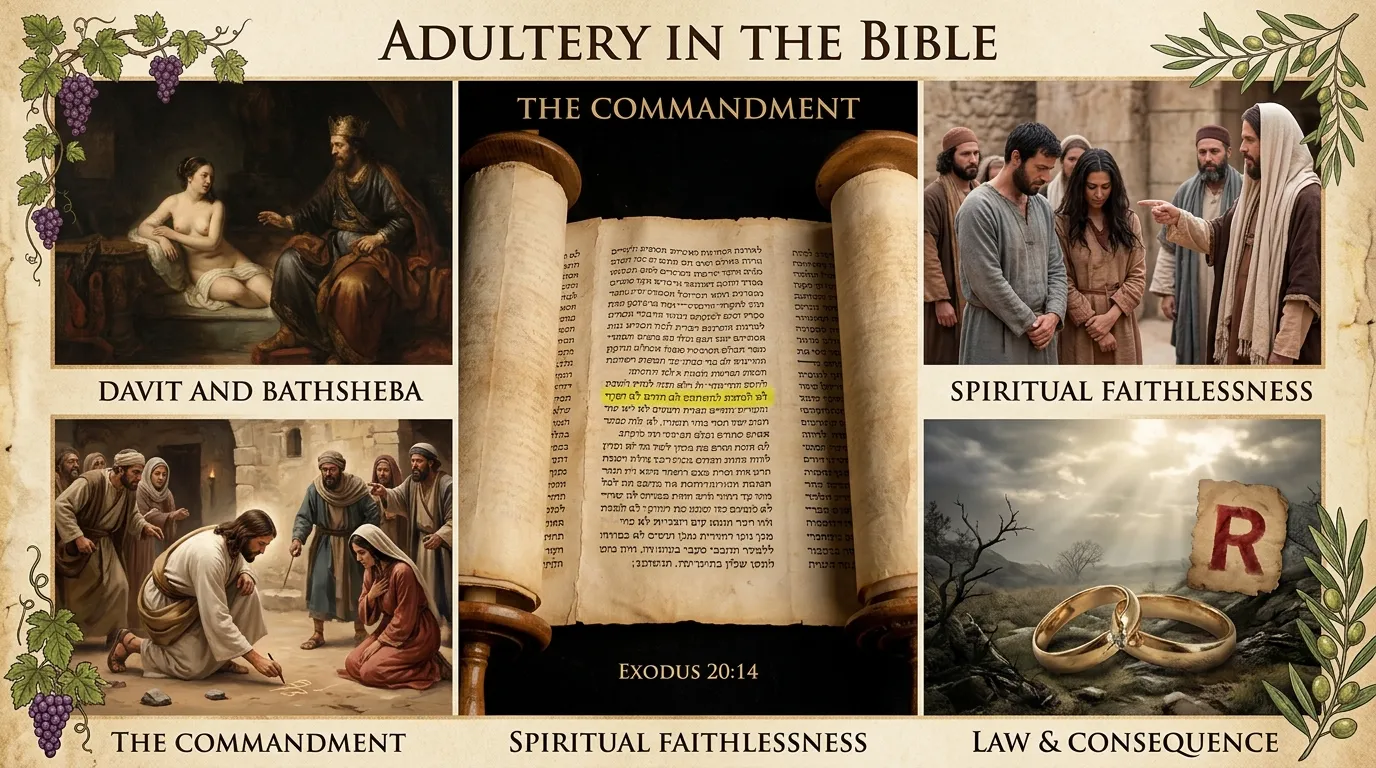
Adultery is one of the serious sins discussed in the Bible. It is closely connected with marriage, faithfulness, trust, and the condition of the human heart. Many people search what is adultery in the Bible because they want to understand what God says about sexual unfaithfulness and why it matters so much.
Imagine a marriage built on trust. Two people promise to love each other and remain faithful. When one person breaks that promise through a sexual relationship with someone else, deep pain can follow. The Bible calls this adultery.
The command against adultery appears in the Ten Commandments. Exodus 20:14 says, “You shall not commit adultery.” This simple command shows that God values faithfulness and protects the covenant of marriage.
But Jesus taught that adultery is not only about an outward action. The heart also matters. In Matthew 5:27–28, Jesus explains that a person who looks at another person with lustful intent has already committed adultery in the heart.
So, what is adultery in the Bible? It is more than breaking a rule. It is a serious act of unfaithfulness that harms marriage, trust, and our relationship with God. Yet the Bible also gives hope. God offers forgiveness, healing, wisdom, and a path toward repentance.
What Is Adultery in the Bible?
In simple terms, adultery in the Bible means sexual unfaithfulness within marriage. It happens when a married person has a sexual relationship with someone who is not their spouse.
The Bible clearly teaches that marriage should be treated with honor.
Hebrews 13:4 says:
“Let marriage be held in honor among all.”
Marriage is presented in Scripture as a special covenant. It is not meant to be treated as something casual or disposable.
Adultery Breaks Faithfulness
One major biblical meaning of adultery is broken faithfulness.
A partners make a commitment to one another. Adultery violates that commitment. Proverbs 6:32 gives a strong warning:
“He who commits adultery lacks sense; he who does it destroys himself.”
This verse shows that adultery can bring serious emotional, spiritual, and relational damage.
It can create pain, anger, fear, broken trust, and lasting wounds. That is why the Bible warns people to stay away from sexual sin and to honor their marriage vows.
Jesus Also Taught About Adultery of the Heart
Jesus went deeper than the outward act.
In Matthew 5:27–28, Jesus says that while the commandment says not to commit adultery, a person who looks at another with lustful desire has committed adultery in the heart.
This teaches an important spiritual lesson: God cares about the heart, not only our actions.
A person may appear faithful on the outside while allowing lust, fantasy, or sinful desire to grow inside. Jesus calls His followers to seek purity in both their thoughts and actions.
Adultery Is a Serious Sin
The Bible does not treat adultery lightly.
In the Old Testament, adultery was forbidden under God’s law. Leviticus 20:10 describes the seriousness of the offense under ancient Israel’s covenant law.
However, Christians should also remember that the Bible’s message is not simply about punishment. Scripture repeatedly shows God’s willingness to forgive people who truly repent.
1 John 1:9 gives this promise:
“If we confess our sins, he is faithful and just to forgive us our sins and to cleanse us from all unrighteousness.”
This gives hope to anyone who has failed.
Adultery is serious, but God’s mercy is also real.
Adultery and God’s Design for Marriage
The Bible presents marriage as a relationship built on love, commitment, and faithfulness.
Genesis 2:24 describes partners becoming “one flesh.” This points to the deep unity that marriage is meant to have.
Adultery damages that unity.
It can turn something meant to be a place of safety and trust into a place of pain. Therefore, biblical teaching about adultery is also a call to protect marriage, practice honesty, and remain faithful.
Spiritual Significance and Symbolism of Adultery
The spiritual meaning of adultery can be understood through the ideas of faithfulness, temptation, broken trust, repentance, and restoration.
The Bible sometimes uses marriage as a picture of humanity’s relationship with God. When God’s people turn away from Him and worship other gods, Scripture sometimes describes this spiritual unfaithfulness using the language of adultery.
For example, the book of Hosea uses marriage as a powerful picture of Israel’s unfaithfulness toward God. Israel had turned away from God, yet God continued to show mercy and called His people back.
This gives us a deeper lesson.
Adultery Can Represent Unfaithfulness
In a spiritual sense, adultery can remind Christians of the danger of becoming unfaithful to God.
James 4:4 uses strong language when it warns believers about friendship with the world. The larger message is that God’s people should not allow worldly desires to replace devotion to Him.
The lesson is not that every struggle means a person has abandoned God. Instead, it reminds believers to examine their hearts.
Are we allowing temptation to control us?
Are we protecting our relationships?
These questions can lead to healthy spiritual reflection.
Adultery Can Teach the Need for Repentance
The Bible does not tell people to hide their sins.
Instead, Scripture encourages confession and repentance. Repentance means turning away from sin and turning back toward God.
Psalm 51 is a powerful example of a prayer of repentance after serious sin. David asks God to create a clean heart within him.
This shows that even after great failure, a person can seek God’s forgiveness and transformation.
God Cares About Healing
Adultery can cause deep wounds, but the Christian message includes hope.
God can guide people through confession, repentance, wise counsel, forgiveness, and healing. Forgiveness does not always mean that every consequence disappears or that trust is restored immediately. Healing may take time.
Still, God’s presence can give strength during that process.
Biblical Interpretations of Adultery in Dreams or Real Life
Some people may dream about adultery even when they have never committed it. A dream about adultery does not automatically mean that God is predicting an affair.
Dreams can come from many sources, including fears, stress, memories, relationship concerns, or things we have recently seen or thought about.
If you dream that your spouse commits adultery, it may reflect fear of losing trust, insecurity, or anxiety. It should not automatically be treated as proof that your spouse is unfaithful.
If you dream that you commit adultery, it does not necessarily mean you secretly want to do it. The dream may simply bring feelings about temptation, guilt, commitment, or fear to the surface.
A Christian response is to pray and seek wisdom rather than panic.
Philippians 4:6 encourages believers to bring their concerns to God through prayer.
Let Scripture guide you more than fear or dream interpretations.
Practical Lessons and Faith Insights
The Bible’s teaching about adultery gives several simple lessons:
- Protect your marriage through honesty and faithfulness.
- Guard your heart against lust and temptation.
- Seek God in prayer when you feel weak.
- Confess sin instead of hiding it.
- Remember God’s mercy when genuine repentance takes place.
- Give healing time when trust has been broken.
God calls His people to live with integrity, purity, love, and faithfulness.
FAQs:
1. What is adultery in the Bible?
Adultery is sexual unfaithfulness within marriage. The Bible forbids it and teaches that marriage should be honored and protected. Jesus also taught that lustful intent can make the heart guilty of adultery (Matthew 5:27–28).
2. Is adultery considered a sin in Christianity?
Yes. Adultery is clearly identified as sin in the Bible. Exodus 20:14 says, “You shall not commit adultery.” Christians are called to honor marriage and remain faithful.
3. Does God forgive adultery?
Yes. The Bible teaches that God forgives those who sincerely confess and repent. First John 1:9 says that God is faithful to forgive sins and cleanse those who confess them.
4. Is lust the same as adultery in the Bible?
Jesus connects lust with adultery of the heart in Matthew 5:27–28. This shows that sinful desire matters to God, even before an outward action takes place.
5. What should I do if adultery has affected my life?
Turn to God in honest prayer and seek wise, trustworthy help. Genuine repentance, honesty, accountability, and healing are important. If a marriage has been harmed, rebuilding trust can take time. God’s grace can provide strength throughout the process.
Conclusion:
So, what is adultery in the Bible? It is sexual unfaithfulness that breaks the trust and covenant of marriage. Scripture also teaches that God cares about the desires of our hearts.
Although adultery is a serious sin, the Bible offers a message of repentance, forgiveness, healing, and hope.
If adultery has touched your life, do not let shame keep you from God. Bring your heart to Him in prayer and seek His wisdom. God’s mercy can lead you toward a new path of faithfulness and restoration.

I am Caleb Anderson, a Christian writer passionate about exploring deep biblical meanings and spiritual truths.
On Biblicaltribez.com, I share faith based insights to help readers grow closer to God through Scripture.
My writing focuses on making the Bible easy to understand, meaningful, and relevant to everyday life.