Skip to content
Have you ever remembered a Bible verse but could not remember where it was written? You may remember the message clearly. Perhaps it was something about God’s love, fear, prayer, forgiveness, faith, or hope. But then you ask, “Where in the Bible does it say that?”
This is a common question for Christians. The Bible has thousands of verses across many books. Sometimes we remember the meaning of a verse but forget the exact words or chapter. Other times, we hear a popular Christian saying and wonder if it is actually found in Scripture.
Searching for the right Bible verse can help us understand what God truly says. It can also protect us from treating human sayings as if they were direct Bible teachings.
The question “where in the Bible does it say” is more than a search for a verse. It can be a desire to know the truth and build faith on God’s Word.
Let us look at how to find Bible verses, understand their meaning, and make sure popular sayings agree with Scripture.
Biblical Meaning of “Where in the Bible Does It Say”
The phrase “where in the Bible does it say” is usually used when someone wants to find the exact place where a teaching, statement, or idea appears in Scripture.
For example, someone may ask:
- Where in the Bible does it say God helps those who help themselves?
- Where in the Bible does it say money is the root of all evil?
- Where in the Bible does it say this too shall pass?
- Where in the Bible does it say God will not give you more than you can handle?
- Where in the Bible does it say everything happens for a reason?
These questions are important because some popular Christian sayings are not written in the Bible exactly as people say them.
“God Helps Those Who Help Themselves”
Many people believe this is a Bible verse. However, those exact words do not appear in Scripture.
The Bible does teach us to work hard, act wisely, and take responsibility. For example, Proverbs 14:23 says:
“All hard work brings a profit, but mere talk leads only to poverty.”
At the same time, Scripture teaches that we must depend on God. Proverbs 3:5–6 says:
“Trust in the Lord with all your heart and lean not on your own understanding.”
So the biblical message is not simply that people should depend on themselves. Christians are called to work faithfully while trusting God.
“Money Is the Root of All Evil”
This is another saying that is often quoted incorrectly.
The Bible says in 1 Timothy 6:10:
“For the love of money is a root of all kinds of evil.”
Notice the difference. The Bible does not say that money itself is the root of all evil. It warns about the love of money.
Money can be used for good. But when wealth becomes more important than God, it can lead the heart away from Him.
“This Too Shall Pass”
Many people use this phrase during difficult times. It gives comfort, but the exact phrase “this too shall pass” does not appear as a direct Bible verse.
However, the Bible clearly teaches that suffering does not last forever.
Psalm 30:5 says:
“Weeping may stay for the night, but rejoicing comes in the morning.”
This verse gives a similar message of hope and endurance. Hard seasons can come, but God’s faithfulness remains.
“God Will Not Give You More Than You Can Handle”
This is another popular statement that people often connect with the Bible.
The closest passage is 1 Corinthians 10:13. It says that God will not allow believers to be tempted beyond what they can bear and that He provides a way to endure temptation.
This verse is specifically about temptation, not every painful situation in life.
The distinction matters. Sometimes life can feel far beyond our strength. The Bible does not teach that we must handle everything alone. Instead, we can bring our weakness to God.
Paul wrote in 2 Corinthians 12:9:
“My grace is sufficient for you, for my power is made perfect in weakness.”
This gives Christians a beautiful message: God’s strength can meet us when our own strength is gone.
Why Finding the Exact Bible Verse Matters 📖
Knowing where a teaching comes from helps us understand its biblical context.
A single verse can sometimes be misunderstood when it is taken away from the verses around it. Reading the whole passage can reveal who was speaking, who was being addressed, and what problem or situation was involved.
For example, when you search for a verse about fear, you may find many passages.
Psalm 56:3 says:
“When I am afraid, I put my trust in you.”
This is not saying that a believer will never feel fear. Instead, it shows us what we can do when fear comes.
We can turn to God.
Finding Scripture also helps us separate biblical truth from popular sayings. A statement may sound spiritual but still not be supported by the Bible.
That is why asking, “Where in the Bible does it say?” can be a healthy part of Christian study.
Spiritual Significance of Searching the Bible
Searching for a Bible verse can become more than a simple information search. It can become an act of faith and spiritual growth.
Psalm 119:105 says:
“Your word is a lamp for my feet, a light on my path.”
God’s Word gives direction. When we are confused, Scripture can help us think clearly. When we are afraid, it can remind us of God’s presence.
For example, imagine someone going through a difficult season. They may ask, “Where in the Bible does it say that God is with me?”
One powerful answer is Hebrews 13:5:
“Never will I leave you; never will I forsake you.”
The verse can become a reminder that God’s presence does not depend on how easy life feels.
Scripture Can Guide Your Daily Life
You may search the Bible when you need guidance about:
- Fear
- Anxiety
- Love
- Forgiveness
- Marriage
- Friendship
- Money
- Work
- Parenting
- Prayer
- Hope
- Grief
- Faith
The goal is not simply to collect verses. The goal is to know God’s Word and live by it.
Biblical Interpretations in Real Life ✨
People often ask, “Where in the Bible does it say this?” after hearing a teaching from a friend, church, video, book, or social media post.
Before accepting the statement, check Scripture.
If someone says, “The Bible says you should never worry,” you can search for verses about worry. Philippians 4:6 teaches believers not to be anxious but to bring their concerns to God through prayer and thanksgiving.
If someone says, “The Bible says you must forgive everyone immediately,” Scripture can help you understand forgiveness in a deeper way. Ephesians 4:32 tells believers to be kind, compassionate, and forgiving.
If someone says, “The Bible promises that Christians will never suffer,” Scripture shows something different. Jesus warned His followers that they would face trouble.
John 16:33 says:
“In this world you will have trouble. But take heart! I have overcome the world.”
The Bible does not promise an easy life. It promises God’s presence, strength, hope, and ultimate victory.
How to Find a Bible Verse
When you cannot remember where a verse is found, start with the main idea.
For example, if you remember something about God’s love, search for Bible passages about God’s love.
Some helpful starting points include:
- John 3:16 : God’s love and salvation
- Psalm 23 : God’s care and guidance
- Romans 8:28 : God’s purpose in difficult situations
- Philippians 4:6–7 : prayer and peace
- Jeremiah 29:11 : God’s plans and hope
- Proverbs 3:5–6 : trusting God
- Psalm 46:1 : God as our refuge and strength
Always read the surrounding passage when possible. This helps you understand the full biblical meaning.
Practical Lessons & Faith Insights
When you ask, “Where in the Bible does it say?”, let the question lead you deeper into Scripture.
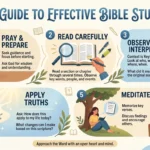
Check the source. Read the context. Pray for wisdom. Compare teachings with God’s Word.
Do not be afraid to discover that a popular saying is not a direct Bible verse. The truth of Scripture does not become weaker because a saying was quoted incorrectly.
FAQs:
1. What does “where in the Bible does it say” mean?
It means someone wants to find the exact Bible book, chapter, and verse where a particular teaching or statement appears.
2. Why should I check where a saying comes from?
Checking the source helps you know whether the statement is actually found in Scripture or is simply a popular saying. It also helps you understand the verse in its proper context.
3. Does everything people say is biblical appear in the Bible?
No. Many popular Christian sayings are not direct Bible verses. Some may express an idea that is similar to Scripture, while others may not fully agree with biblical teaching.
4. How can I find a Bible verse I only partly remember?
Think about the main words or idea you remember. Search for those words in a Bible app or concordance. You can also look through passages related to topics such as faith, prayer, love, fear, hope, or forgiveness.
5. Should I read the whole chapter instead of one verse?
Yes, when possible. Reading the surrounding verses gives you important context and can help prevent misunderstanding.
Conclusion:
The question “where in the Bible does it say” can open the door to deeper Bible study. It reminds us to look beyond popular sayings and discover what Scripture truly teaches.
God’s Word offers wisdom, comfort, correction, hope, and guidance. When you are unsure about a spiritual claim, take it to Scripture. Read, pray, and seek God’s truth.
May your search through the Bible bring you closer to God and give you peace for every step ahead.

I am Joseph Parker, a devoted Bible content writer dedicated to sharing God’s Word with clarity and purpose.
Through Biblicaltribez.com, I create inspirational and scripture-centered articles that strengthen faith.
My goal is to guide readers into a deeper understanding of biblical teachings and Christian living.