Skip to content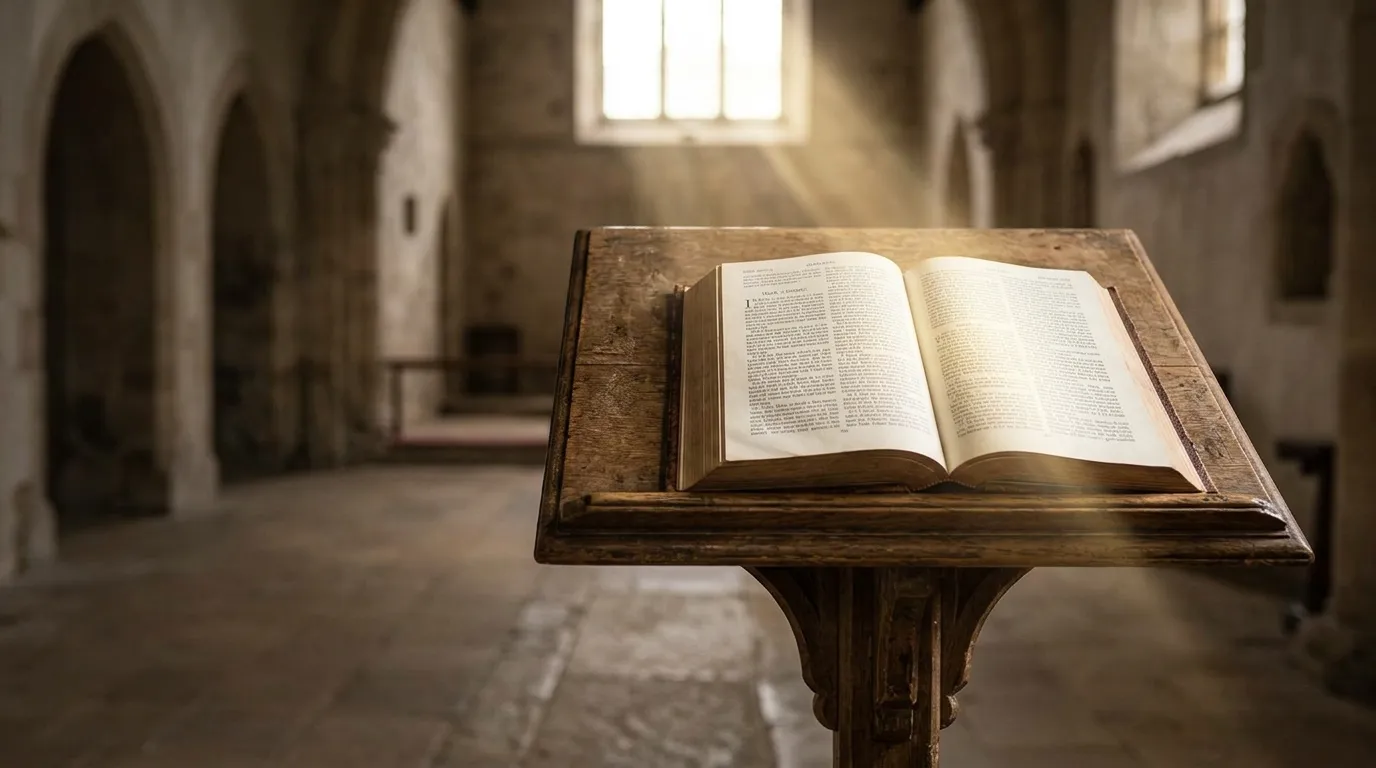
Have you ever wondered, what is the Bible and why Christians read it every day? The Bible is much more than an old book. It is a collection of sacred writings that tells the story of God, His creation, humanity, sin, salvation, and His plan for the world.
The Bible teaches people who God is and how they can live in a relationship with Him. It also tells the story of Jesus Christ, His life, death, and resurrection.
For Christians, the Bible is the main source of faith, teaching, wisdom, and hope.
The Bible can seem large or hard to understand at first. It has many books, writers, places, people, laws, poems, prophecies, letters, and stories. Yet its central message can be understood: God loves His creation and calls people to know Him, trust Him, and follow His ways.
In this guide, we will explain what the Bible is, how it is organized, who wrote it, what it teaches, and how you can begin reading it.
What Is the Bible?
The Bible is a collection of sacred books that Christians believe communicates God’s truth and teaches people about Him, His will, and His work of salvation.
The word “Bible” comes from a Greek word related to biblia, meaning “books.” This fits the Bible well because it is not one book written at one time. It is a library of many books brought together into one collection.
The Bible contains different types of writing. These include history, law, poetry, wisdom, prophecy, the Gospels, and letters.
Although the books have different human writers, Christians believe God guided the writers in giving His message.
Paul explains this in 2 Timothy 3:16:
“All Scripture is breathed out by God and profitable for teaching, for reproof, for correction, and for training in righteousness.”
This verse shows why Scripture is important. The Bible teaches, corrects, guides, and helps believers grow in righteous living.
How Many Books Are in the Bible?
The number of books depends on the Christian tradition.
Most Protestant Bibles contain 66 books:
- 39 books in the Old Testament
- 27 books in the New Testament
Catholic Bibles contain additional books commonly called the Deuterocanonical books. Eastern Orthodox traditions may have a somewhat different collection.
So, when someone asks, “How many books are in the Bible?” the answer depends on which Christian Bible tradition they mean.
The important point is that the Bible is a collection of many individual books, not a single work written by one person.
What Are the Old Testament and New Testament?
The Bible has two major sections: the Old Testament and the New Testament.
The Old Testament
The Old Testament comes first in the Christian Bible. It contains the story of God’s relationship with His people before the coming of Jesus Christ.
It includes:
- Creation
- The fall of humanity
- Noah and the flood
- Abraham and his family
- Moses and the Exodus
- The nation of Israel
- Israel’s kings
- The prophets
- Wisdom and poetry
- Promises about God’s future work
The Old Testament points forward to God’s promises and, from a Christian perspective, prepares the way for Christ.
The New Testament
The New Testament focuses on Jesus Christ and the beginning of the Christian church.
It contains:
- The four Gospels
- Acts
- Letters to churches and believers
- Revelation
The four Gospels are Matthew, Mark, Luke, and John. They tell about Jesus’ life, teachings, miracles, death, and resurrection.
The New Testament explains the good news of salvation through Jesus and teaches Christians how to live as His followers.
What Is the Main Message of the Bible?
The Bible has many themes, but one central message is God’s plan to redeem humanity through Jesus Christ.
Genesis begins with God creating the heavens and the earth. Sin enters the world through human disobedience, bringing separation from God.
The Bible then follows God’s work through history. God makes promises, forms a people, gives His law, sends prophets, and prepares the way for the coming Messiah.
The New Testament presents Jesus as the promised Savior.
John 3:16 gives one of the Bible’s best-known summaries of God’s saving love:
“For God so loved the world, that he gave his only Son, that whoever believes in him should not perish but have eternal life.”
This verse shows several key ideas: God’s love, Jesus’ sacrifice, faith, and eternal life.
Who Wrote the Bible?
The Bible was written by many human authors over a long period of history.
Its writers included prophets, kings, shepherds, apostles, and other servants of God. The books were written in different places and settings.
For example, Moses is traditionally associated with the first five books of the Bible. David is strongly connected with many of the Psalms. The apostle Paul wrote many New Testament letters. The Gospel writers recorded the life and ministry of Jesus.
Christians believe these human writers were used by God.
Peter writes in 2 Peter 1:21:
“Men spoke from God as they were carried along by the Holy Spirit.”
This teaches that Scripture has both human authorship and divine inspiration.
How Was the Bible Written?
The Bible was written over many centuries. Its books were originally written mainly in Hebrew, Aramaic, and Greek.
The Old Testament was written primarily in Hebrew, with some sections in Aramaic. The New Testament was written in Greek.
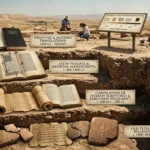
Before modern printing, biblical texts were copied by hand. Scribes carefully preserved the text and passed manuscripts from one generation to another.
Today, the Bible has been translated into many languages, allowing people around the world to read Scripture in their own language.
Why Is the Bible Important to Christians?
The Bible is important because Christians use it to learn about God and His will.
It also gives guidance for daily life. Scripture addresses subjects such as love, forgiveness, wisdom, marriage, family, work, money, prayer, suffering, temptation, and relationships.
Psalm 119:105 says:
“Your word is a lamp to my feet and a light to my path.”
The picture is simple. A lamp helps someone see where to walk. In the same way, God’s Word gives believers guidance when they face choices and difficult situations.
The Bible does not answer every modern question with a direct sentence. But it gives principles that help Christians make wise and faithful decisions.
What Are the Different Types of Books in the Bible?
One reason the Bible can feel difficult is that its books have different purposes and styles.
Law
The first five books are often called the Pentateuch or Law.
They include Genesis, Exodus, Leviticus, Numbers, and Deuteronomy.
These books introduce creation, God’s covenant, Israel’s story, and God’s law.
History
Historical books tell the story of God’s people and important events in Israel’s history.
They include books such as Joshua, Judges, Ruth, Samuel, Kings, Chronicles, Ezra, Nehemiah, and Esther.
Poetry and Wisdom
Books such as Psalms, Proverbs, Job, Ecclesiastes, and Song of Solomon contain poetry, worship, wisdom, questions, and reflections about life.
Psalms, for example, contains songs and prayers that express joy, sorrow, fear, praise, trust, and hope.
Prophets
The prophetic books contain messages from God’s prophets.
Isaiah, Jeremiah, Ezekiel, Daniel, and the twelve Minor Prophets address sin, judgment, repentance, hope, restoration, and God’s promises.
Gospels
Matthew, Mark, Luke, and John are called the Gospels.
They tell the story of Jesus Christ.
Letters
The New Testament contains letters written to churches and individuals.
These letters teach Christians about faith, salvation, love, holiness, church life, and following Christ.
Revelation
Revelation is the final book of the Christian Bible. It contains visions given to John and points toward God’s final victory, judgment, and the hope of God’s people.
What Does the Bible Say About God?
The Bible teaches that there is one true God who created all things.
Genesis 1:1 begins:
“In the beginning, God created the heavens and the earth.”
God is presented as the Creator, holy, righteous, loving, wise, and faithful.
The Bible also teaches that God desires a relationship with His people. He calls people to love Him and trust Him.
Jesus summarizes this in Matthew 22:37–39, where He teaches people to love God with all their heart, soul, and mind and to love their neighbor as themselves.
What Does the Bible Say About Jesus?
Jesus Christ is at the center of the New Testament.
The Gospels describe His birth, ministry, teaching, miracles, death on the cross, and resurrection.
Christians believe Jesus is the Son of God and the promised Messiah.
John 1:1 says:
“In the beginning was the Word, and the Word was with God, and the Word was God.”
Later, John 1:14 explains that the Word became flesh.
Jesus also said in John 14:6:
“I am the way, and the truth, and the life.”
For Christians, Jesus is not simply a teacher from history. He is central to God’s plan of salvation.
What Does the Bible Teach About Sin?
The Bible teaches that sin is rebellion against God and His good ways.
Romans 3:23 says:
“For all have sinned and fall short of the glory of God.”
This means every person needs God’s grace. The Bible does not present salvation as something people earn by being perfect.
Instead, the New Testament teaches salvation through faith in Jesus Christ.
Ephesians 2:8–9 emphasizes that salvation is by grace through faith and is not something people can boast about earning through their own works.
What Is the Purpose of the Bible?
The Bible has several important purposes.
It Helps Us Know God
Scripture reveals God’s character, actions, promises, and will.
It Teaches Truth
The Bible gives instruction about faith and life.
It Corrects Us
God’s Word can show us where our choices and attitudes are wrong.
It Gives Wisdom
Proverbs especially teaches practical wisdom for everyday life.
It Gives Hope
The Bible reminds believers that God remains faithful during suffering and uncertainty.
It Points Us to Jesus
The Old and New Testaments together tell the story of God’s redemptive work, with Jesus at the center of the Christian message.
How Can You Start Reading the Bible?
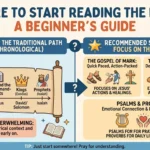
If you are new to the Bible, you do not need to read it from cover to cover on your first attempt.
Start with a book that helps you understand Jesus.
The Gospel of John is a good starting point because it focuses strongly on who Jesus is and why faith in Him matters.
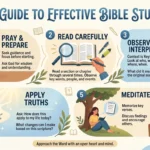
You can follow these simple steps:
- Pray before reading.
- Read a small section.
- Ask what the passage says about God.
- Ask what it teaches about people.
- Look for commands, promises, warnings, or examples.
- Think about how you can apply the teaching.
- Write down questions you do not understand.
- Continue reading regularly.
Do not worry if you cannot understand everything. The Bible contains difficult passages, and learning takes time.
How Should Christians Apply the Bible in Daily Life?
The Bible is meant to shape more than what a person knows. It should shape how a person lives.
In Prayer
Scripture teaches believers how to pray and gives them words when they do not know what to say.
In Family Life
The Bible teaches parents and children about love, honor, patience, discipline, and forgiveness.
In Marriage
Scripture calls partners to love, honor, faithfulness, and selfless service.
In Church
The New Testament teaches believers to worship together, serve others, encourage one another, and live as one body.
During Hard Times
The Bible gives hope when life feels painful or uncertain. Passages such as Psalm 23 remind believers of God’s care and presence.
In Personal Growth
Reading Scripture can help Christians examine their thoughts, choices, words, and actions.
James 1:22 gives an important warning: believers should not only hear God’s Word but also put it into practice.
What Makes the Bible Different From Other Books?
The Bible is unique in its structure, history, message, and place in Christian faith.
It contains many books written by different authors across different historical settings, yet Christians read the whole collection as one unfolding story of God’s work.
It also addresses the deepest questions people ask:
- Who is God?
- Why are we here?
- What is wrong with the world?
- What is sin?
- Can people be forgiven?
- What happens after death?
- Who is Jesus?
- How can I have eternal life?
- How should I live?
The Bible’s answer to these questions forms the foundation of Christian belief.
A Simple Bible Reading Plan for Beginners
If you are reading the Bible for the first time, keep it simple.
- Week 1: Read John 1–7.
- Week 2: Read John 8–14.
- Week 3: Read John 15–21.
- Week 4: Read selected Psalms and Proverbs.
After that, you can explore Acts, Romans, Genesis, Exodus, and other books.
The goal is not simply to finish pages. The goal is to understand God’s Word and allow it to shape your faith and life.
FAQs:
What is the Bible in simple words?
The Bible is a collection of sacred books that teaches people about God, His creation, humanity, sin, salvation, and His plan for the world. Christians believe the Bible is God’s inspired Word and use it as their main guide for faith and life.
Why is the Bible called the Word of God?
The Bible is called the Word of God because Christians believe God inspired its human writers. Second Timothy 3:16 says that all Scripture is “breathed out by God,” showing its divine source and authority.
What is the main purpose of the Bible?
The main purpose of the Bible is to reveal God and His work in the world. It teaches people about sin, faith, salvation, righteous living, and God’s promises. The New Testament places Jesus Christ at the center of God’s saving work.
Who wrote the Bible?
Many people wrote the books of the Bible. The writers included prophets, kings, apostles, and other servants of God. Christians believe God worked through these human authors by the Holy Spirit.
What should I read first in the Bible?
If you are new to Scripture, the Gospel of John is a helpful place to begin. It focuses on Jesus and explains important truths about His identity, teachings, death, and resurrection. You can then explore Acts, Psalms, Proverbs, and Genesis.
Conclusion:
So, what is the Bible? It is a collection of sacred books that reveals God’s character, His relationship with humanity, and His plan of salvation. It contains history, law, poetry, wisdom, prophecy, the story of Jesus, and teachings for Christian life.
For believers, the Bible is not only a book to study. It is God’s Word to be heard, understood, trusted, and lived out.
It can teach a child, guide a teenager, strengthen a parent, comfort someone who is hurting, and deepen the faith of a lifelong Christian.
If you are just beginning, do not feel overwhelmed. Start with a small passage, ask God for wisdom, and keep going. As you read, you will discover the Bible’s central message again and again: God is faithful, Jesus brings salvation, and God’s Word leads His people toward truth, hope, and life.

I am Samuel Brooks, a Christian author who enjoys breaking down complex Bible concepts into simple truths. At Biblicaltribez.com, I write content that inspires faith, hope, and spiritual growth. I aim to help readers connect Scripture with real life challenges in a meaningful way.