Skip to content
Starting the Bible can feel hard. It is a big book with many names, stories, laws, poems, and teachings. If you open it at random, you may wonder, “Where should I begin?”
The good news is that you do not need to read the Bible from cover to cover on your first try. You also do not need to understand every verse right away. The goal is to know God, understand His Word, and learn how to live by faith.
For most beginners, the Gospel of John is an excellent place to start. It helps you see who Jesus is and why He came. After John, you can read Luke, Acts, Genesis, Psalms, and Romans.
This guide explains where to start reading the Bible, what books to read first, how to make a simple Bible reading plan, and how kids, teenagers, and adults can enjoy Scripture without feeling overwhelmed.
Quick Answer: Where Should You Start Reading the Bible?
If you are reading the Bible for the first time, start with John.
John is one of the four Gospels. It tells us about the life, words, death, and resurrection of Jesus Christ.
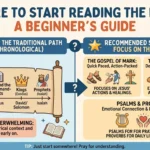
A simple reading order is:
- John : Learn who Jesus is.
- Luke : Read the story of Jesus in more detail.
- Acts : See what happened after Jesus rose from the dead.
- Genesis : Learn how the Bible begins and how God created His people.
- Psalms : Learn how people prayed, worshiped, and trusted God.
- Proverbs : Learn practical wisdom for daily life.
- Romans : Learn key truths about sin, grace, faith, and salvation.
You can then explore the rest of the Bible.
Why Start With the Gospel of John?
The Bible has 66 books, and each book has a different purpose. Some are easier for beginners than others.
John is a strong starting point because its main focus is Jesus Christ.
John even explains why he wrote his Gospel:
“But these are written, that ye might believe that Jesus is the Christ, the Son of God.” : John 20:31, KJV
The message is simple. John wants readers to know Jesus and believe in Him.
As you read John, look for what Jesus says about Himself. Notice His love, His works, His teaching, and His relationship with the Father.
You do not need to know every part of the Old Testament before reading John. You can begin with the story of Jesus and then learn the background as you continue.
Where to Start Reading the Bible for the First Time
If you have never read the Bible before, do not feel pressure to read dozens of chapters each day.
Start small.
Read one chapter a day. Take a few minutes to think about what you read. Then pray and ask God to help you understand His Word.
A simple prayer can be:
“God, please help me understand Your Word and show me how to live by it.”
James gives an important promise about asking God for wisdom:
“If any of you lack wisdom, let him ask of God.” : James 1:5, KJV
This does not mean every passage will become clear at once. Some parts of Scripture take time and study. That is normal.
The important thing is to keep reading.
Should You Read the Bible From Genesis to Revelation?
You can, but it may not be the easiest way for a new reader.
Genesis is a great place to start because it introduces creation, humanity, sin, the flood, Abraham, Isaac, Jacob, and Joseph.
But after Genesis, some readers find books such as Leviticus difficult because they contain many laws and details about Israel’s worship.
This does not mean those books are unimportant. All Scripture is valuable, but not every book has the same purpose or reading level for a beginner.
Paul wrote:
“All scripture is given by inspiration of God, and is profitable…” : 2 Timothy 3:16, KJV
So you should eventually explore the whole Bible. But you can begin with books that help you understand its central message.
The Best Bible Books to Read First
1. John: Start With Jesus
John is often the best first book for a new Bible reader.
It includes famous passages such as John 3:16 and teaches about Jesus as the Son of God.
You will read about His miracles, conversations, death, resurrection, and promises.
Best for: Beginners, teenagers, adults, and anyone wanting to know Jesus.
2. Luke: Read the Life of Jesus
Luke gives a detailed account of Jesus’ life and ministry.
It shows Jesus’ compassion toward people who were poor, sick, rejected, or considered outsiders.
Luke is also the first part of a two-part story. The second book is Acts.
Best for: Readers who want a fuller picture of Jesus’ earthly ministry.
3. Acts: Learn About the Early Church
After reading Luke, Acts is a natural next step.
Acts begins after Jesus’ resurrection and tells how His followers spread the gospel.
You will meet people such as Peter and Paul and learn about the growth of the early Christian church.
Acts also helps connect the story of Jesus with the mission of His followers.
4. Genesis: Understand the Beginning
Genesis means “beginning” or “origin.”
It opens with one of the Bible’s most famous statements:
“In the beginning God created the heaven and the earth.” : Genesis 1:1, KJV
Genesis introduces major biblical themes such as creation, sin, God’s promises, judgment, faith, and redemption.
It also introduces important people such as Abraham, Sarah, Isaac, Jacob, and Joseph.
Best for: Anyone who wants to understand the foundation of the Bible.
5. Psalms: Learn to Pray and Worship
Psalms is a wonderful book when you want comfort, hope, worship, or words for prayer.
The Psalms cover many human emotions. They include joy, fear, sadness, praise, confusion, repentance, and trust.
Psalm 23 begins:
“The LORD is my shepherd; I shall not want.” : Psalm 23:1, KJV
The image of God as a shepherd shows His care and guidance for His people.
You can read one Psalm each day and turn its words into your own prayer.
6. Proverbs: Learn Practical Wisdom
Proverbs is helpful for everyday Christian living.
It talks about wisdom, speech, work, friendship, money, family, self-control, and making good choices.
One of its key teachings says:
“The fear of the LORD is the beginning of wisdom.” : Proverbs 9:10, KJV
Here, “fear of the LORD” points to reverence, respect, and a right attitude toward God.
Proverbs is especially useful for teenagers and young adults who are learning how to make wise choices.
7. Romans: Understand the Gospel
Romans goes deeper into important Christian truths.
It teaches about sin, God’s righteousness, faith, grace, salvation, and life in Christ.
For example:
“Therefore being justified by faith, we have peace with God through our Lord Jesus Christ.” : Romans 5:1, KJV
Romans can be more challenging than John or Psalms. It is often better to read it after you have some basic understanding of Jesus and the gospel.
Where Should Kids Start Reading the Bible?
Children can begin with stories that are easy to follow and teach clear truths about God.
Good choices include:
- Genesis 1–3
- Noah in Genesis 6–9
- Joseph in Genesis 37–50
- David and Goliath in 1 Samuel 17
- Jonah
- Selected Psalms
- The Gospel of Mark
- The Gospel of Luke
Parents can read with children instead of simply telling them to read alone.
After reading, ask simple questions:
- What happened?
- Who was involved?
- What did God do?
- What can we learn about God?
- What good choice can we make today?
This turns Bible reading into a conversation rather than a school assignment.
Where Should Teenagers Start Reading the Bible?
Teenagers often face questions about identity, friendship, temptation, fear, relationships, purpose, and the future.
The Bible speaks to all of these areas.
A good starting path is:
John → Proverbs → Psalms → Acts → Genesis → Romans
John helps teenagers understand Jesus.
Proverbs gives wisdom for choices and relationships. Psalms gives words for emotions and prayer. Acts shows courage and faith in action.
When reading, teenagers can ask:
“What does this passage teach me about God, and how should it change the way I live?”
That question can turn Bible reading from a task into a personal journey of faith.
Where Should Adults Start Reading the Bible?
Adults can use the same basic reading order, but they may also want to study specific books based on their needs.
For example:
- Need comfort? Read Psalms.
- Need wisdom? Read Proverbs.
- Want to know Jesus? Read John.
- Want to understand the early church? Read Acts.
- Want to understand the beginning of God’s story? Read Genesis.
- Want to study salvation and grace? Read Romans.
- Want encouragement during trials? Read James.
James gives practical teaching about faith, speech, trials, wisdom, and how believers live.
This makes it a useful book for Christians who want to connect faith with daily life.
A Simple Bible Reading Plan for Beginners
You do not need a complicated plan.
Try this 30-day beginner Bible reading plan:
Days 1–21: Gospel of John
Read one chapter of John each day.
John has 21 chapters, so this gives you three weeks focused on Jesus.
Days 22–26: Psalms
Read one Psalm each day.
Think about what each Psalm teaches about God, prayer, trust, and worship.
Days 27–30: Proverbs
Read one chapter from Proverbs each day.
Look for one piece of wisdom that you can practice.
After 30 days, you can move into Luke, Acts, Genesis, and Romans.
How to Read the Bible So You Understand It
Reading more pages does not always mean learning more.
Slow down.
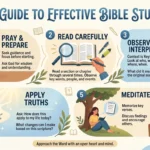
Try the READ method:
Read
Read the passage carefully.
Do not rush. Notice repeated words, people, actions, commands, and promises.
Examine
Ask what the passage means in its own setting.
Who wrote it? Who was the original audience? What is happening in the passage?
Apply
Ask how the truth applies to your life.
Not every command applies in the same way to every person or situation, so always consider the context.
Discuss
Talk about what you read with a trusted Christian, pastor, parent, teacher, or Bible study group.
Proverbs teaches:
“In the multitude of counsellors there is safety.” : Proverbs 11:14, KJV
Wise Christian guidance can help you understand difficult passages.
Read the Bible With Prayer
Prayer and Bible reading belong together.
Before you read, ask God for wisdom. After you read, thank Him and ask how you can obey what you learned.
Psalm 119:18 says:
“Open thou mine eyes, that I may behold wondrous things out of thy law.” : Psalm 119:18, KJV
The writer asks God for help in seeing the value of His Word.
This is a good attitude for every Bible reader.
You are not only reading an old book. You are seeking to understand God’s revealed truth and respond to it with faith and obedience.
What If You Do Not Understand the Bible?
Do not give up.
Every Christian encounters difficult passages.
Some parts of the Bible are simple. Others require more study. A confusing verse does not mean you are failing.
Try these steps:
- Read the verses before and after it.
- Read the whole chapter.
- Check another trustworthy Bible translation.
- Look at cross-references.
- Study the historical and biblical context.
- Ask a mature Christian or pastor.
- Pray for wisdom.
- Keep reading.
Most importantly, do not build a major belief on one verse taken out of context.
The Bible should be understood as a whole.
What Should You Look for When Reading Scripture?
A helpful Bible study question is:
“What does this passage show me about God?”
Then ask:
- What does it teach about Jesus?
- What does it teach about sin?
- What does it teach about faith?
- Is there a command to obey?
- Is there a warning to take seriously?
- Is there a promise to trust?
- Is there an example to follow?
- Is there a truth I need to remember?
These questions help you move beyond simply reading words.
They help you understand the message.
How the Bible Can Change Daily Christian Life
Bible reading should not end when you close the book.
God’s Word should shape how you live.
It can affect the way you speak to your family, treat your spouse, raise your children, handle conflict, work, forgive others, and respond to temptation.
Jesus said:
“If ye know these things, happy are ye if ye do them.” : John 13:17, KJV
Knowing biblical truth matters. Putting it into practice matters too.
For families, Bible reading can become a shared habit. Parents can read a short passage with their children and pray together.
For married couples, Scripture can guide love, forgiveness, patience, and service.
For church life, Bible reading helps believers grow in truth and encourages them to serve others.
How Much of the Bible Should You Read Each Day?
There is no single number of chapters that every Christian must read.
You could read:
- One chapter
- One Psalm
- A short passage
- Several chapters
- A whole book over several days
The best plan is one you can follow consistently.
If you only have ten minutes, use ten minutes.
Do not compare your Bible reading with someone else’s.
The goal is not to win a reading contest. The goal is to know God’s Word and live faithfully.
Should You Read the Bible in Order?
Not always.
If you are new to Scripture, a topical or guided order can help you understand the main story first.
A useful path is:
Jesus → Early Church → Old Testament Foundation → Wisdom → Christian Doctrine
That is why this order works well:
John → Luke → Acts → Genesis → Psalms → Proverbs → Romans
Once you become familiar with these books, you can read through the Bible from Genesis to Revelation.
Over time, you will see how the books connect and how major biblical themes develop across Scripture.
What Is the Most Important Thing to Remember?
Do not let the size of the Bible scare you.
You do not have to understand everything today.
Start with one book. Read a little. Pray. Ask questions. Learn the context. Talk with other Christians. Then keep going.
The Bible itself describes God’s Word as useful for teaching and training in righteousness in 2 Timothy 3:16–17.
Your first goal should not be to finish the Bible as quickly as possible.
Your goal should be to know God, understand His truth, grow in faith, and live according to His Word.
FAQs:
1. What book of the Bible should I read first?
For most beginners, the Gospel of John is an excellent starting point. It focuses on Jesus and explains why He came so readers may believe in Him. After John, Luke and Acts are helpful next steps.
2. Should I start reading the Bible from Genesis?
You can start with Genesis, and it is a very important book. However, many beginners find it easier to start with John because it introduces Jesus clearly. You can then return to Genesis to understand the beginning of the biblical story.
3. How many chapters of the Bible should I read each day?
There is no required number. One chapter a day is a simple starting point. What matters most is reading carefully, understanding the passage, praying, and putting God’s truth into practice.
4. What is the easiest Bible book to understand?
John, Mark, Psalms, Proverbs, and James are often good starting choices. The best choice depends on your goal. If you want to learn about Jesus, start with John. If you want wisdom, try Proverbs.
5. How can I understand the Bible better?
Start with the context. Read the whole passage instead of focusing on one verse. Pray for wisdom, use a reliable study resource, compare translations when helpful, and ask mature Christians or church leaders about difficult passages.
Conclusion:
Knowing where to start reading the Bible can make your first step much easier. If you are new to Scripture, begin with John and focus on learning about Jesus. Then move to Luke and Acts, followed by Genesis, Psalms, Proverbs, and Romans.
Do not worry if you cannot understand everything at first. Bible study is a journey, and understanding grows with time, prayer, practice, and good teaching.
Read slowly. Ask honest questions. Look at the context. Pray about what you learn. Most of all, let God’s Word shape your faith and daily life.
You do not need to read the whole Bible today. Open it, read one passage, and take the next step.

I am Joseph Parker, a devoted Bible content writer dedicated to sharing God’s Word with clarity and purpose.
Through Biblicaltribez.com, I create inspirational and scripture-centered articles that strengthen faith.
My goal is to guide readers into a deeper understanding of biblical teachings and Christian living.