Skip to content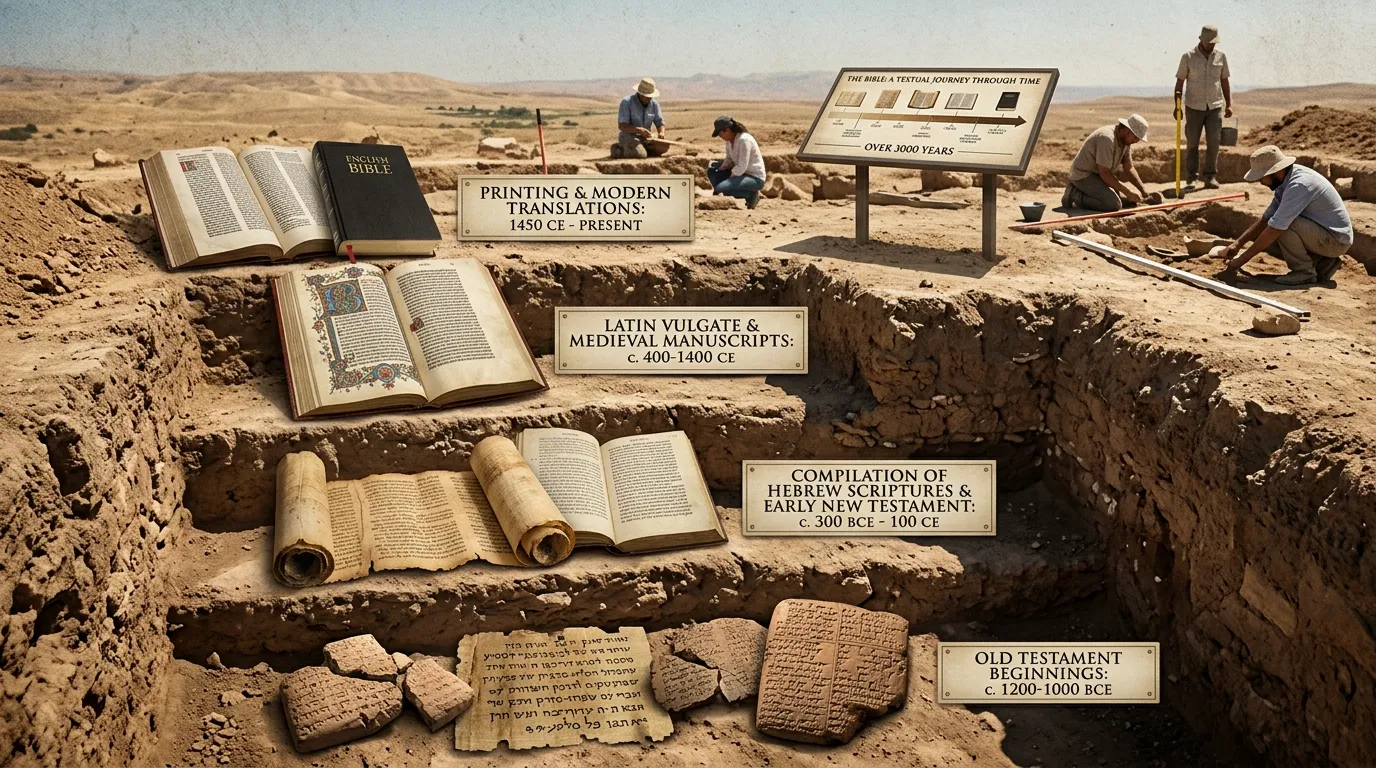
How old is the Bible? The short answer is that the Bible is more than 2,000 years old, but its story began much earlier. Its books were written over many centuries, not all at once. The Hebrew Bible contains some of the oldest biblical writings, while the New Testament came later in the first century CE.
This makes the question more interesting than it first seems. Are we asking about the age of the first biblical writings? The oldest surviving manuscripts? The complete Bible? Or the Bible as a recognized collection of books?
In this guide, you will see the Bible’s history in simple terms. You will learn when the Old Testament and New Testament were written, how old the oldest Bible manuscripts are, when the Bible became a recognized collection, and why scholars give different dates.
The key point is simple: the Bible has a long history, and there is no single date that marks its “birth.”
Quick Answer
So, how old is the Bible?
There is no single age because the Bible is a collection of books written and collected over time. Many scholars place some of the earliest biblical writings in the 8th or 7th century BCE, making those texts roughly 2,700–2,900 years old today.
Most New Testament books were likely written between about 50 and 125 CE, making them about 1,900–1,975 years old.
The oldest surviving manuscripts are different from the date when the books were first written. For example, the Great Isaiah Scroll dates to about 125 BCE, while the Dead Sea Scrolls as a group date from the second century BCE to the first century CE.
So, depending on what you mean by “the Bible,” its history reaches back well over 2,000 years.
How Old Is The Bible?
The Bible is a collection of 66 books written by many authors over a long period. The earliest biblical writings are generally associated with the time of Moses, while the New Testament writings were produced in the first century AD.
The Bible itself does not say, “The Bible is X years old.” Instead, it gives information about people, events, kingdoms, and generations that help establish its timeline.
What Does The Bible Say About Its Beginning?
The Bible begins with:
“In the beginning God created the heaven and the earth.”
Genesis 1:1
This describes the beginning of creation, not the date when the Bible was written.
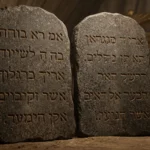
Moses is traditionally associated with the writing of the first five books, known as the Pentateuch. The Bible also records Moses writing down God’s words and commands:
“And Moses wrote all the words of the LORD.”
Exodus 24:4
Definition & Meaning
The Bible is not one book written by one person at one time. It is a collection of many books written by different authors in different periods.
Christian Bibles contain two main sections:
- Old Testament : also called the Hebrew Bible in many academic settings
- New Testament : writings about Jesus, his followers, and the early Christian movement
The books were written, copied, edited, collected, and transmitted across generations. Bible Odyssey notes that the Bible did not simply appear in its final form. Its texts developed and were collected over centuries.
That is why asking for one exact “Bible age” can lead to a misleading answer.
How Old Is the Old Testament?
The Old Testament has a very long history.
Scholars do not give one date for when all of it was written. Different books come from different periods. Some biblical traditions are much older than the manuscripts that preserve them.
Bible Odyssey reports that many scholars place the earliest biblical texts that were written down in the 8th or even 7th century BCE.
That means some of the biblical material has a written history of around 2,700 to 2,900 years.
However, this does not mean every Old Testament book is that old. Some books reached their final form later.
It is also important to separate oral tradition from written text. A story may have been told for generations before someone wrote it down. Because of this, the date of a written text does not always tell us when the tradition first began.
How Old Is the New Testament?
The New Testament is younger than the Hebrew Bible.
Most scholars place the writing of the New Testament books somewhere between about 50 and 125 CE, although exact dates remain uncertain.
The New Testament includes:
- The four Gospels
- Acts
- Paul’s letters
- Other letters
- Revelation
These books were written in the first century and, for some books, perhaps into the early second century.
If we use 50 CE as a rough early date, the oldest New Testament writings are now about 1,975 years old. If a book dates closer to 125 CE, it is about 1,900 years old.
These are estimates, not exact birthdays.
When Was the Bible Written?
The Bible was written over a long period.
There was no single day when someone sat down and “wrote the Bible.” Different books appeared at different times and in different settings.
The Hebrew Bible developed over many centuries. The New Testament writings came later, during the first and early second centuries CE.
This is one of the most important facts to understand when studying Bible history.
Think of the Bible like a library. A library can contain books written hundreds of years apart. The same idea helps explain the Bible’s timeline.
How Old Is the Oldest Bible Manuscript?
This question needs care because “oldest Bible manuscript” can mean several things.
The Dead Sea Scrolls are among the most important evidence for the ancient biblical text. The Library of Congress says the scrolls date from the third century BCE to 68 CE. They include manuscripts of books from the Hebrew Scriptures.
The Great Isaiah Scroll is especially important. The Israel Museum dates it to around 125 BCE and describes it as the oldest known manuscript containing a complete biblical book.
That makes the scroll about 2,150 years old in 2026.
But remember: the manuscript is a surviving copy. The book of Isaiah itself existed before this particular scroll was copied.
That distinction helps avoid a common mistake.
The Dead Sea Scrolls and Bible History
The Dead Sea Scrolls changed the study of ancient Jewish texts.
They were discovered in caves near Qumran beginning in 1947. The surviving material includes biblical manuscripts and many other Jewish writings.
The Library of Congress explains that the scrolls are older than previously known surviving Hebrew Scripture manuscripts by almost 1,000 years.
The Israel Museum also describes the Great Isaiah Scroll as one of the oldest known biblical texts and notes that it contains all 66 chapters of Isaiah.
These discoveries give researchers direct evidence of biblical texts from the Second Temple period.
They also show why manuscript evidence matters. Instead of relying only on later copies, scholars can compare much older witnesses to the text.
How Old Is the Complete Bible?
The answer changes again when we ask about a complete Bible manuscript.
A complete Bible manuscript is different from an early manuscript of one biblical book.
The Codex Sinaiticus, for example, was written more than 1,600 years ago. The Library of Congress describes it as containing the Christian Bible in Greek and the oldest complete copy of the New Testament.
This does not mean the Bible itself began in the fourth century.
It means that one of the earliest surviving manuscripts containing the complete Christian Bible dates from that period.
This is a vital difference:
A manuscript’s age is not the same as the age of the text it contains.
A modern Bible may contain a text that has been copied through many generations.
Bible Age: Written Text vs. Surviving Manuscript
Here is the easiest way to understand the difference:
| Question | Approximate date | What it tells us |
| Some earliest biblical texts written down | 8th–7th century BCE | Around 2,700–2,900 years of written history |
| Dead Sea Scrolls | 3rd century BCE–1st century CE | Very early surviving biblical manuscripts |
| Great Isaiah Scroll | Around 125 BCE | About 2,150 years old |
| Most New Testament writings | 50–125 CE | About 1,900–1,975 years old |
| Codex Sinaiticus | 4th century CE | One of the oldest complete Christian Bible manuscripts |
The dates above are best understood as historical ranges and manuscript dates, not as exact dates for every biblical book.
When Did the Bible Become a Collection?
Another common question is when the Bible became “the Bible.”
This also happened over time.
Individual books were copied and used by Jewish and Christian communities long before every book existed in one recognized collection.
The New Testament canon took shape gradually. Bible Odyssey notes that the New Testament canon formed relatively late, around the fourth century CE, although individual writings had been read in churches much earlier.
This means there is a major difference between:
- A book being written
- A book being copied
- A book being used as Scripture
- A group of books being recognized as a canon
- A complete Bible manuscript being produced
These events did not happen on the same date.
Oldest Bible Manuscript vs. Oldest Bible Text
It is easy to mix these two ideas.
Suppose an author writes a book in 700 BCE. A scribe copies it in 500 BCE, another copies it in 200 BCE, and another copies it in 100 CE.
The surviving 200 BCE copy does not mean the book was written in 200 BCE.
The same principle applies to biblical manuscripts.
The Great Isaiah Scroll is a powerful example. The scroll dates to around 125 BCE, but the book of Isaiah existed before that manuscript was copied.
This is why serious Bible research looks at many kinds of evidence, including language, writing style, archaeology, manuscript evidence, and historical setting.
How Accurate Are Ancient Bible Manuscripts?
Ancient manuscripts contain differences.
That should not surprise us. Before printing, scribes copied texts by hand. A copyist could miss a word, spell something differently, or make another small change.
Scholars compare manuscripts to study these differences.
The Dead Sea Scrolls are especially valuable because they give researchers much earlier witnesses to biblical texts. The Library of Congress notes that the scrolls provide evidence for the Hebrew Scriptures from the late Second Temple period.
This does not mean every question about the biblical text has a simple answer. Some passages remain debated.
A trustworthy study should tell you when the evidence is strong and when scholars disagree.
Traditional Religious Views vs. Academic Dating
You may see very different Bible dates online.
One reason is that religious traditions and modern academic scholarship can use different methods.
For example, some Jewish and Christian traditions connect certain biblical books with figures such as Moses. Modern scholars often study the books through literary, linguistic, historical, and manuscript evidence and may propose later dates for their written or final forms.
These approaches do not always ask the same question.
A faith tradition may focus on who is traditionally believed to have received or written a text. Academic dating may focus on when the text reached its written or final form.
When you see different dates, check what each date is actually measuring.
Common Mistakes When Researching Bible Age
| Mistake | Better approach |
| Saying the whole Bible was written on one date | Explain that its books were written over centuries |
| Calling the oldest manuscript the original text | Call it a surviving manuscript or copy |
| Saying the Bible is exactly one age | Explain which part or stage you mean |
| Treating one scholarly date as certain | Use approximate dates when evidence is debated |
| Confusing canon with composition | Separate writing, copying, use, and canon formation |
| Ignoring the Dead Sea Scrolls | Use them as important early manuscript evidence |
This approach gives readers a more accurate picture of Bible history without making the subject harder than it needs to be.
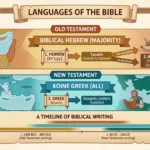
Bible History: A Simple Timeline
The story becomes much easier when you see it as a timeline.
8th–7th century BCE: Some scholars place the writing of the earliest biblical texts in this broad period.
3rd century BCE–1st century CE: The Dead Sea Scrolls and related Qumran manuscripts were produced. They include biblical texts.
Around 125 BCE: The Great Isaiah Scroll was copied. It contains the complete Book of Isaiah and is one of the oldest known biblical manuscripts.
50–125 CE: Most New Testament writings were likely composed during this broad period.
4th century CE: Major complete Christian Bible manuscripts, such as Codex Sinaiticus, appear. The New Testament canon was also taking its recognizable form.
Medieval period: Hebrew Bible manuscripts continued to be copied and preserved. The Leningrad Codex, dated to 1009 CE, is the oldest complete manuscript of the Masoretic Text that survives today.
Quick Reference: How Old Is the Bible?
| What you mean | Simple answer |
| Earliest written biblical material | Roughly 2,700–2,900 years old, based on common scholarly dating |
| Old Testament/Hebrew Bible | Developed over many centuries |
| New Testament | Roughly 1,900–1,975 years old for its earliest-to-latest likely writings |
| Great Isaiah Scroll | About 2,150 years old |
| Complete early Christian Bible manuscript | More than 1,600 years old |
| Bible as a recognized collection | Developed gradually over time |
The most honest answer is therefore not one number. The Bible has layers of history, and each layer has its own date.
Why Does the Bible’s Age Matter?
Knowing the Bible’s age can help you read it with greater care.
First, it shows how much history stands behind the text. These writings come from ancient Jewish and Christian communities.
Second, manuscript discoveries let us compare ancient copies with later biblical traditions.
Third, knowing the timeline helps prevent false claims. You do not have to choose between “the Bible was written yesterday” and “the entire Bible appeared thousands of years ago as one finished book.” Neither statement explains the full history.
The real story is richer.
FAQs:
1. How old is the Bible in years?
There is no single number. Some biblical writings were likely written down around the 8th or 7th century BCE, while most New Testament writings date from about 50–125 CE. That means the Bible’s written history spans roughly 1,900 to 2,900 years, depending on which texts you mean.
2. How old is the Old Testament?
The Old Testament developed over many centuries. Some scholars date the earliest biblical texts to the 8th or 7th century BCE. This makes the earliest written material roughly 2,700–2,900 years old today.
3. How old is the New Testament?
Most New Testament books were likely written between about 50 and 125 CE. In 2026, that puts their age at roughly 1,900–1,975 years. Exact dates for individual books remain uncertain.
4. What is the oldest Bible manuscript?
The answer depends on what you count as a “Bible manuscript.” The Dead Sea Scrolls contain some of the oldest surviving biblical manuscripts. The Great Isaiah Scroll, dated to around 125 BCE, is the oldest known manuscript of a complete biblical book.
5. Is the Bible older than the Dead Sea Scrolls?
Yes. The Dead Sea Scrolls are ancient surviving manuscripts, not the date when biblical books were first created. Some biblical texts existed before the scrolls were copied. The scrolls give us early physical evidence of those texts.
6. When was the complete Bible written?
There was no single moment when the complete Bible was written. Its individual books were produced over centuries.
7. Is the Bible 2,000 or 3,000 years old?
Both numbers can make sense, depending on what you are measuring. Some early biblical writings may be around 2,700–2,900 years old, while the New Testament is about 1,900–2,000 years old.
Conclusion:
So, how old is the Bible? The best answer is that its history spans many centuries. Some biblical writings may go back about 2,700–2,900 years, while the New Testament writings are about 1,900–2,000 years old.
The oldest surviving biblical manuscripts, such as the Great Isaiah Scroll, are more than 2,000 years old.
The most important lesson is to separate the age of a text, a manuscript, and the biblical canon. Each tells a different part of the story.
If you want to study Bible history further, start with manuscript evidence such as the Dead Sea Scrolls, then compare it with the history of the biblical canon. That gives you a much clearer and more balanced view of this ancient collection.

I am Samuel Brooks, a Christian author who enjoys breaking down complex Bible concepts into simple truths. At Biblicaltribez.com, I write content that inspires faith, hope, and spiritual growth. I aim to help readers connect Scripture with real life challenges in a meaningful way.