Skip to content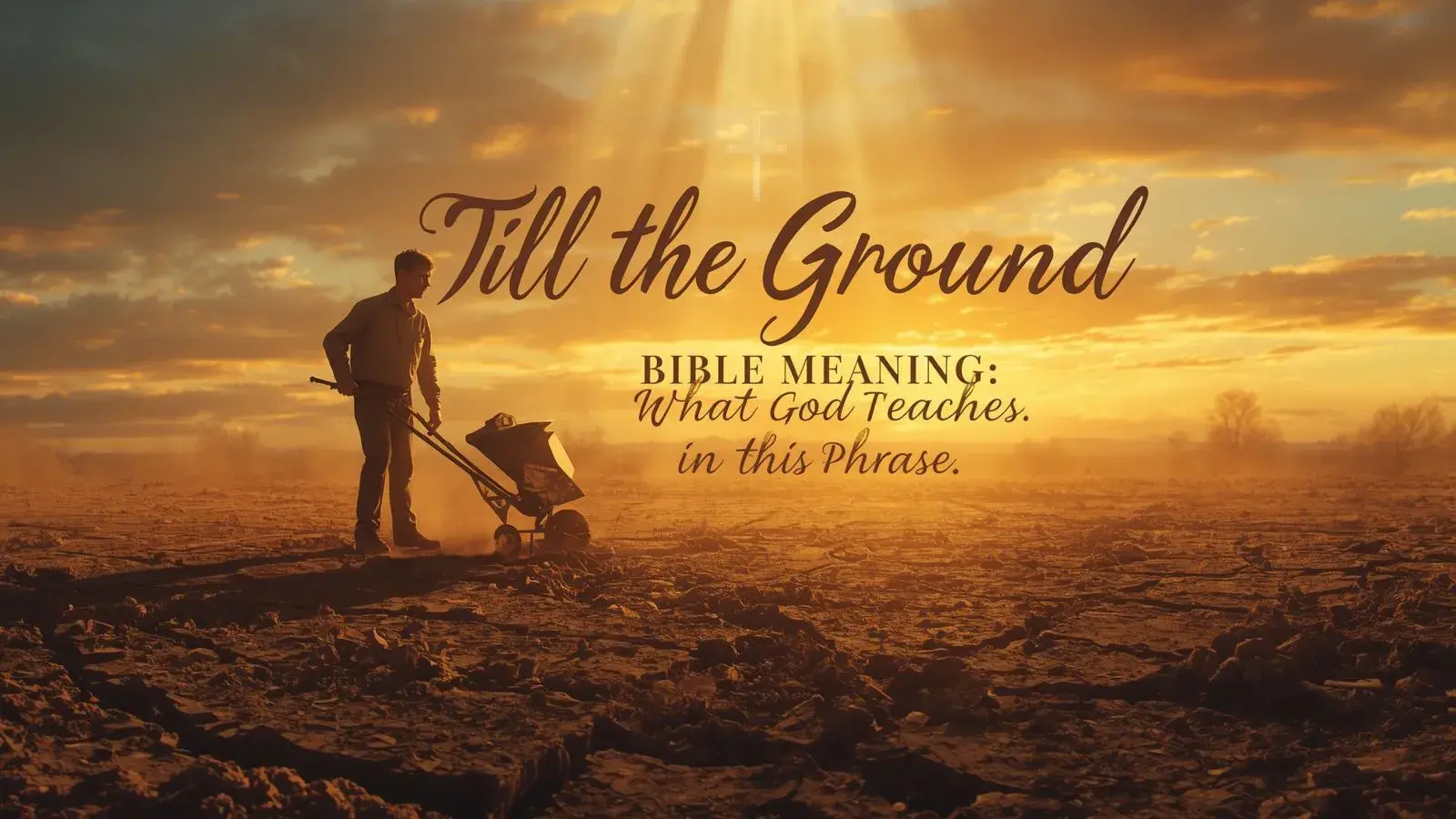
One day, you may notice someone working hard in a field. The soil is dry. The sun is hot. Yet they keep going, breaking the ground again and again.
It may look simple, but it feels powerful. You pause and wonder, what does “till the ground” really mean in the Bible?
In Scripture, this image appears many times. It speaks of effort, patience, and change. It is not just about farming, and its is about the heart, faith, and spiritual growth.
Maybe you saw this in a dream. Maybe you read it in the Bible. Or maybe you feel like your life right now is like hard soil being turned over. You may ask, “Is God trying to tell me something?”
The truth is, the act to till the ground carries a deep spiritual message. It shows how God prepares us, shapes us, and helps us grow.
Let’s explore the ground Bible meaning and discover what God may be saying to your heart.
Biblical Meaning of Till the Ground

In the Bible, to till the ground means to work the soil so it can bring life. But beyond farming, it shows how God works on us.
In Genesis 2:15, God placed man in the garden “to work it and take care of it.” This shows that work is part of God’s plan. It is not punishment. It has a purpose.
Later, in Genesis 3:23, after sin entered the world, man was sent to till the ground again but now with struggle. This teaches us that life may be hard, but God still uses it for growth.
A Symbol of the Heart
The ground often represents the human heart in biblical symbolism. When the ground is hard, seeds cannot grow. In the same way, when our hearts are closed, we cannot receive God’s word.
In Hosea 10:12, it says:
“Break up your fallow ground, for it is time to seek the Lord.”
This verse is powerful. It means:
- Let go of pride
- Open your heart
- Prepare for God’s truth
God wants to soften our hearts so His word can grow inside us.
A Sign of Preparation
Tilling the ground always comes before growth. You cannot plant seeds in hard soil.
Spiritually, this means:
- God may be preparing you for something new
- You may go through a season of change
- Old habits may need to be removed
This process can feel uncomfortable. But it is part of God’s plan.
A Warning Message
Sometimes, the image of tilling also brings a warning. If the ground is ignored, it becomes dry and useless.
In Proverbs 24:30-31, a neglected field is full of thorns. This shows what happens when we ignore our spiritual life.
So, the message can also be:
- Do not neglect your faith
- Stay close to God
- Keep your heart ready
A Message of Hope
Even hard ground can become fertile again. This is the beauty of God’s grace.
No matter your past, God can:
- Renew your heart
- Restore your faith
- Bring new life
The till the ground Bible meaning reminds us that God never gives up on us.
Till the ground bible verse

The Bible uses the idea of “till the ground” to describe working, cultivating, and caring for the land. One of the clearest examples is found in Genesis. After God created Adam, He placed him in the Garden of Eden and gave him work to do. This shows that work was part of God’s original plan for humanity.
Genesis 2:15 says:
“And the LORD God took the man, and put him into the garden of Eden to dress it and to keep it.” Genesis 2:15 (KJV)
The idea of tilling the ground also appears after Adam and Eve sinned. In Genesis 3:23, Adam was sent out of Eden to till the ground from which he was taken.
Key biblical ideas include:
- Working the land.
- Caring for what God created.
- Providing food through honest work.
- Recognizing humanity’s responsibility toward creation.
- Understanding work as part of human responsibility.
Genesis 3:17 also explains that the ground became difficult to work because of sin:
“Cursed is the ground for thy sake; in sorrow shalt thou eat of it all the days of thy life.”
Thus, “till the ground” can describe both human responsibility and the hardship of agricultural work after the Fall.
genesis 2:15
Genesis 2:15 is one of the main Bible verses connected with the idea of tilling or working the ground. It says:
“And the LORD God took the man, and put him into the garden of Eden to dress it and to keep it.”
The verse shows that God did not create Adam simply to live without responsibility. God gave him a task: to dress and keep the garden.
In simple terms, Adam was expected to work in the garden and take care of it. This gives an important biblical view of work: work existed before sin entered the world.
The verse teaches several principles:
- God gives people responsibilities.
- Work can be part of God’s purpose.
- Creation should be cared for rather than abused.
- Human beings have a role in cultivating what God provides.
- Work itself is not a punishment.
The difficult nature of work came after the Fall. Genesis 3:17–19 describes the pain, sweat, and struggle that would become part of human labor.
Frivolity meaning in the bible
Frivolity means a lack of seriousness or treating important things as if they have little value. It can describe foolish, careless, or empty behavior.
The exact English word “frivolity” is not a major biblical term in most translations. However, the Bible often warns against foolish talk, empty words, vain behavior, and careless living.
For example, Ecclesiastes repeatedly discusses the emptiness of things that have no lasting value:
“Vanity of vanities, saith the Preacher, vanity of vanities; all is vanity.” Ecclesiastes 1:2 (KJV)
The Bible also teaches believers to be careful with their words:
“But I say unto you, That every idle word that men shall speak, they shall give account thereof in the day of judgment.” Matthew 12:36 (KJV)
From a biblical perspective, frivolity can therefore refer to behavior that is empty, careless, foolish, or lacking proper seriousness, especially when it distracts someone from wisdom and godly living.
This does not mean the Bible teaches that believers can never enjoy life, laugh, or have fun. Scripture also speaks about joy and gladness.
The concern is when entertainment, foolishness, or empty behavior becomes more important than God, wisdom, and righteous living.
What does it mean to till the ground in the Bible?
To till the ground in the Bible means to work, cultivate, prepare, and care for the soil so that it can produce crops.
The concept appears clearly in Genesis. God placed Adam in Eden and gave him responsibility for the garden. Later, after Adam’s sin, he had to work the ground outside Eden.
Genesis 3:23 says:
“Therefore the LORD God sent him forth from the garden of Eden, to till the ground from whence he was taken.”
The phrase has a literal agricultural meaning, but it can also help us understand broader biblical themes about work, responsibility, provision, and stewardship.
Biblically, tilling the ground involves:
- Preparing the soil.
- Planting and growing crops.
- Working to produce food.
- Caring for the land.
- Accepting the responsibility God gives.
- Working despite difficulty.
The Bible often connects farming with spiritual lessons too. Jesus used farming and planting as illustrations of God’s kingdom, such as in the Parable of the Sower in Matthew 13.
What does till mean in the Bible?
In the Bible, “till” usually means to work, cultivate, or labor on the land.
For example, when Scripture says someone was sent to “till the ground,” it means that person was expected to work the soil and cultivate it.
The word does not mean “until” in this context. Instead, “till” is an old English verb meaning to cultivate or work the earth.
A simple definition is:
Till = to prepare and work the soil for growing plants or crops.
This meaning fits the context of Genesis:
“…to till the ground from whence he was taken.” Genesis 3:23 (KJV)
The Bible therefore presents tilling as physical work connected with human responsibility and food production.
What does ground mean in the Bible?
The word “ground” in the Bible can have several meanings depending on the passage. In the context of “till the ground,” it means the soil or earth that people cultivate for crops.
Genesis connects the ground with Adam’s creation:
“And the LORD God formed man of the dust of the ground…” Genesis 2:7 (KJV)
This creates an important connection between humanity and the earth. Adam was formed from the dust of the ground, and he was later given responsibility to work the ground.
The Bible can use “ground” in different ways:
- Soil: Land used for growing plants.
- Earth: The physical land God created.
- Land: A particular area or territory.
- Dust: The material from which Adam was formed.
- Symbolic ground: In some passages, soil can represent people’s hearts or their response to God’s Word.
For example, Jesus uses different kinds of soil in the Parable of the Sower to teach about how people respond to God’s Word (Matthew 13:3–23).
What does the phrase “till the ground” mean?
The phrase “till the ground” means to work and cultivate the soil, usually so that crops can grow.
In the biblical context, the phrase is especially important in Genesis. Adam was given responsibility to work the garden, and after the Fall, he was sent out to work the ground from which he had been formed.
Genesis 3:23 says:
“Therefore the LORD God sent him forth from the garden of Eden, to till the ground from whence he was taken.”
The phrase can therefore be understood in two ways:
Literal meaning:
- Work the soil.
- Prepare the land.
- Grow crops.
- Produce food through labor.
Biblical significance:
- Human beings have responsibilities.
- Work is connected with God’s created order.
- Sin brought greater difficulty into human labor.
- People depend on God’s provision while working faithfully.
The phrase reminds readers that humanity was created to work and care for God’s creation.
In the hands of those who till meaning
In a biblical context, “those who till” refers to people who work the soil, cultivate land, and prepare it to produce crops. To “till” means to break up and work the ground so that it can be planted. In the Bible, farming often gives a picture of human work, responsibility, and dependence on God.
The idea also connects with the responsibility God gave humanity to care for the earth. Adam was placed in the Garden of Eden to work and keep it.
“And the LORD God took the man, and put him into the garden of Eden to dress it and to keep it.”
Genesis 2:15
The phrase “in the hands of those who till” can therefore suggest that land or soil is entrusted to people who cultivate it.
- Till = work or cultivate the soil.
- Those who till = farmers or people who work the land.
- Biblical idea = human beings work the ground, but God ultimately gives growth and blessing.
The Bible reminds us that human work and God’s provision work together. A person may plant and cultivate, but God is the one who ultimately brings growth.
“I have planted, Apollos watered; but God gave the increase.”
1 Corinthians 3:6
Till the ground meaning in the bible
“Till the ground” means to work, cultivate, or prepare the soil for growing plants. This phrase is especially important in Genesis because it describes humanity’s relationship with the ground after the fall.
Before the fall, Adam was given work in the Garden of Eden. After Adam sinned, God told him that the ground would become difficult to work.
“And the LORD God sent him forth from the garden of Eden, to till the ground from whence he was taken.”
Genesis 3:23
This verse connects tilling the ground with human labor. Adam came from the ground, and after sin entered the world, he would have to work the ground to obtain food.
Genesis 3:17 gives more detail:
“Cursed is the ground for thy sake; in sorrow shalt thou eat of it all the days of thy life.”
So, biblically, “till the ground” can refer to:
- Cultivating soil.
- Growing food.
- Working through physical labor.
- Fulfilling a responsibility given by God.
- Depending on God for the fruit of one’s labor.
The phrase is therefore both literal and symbolic. Literally, it means farming. Symbolically, it can remind us of work, responsibility, and humanity’s dependence upon God.
Till meaning in the bible
In the Bible, “till” usually means to cultivate, work, or prepare the ground. It does not have the modern meaning of “until” when it appears in expressions such as “till the ground.”
For example, Genesis 2:5 says:
“…and there was not a man to till the ground.”
Here, “till” means to work or cultivate the ground.
The word describes agricultural labor. A person tills the soil by breaking it up, preparing it, and caring for it so crops can grow.
Biblical meanings of till can include:
- To cultivate the soil.
- To work the land.
- To prepare the earth for planting.
- To labor in agriculture.
- To care for cultivated land.
The larger biblical lesson is that work itself is not presented as something meaningless. God gave Adam work even before sin entered the world.
“And the LORD God took the man, and put him into the garden of Eden to dress it and to keep it.”
Genesis 2:15
What does till the ground mean
“Till the ground” means to work and cultivate the soil so that it can produce crops. In biblical language, it describes agricultural work such as preparing the earth, planting, and caring for what grows from it.
The phrase becomes especially important in the story of Adam. After Adam and Eve sinned, God sent Adam out of Eden, and Adam was required to work the ground from which he had been taken.
“Therefore the LORD God sent him forth from the garden of Eden, to till the ground from whence he was taken.”
Genesis 3:23
There is also an important connection between the ground and humanity. The name Adam is related to the Hebrew word for ground or earth, and Genesis emphasizes that human beings were formed from dust.
“And the LORD God formed man of the dust of the ground…”
Genesis 2:7
Therefore, “till the ground” can be understood as:
- Working the soil.
- Cultivating land for food.
- Performing agricultural labor.
- Caring for God’s creation.
- Experiencing the labor associated with life after the fall.
Till the land
“Till the land” means to cultivate and work the soil. A farmer tills land to make it ready for planting and production.
The Bible frequently presents land as important to human life. People planted crops, harvested food, cared for vineyards, and worked fields.
One clear example comes from Proverbs:
“He that tilleth his land shall be satisfied with bread…”
Proverbs 12:11
This verse connects diligent work with provision. The basic idea is that a person who faithfully works his land can expect to benefit from his labor.
The phrase can therefore carry these ideas:
- Working farmland.
- Preparing soil for crops.
- Being diligent.
- Providing food.
- Receiving the fruit of one’s labor.
It can also point to a broader biblical principle: faithful work matters.
Til the ground
“Til the ground” is a shortened or informal spelling of “till the ground.” In biblical wording, the standard expression is “till the ground.”
The meaning remains the same: to work, cultivate, or prepare the soil for growing crops.
Genesis provides the clearest biblical context:
“…to till the ground from whence he was taken.”
Genesis 3:23
So, if someone searches for “til the ground,” they are generally looking for the meaning of “till the ground.”
In simple terms:
- Til the ground → informal spelling.
- Till the ground → standard spelling.
- Biblical meaning → cultivate or work the soil.
Till the land meaning
“Till the land” means to work and cultivate land so it can produce crops. The phrase describes the practical work of farming.
This idea fits the Bible’s teaching about diligence and productive labor. Proverbs says:
“He that tilleth his land shall be satisfied with bread…”
Proverbs 12:11
The verse shows that working the land was closely connected with obtaining food and meeting physical needs.
From a biblical perspective, tilling land can represent:
- Labor doing the work required.
- Diligence continuing to work faithfully.
- Provision producing food for life.
- Stewardship caring for what God has entrusted to people.
- Dependence on God recognizing that human work alone does not control the final harvest.
The Bible often uses farming as a picture of spiritual truth as well. Jesus used seeds, fields, harvests, and workers to explain God’s kingdom.
There was not a man to till the ground meaning
“There was not a man to till the ground” means that no human being was yet present to work and cultivate the earth. This phrase appears in Genesis 2:5, before the creation of Adam.
Genesis says:
“And every plant of the field before it was in the earth, and every herb of the field before it grew: for the LORD God had not caused it to rain upon the earth, and there was not a man to till the ground.”
Genesis 2:5
This verse describes the condition of the earth before Adam was created. The text gives several details:
- The plants of the field had not yet appeared in their developed form.
- Rain had not yet been sent upon the earth.
- There was no human being to cultivate the ground.
- Adam had not yet been formed.
- God was preparing the setting for humanity.
Soon afterward, God created man:
“And the LORD God formed man of the dust of the ground…”
Genesis 2:7
This creates an important connection: the man was formed from the ground, and he was later given responsibility to work the ground.
The idea becomes even clearer in Genesis 2:15:
“And the LORD God took the man, and put him into the garden of Eden to dress it and to keep it.”
So “there was not a man to till the ground” does not mean that God was unable to make plants grow. Rather, Genesis is describing the world before the human being who would cultivate and care for the ground had been created.
Main biblical idea
The phrase teaches an important pattern found throughout Genesis:
God creates → God provides → humanity receives responsibility → humanity works within God’s creation.
This is why the Bible can speak positively about honest work while also teaching that God is ultimately the source of life and growth.
“Except the LORD build the house, they labour in vain that build it…”
Psalm 127:1
And regarding the work of planting and watering:
“So then neither is he that planteth any thing, neither he that watereth; but God that giveth the increase.”
1 Corinthians 3:7
To till the ground meaning
“To till the ground” means to work and cultivate the soil so that it can produce crops.
In biblical times, farming was a major part of daily life. Tilling the ground could involve preparing the soil, planting seeds, removing weeds, and caring for crops.
Genesis gives this phrase a deeper biblical setting. God placed Adam in Eden to care for the garden (Genesis 2:15). After the Fall, Adam’s relationship with the ground became much harder because of the curse described in Genesis 3.
Genesis 3:19 says:
“In the sweat of thy face shalt thou eat bread, till thou return unto the ground…” Genesis 3:19 (KJV)
So, from a biblical perspective, to till the ground means to labor with the earth to produce food, while also reflecting the larger biblical themes of work, responsibility, provision, and the effects of sin.
Till the ground meaning
The “till the ground meaning” is simply to cultivate, work, or prepare the soil for planting and growing crops.
The phrase has a strong connection to Genesis. God gave Adam work in the Garden of Eden, showing that productive work existed before humanity’s Fall.
After Adam sinned, however, the ground became difficult to cultivate:
“Thorns also and thistles shall it bring forth to thee…” Genesis 3:18 (KJV)
This shows why the phrase can carry an important biblical lesson. Working the ground is not presented as evil. Instead, the struggle and pain connected with work are associated with the consequences of sin.
Spiritual Significance and Symbolism
Spiritually, tilling the ground is about inner transformation.
Think of your life like a field. Sometimes, it feels messy. Sometimes, it feels empty. But God is always working beneath the surface.
Breaking the Hardness
When life feels difficult, it may be God breaking hard areas in your heart.
For example:
- You may face challenges that test your patience
- You may feel pushed to grow
- You may need to forgive someone
These moments are like plowing the soil.
Planting New Seeds
After the ground is ready, God plants new things:
- Faith
- Hope
- Love
Through prayer and trust, these seeds grow.
Everyday Connection
In daily life, this may look like:
- Taking time to pray even when busy
- Letting go of anger
- Choosing kindness
These small actions are part of your spiritual field being prepared.
The spiritual symbolism here is clear:
God prepares before He blesses.
Biblical Interpretations in Dreams or Real Life
If you dream about tilling the ground, it often carries a strong spiritual message.
Positive Meaning
If the ground is soft and easy to work:
- God is preparing you for blessings
- You are ready for growth
- Your faith is strong
This is a sign of peace and readiness.
Challenging Meaning
If the ground is hard or full of stones:
- You may be resisting change
- Your heart may need healing
- God is calling you to seek Him more
This is not negative, it is an invitation to grow.
Real-Life Meaning
In real life, feeling like you are “tilling the ground” may mean:
- You are in a season of effort
- You are building something slowly
- God is shaping your future
Even if progress feels slow, God is working.
Practical Lessons & Faith Insights
The till the ground Bible meaning teaches simple but powerful truths:
- Be patient growth takes time
- Stay faithful God sees your effort
- Open your heart let God work in you
- Trust the process even hard seasons have purpose
Keep praying. Keep believing. Your harvest will come.
Conclusion:
The phrase“till the ground” in the Bible reflects more than physical labor; it symbolizes obedience, responsibility, and a partnership with God’s creation. It reminds believers that work has purpose and dignity when done faithfully.
Spiritually, it points to cultivating the heart, removing what is unfruitful and nurturing what brings growth.
Ultimately, this meaning encourages a life of diligence, stewardship, and readiness to bear good fruit in alignment with God’s will.

I am Joseph Parker, a devoted Bible content writer dedicated to sharing God’s Word with clarity and purpose.
Through Biblicaltribez.com, I create inspirational and scripture-centered articles that strengthen faith.
My goal is to guide readers into a deeper understanding of biblical teachings and Christian living.