Skip to content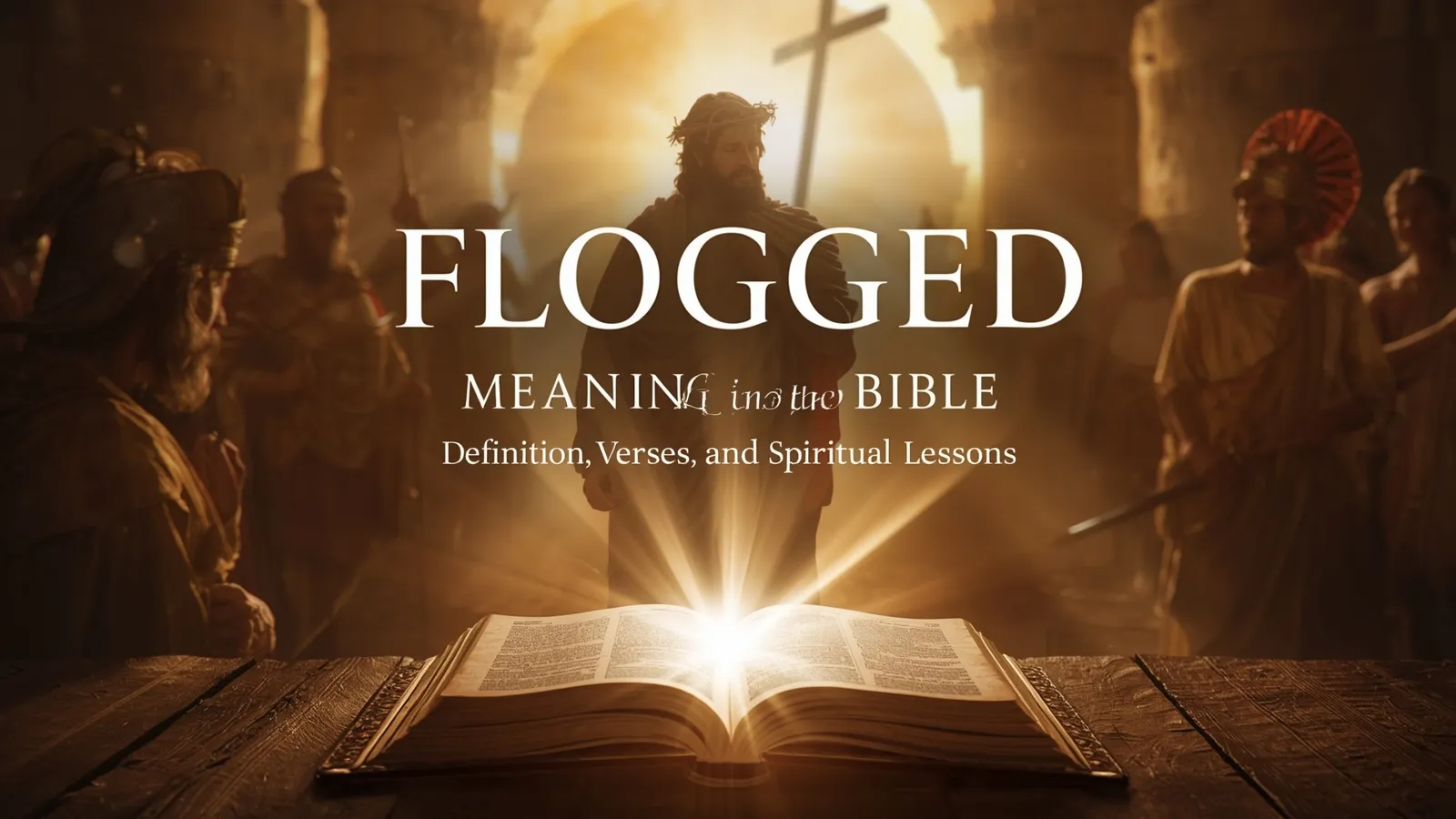
Have you ever read a Bible verse where someone was flogged and wondered what it really meant? The word sounds painful and heavy.
It brings to mind suffering, tears, and deep sorrow. Many people come across this word while reading about Jesus before the crucifixion. Others may hear it during church or while studying Bible stories.
In Bible times, flogging was a harsh punishment. A person would be beaten with a whip. It caused pain, shame, and weakness. But in the Bible, this act was not only physical. It also carried a deep spiritual message.
When Jesus was flogged, it showed the weight of human sin and the depth of God’s love. His suffering became a symbol of sacrifice, mercy, and redemption. For many Christians, this painful moment brings both sadness and hope.
Sometimes people also dream about violence, punishment, or suffering and wonder if it has a biblical meaning. They may ask God for understanding and comfort. The Bible helps believers see that even painful moments can carry a message of faith and transformation.
So, what is the true Flogged Meaning in the Bible? Let us explore its biblical symbolism, spiritual meaning, and the lessons it teaches believers today.
Flogged Definition bible
In the Bible, “flogged” means being beaten severely with a whip or similar instrument as a form of punishment. Flogging was a painful physical punishment used in the ancient world. In the New Testament, Jesus was flogged before His crucifixion.
The Roman governor Pilate ordered Jesus to be flogged even though he repeatedly found no basis for condemning Him.
The Bible presents Jesus’ suffering as part of His path to the cross and connects His wounds with the suffering He endured for others.
“Then Pilate took Jesus and had him flogged.” : John 19:1 (NIV)
The word can therefore describe a person being beaten with a whip as punishment, especially in passages about Jesus’ Passion.
- Flogged: Beaten with a whip.
- Flogging: The act or punishment of beating someone with a whip.
- Biblical context: Often connected with punishment, suffering, and persecution.
- Jesus’ flogging: Occurred shortly before His crucifixion.
What does flogged mean in the bible
“Flogged” in the Bible means beaten with a whip as a punishment. The practice could cause severe pain and physical injury. In the New Testament, flogging is especially important because Jesus was flogged before He was crucified.
Jesus warned His disciples that He would suffer this kind of treatment. For example, Jesus told His disciples that He would be mocked, beaten, and killed.
“They will flog him and kill him.” : Luke 18:33 (NIV)
Flogging was not simply a light beating. It was a harsh punishment that showed the seriousness of the suffering being inflicted on a person.
The Bible also records that the apostles and other followers of Christ faced physical punishment. Paul, for example, experienced beatings because of his preaching.
- Flogging means severe whipping or beating.
- It was used as a form of punishment.
- Jesus was flogged before His crucifixion.
- Some early Christians also experienced physical punishment for their faith.
- The suffering of Christ is central to the Christian understanding of His sacrifice.
Flogging bible
Flogging in the Bible refers to the practice of beating someone with a whip or rod as punishment. It appears in both the Old and New Testaments in different forms. Biblical law placed limits on corporal punishment, while Roman authorities later used flogging as a brutal form of punishment.
One important Old Testament passage says that a guilty person could be beaten, but the punishment was not supposed to become excessive.
“He may be flogged with forty lashes, but no more.” : Deuteronomy 25:3 (NIV)
This shows that biblical law recognized physical punishment while also establishing a limit. The purpose was not to allow unlimited violence.
In the New Testament, Jesus’ flogging is one of the most significant examples.
“Then Pilate took Jesus and had him flogged.” : John 19:1 (NIV)
The Bible therefore uses flogging in several contexts:
- Legal punishment: Deuteronomy describes limits on corporal punishment.
- Persecution: Followers of God could be beaten because of their faith.
- Jesus’ suffering: Christ was flogged before His crucifixion.
- Prophecy and suffering: Isaiah 53 describes the suffering Servant whose wounds are connected with healing.
“By his wounds we are healed.” : Isaiah 53:5 (NIV)
For Christians, Jesus’ flogging is part of the larger story of His suffering and sacrifice.
Flog bible meaning
The Bible meaning of “flog” is to beat or whip a person as punishment. When Scripture uses language related to flogging, it generally describes physical punishment or suffering.
A clear example appears when Jesus predicts His coming suffering:
“They will mock him and spit on him; they will flog him and kill him.” : Mark 10:34 (NIV)
Here, flogging is one part of the mistreatment Jesus would experience before His death.
The meaning can be understood simply:
- Flog: To beat someone with a whip.
- Flogged: Having been beaten or whipped.
- Flogging: The punishment or act of whipping.
- Biblical significance: It can represent suffering, punishment, persecution, and injustice.
Jesus’ experience gives the word particular importance in Christian teaching. He was not merely physically harmed; His suffering occurred as part of the events leading to His crucifixion.
Flog meaning in the bible
The flog meaning in the Bible is “to beat severely with a whip or similar instrument.” The exact method of flogging differed between cultures and historical periods, so the biblical passages should be understood within their historical context.
In the Old Testament, punishment by beating was regulated by law. Deuteronomy 25:2–3 describes a guilty person receiving lashes but warns against excessive punishment.
In the New Testament, Roman authorities used flogging in connection with punishment and execution. Jesus experienced this punishment before being crucified.
“Then Pilate took Jesus and had him flogged.” : John 19:1 (NIV)
The word therefore carries a strong sense of physical suffering in biblical passages.
From a Christian perspective, Jesus’ suffering also points to the seriousness of sin and the depth of His sacrificial love. Isaiah describes the suffering Servant in words Christians traditionally understand as pointing forward to Christ:
“He was pierced for our transgressions, he was crushed for our iniquities.” : Isaiah 53:5 (NIV)
Define flogged in the bible
To define “flogged” in the Bible simply means to be beaten with a whip as a punishment.
The word is commonly encountered when reading about Jesus’ final hours before the crucifixion. Pilate had Jesus flogged before handing Him over for crucifixion.
“Then Pilate took Jesus and had him flogged.” : John 19:1 (NIV)
The Bible also records Jesus telling His disciples beforehand that He would be flogged.
“They will mock him and spit on him; flog him and kill him.” : Mark 10:34 (NIV)
So, when you see “flogged” in a Bible passage, it generally means:
- Whipped or beaten severely
- Punished physically
- Subjected to painful corporal punishment
- In Jesus’ case, beaten before His crucifixion
It is important not to confuse “flogged” with ordinary discipline or a simple beating. In biblical passages, the word describes a serious and painful form of physical punishment.
Flogged in the bible meaning
The “flogged in the Bible” meaning is being severely beaten or whipped as punishment. The most important example is Jesus Christ, who was flogged before His crucifixion.
The Gospel accounts show that Jesus knew beforehand that He would suffer. He told His disciples that He would be handed over, mocked, beaten, and killed.
“They will mock him and spit on him; they will flog him and kill him.” : Mark 10:34 (NIV)
Later, Pilate ordered Jesus to be flogged:
“Then Pilate took Jesus and had him flogged.” : John 19:1 (NIV)
This suffering is significant in Christian theology because Jesus willingly endured suffering on the way to the cross. Isaiah 53 had already described the suffering Servant:
“He was wounded for our transgressions.” : Isaiah 53:5 (KJV)
What flogged means in simple words
- Flogged = whipped or severely beaten.
- It was used as a physical punishment.
- Jesus was flogged before His crucifixion.
- Biblical law placed limits on certain forms of corporal punishment.
- Jesus’ suffering is understood by Christians in connection with His sacrificial death.
- The passages about His wounds emphasize the depth of His suffering and His saving work.
Why was Jesus flogged?
Pilate ultimately ordered Jesus to be flogged even though the Gospel accounts portray him as finding no sufficient basis for a criminal conviction. John records Pilate saying:
“I find no basis for a charge against him.” : John 19:4 (NIV)
Yet Jesus was still subjected to flogging and then crucified. This makes His flogging an important part of the Passion narrative.
Biblical Meaning of Flogged in the Bible
The word flogged means to be severely beaten with a whip. In Bible times, this punishment was often used by Roman soldiers or leaders before execution or imprisonment. It was painful and humiliating.
One of the most important moments involving flogging in the Bible is the suffering of Jesus Christ.
Jesus Was Flogged Before the Crucifixion
The Bible says that Jesus was flogged before He was crucified.
“Then Pilate took Jesus and had him flogged.” John 19:1
This moment was heartbreaking. Jesus was innocent, yet He accepted suffering willingly. Christians believe this showed His great love for humanity.
The flogging of Jesus reminds believers that He carried pain so others could receive hope, forgiveness, and eternal life.
A Symbol of Sacrifice
In the Bible, flogging became a symbol of sacrifice. Jesus suffered physically, but His suffering also had a spiritual purpose. It fulfilled prophecy and showed God’s plan for salvation.
Isaiah spoke about this long before Jesus was born:
“By his wounds we are healed.” Isaiah 53:5
This verse gives comfort to many believers. It teaches that even through pain, God can bring healing and restoration.
Flogging as a Warning
In some Bible passages, flogging also represented correction or judgment. People who broke laws or rebelled against authority were punished publicly.
While harsh, these moments reminded people about obedience and repentance. Spiritually, they can point to the importance of turning back to God.
Hebrews 12:6 says:
“Because the Lord disciplines the one he loves.”
This does not mean God wants people to suffer without reason. Instead, the Bible teaches that correction can lead to growth, wisdom, and stronger faith.
The Pain of the Apostles
Jesus was not the only one who suffered flogging. Some apostles were also beaten because they preached the Gospel.
In Acts 5:40, the disciples were flogged for speaking about Jesus. Yet they continued sharing God’s message with courage.
This teaches Christians that faith may sometimes bring hardship, but God stays present during difficult times.
A Picture of Endurance
The biblical symbolism of flogging also connects with endurance. Jesus and His followers stayed faithful even through pain.
For believers today, this can mean trusting God during sickness, heartbreak, fear, or loss. Hard seasons do not mean God has abandoned His people. Often, they become moments of deeper faith and spiritual awakening.
Hope Through Suffering
The story of Jesus being flogged is painful, but it is also full of hope. Christians believe His suffering opened the way to salvation.
Because of this, many people see the flogging of Jesus as a reminder that God understands human pain. He sees suffering, hears prayers, and offers comfort.
Romans 8:18 says:
“Our present sufferings are not worth comparing with the glory that will be revealed in us.”
This verse encourages believers to hold onto faith, even during dark times.
Scourged meaning in the bible
In the Bible, scourged means being severely beaten or whipped as a form of punishment. Scourging was a painful Roman practice in which a person was struck repeatedly with a whip.
Jesus was scourged before His crucifixion. The suffering was part of the events leading to His death on the cross.
The Gospel accounts show that Pilate had Jesus scourged before handing Him over to be crucified.
Bible verse:
“Then Pilate therefore took Jesus, and scourged him.” : John 19:1 (KJV)
Biblically, Jesus’ scourging reminds Christians of the great physical suffering He willingly endured.
- Scourging was a form of severe physical punishment.
- Jesus was scourged before His crucifixion.
- His suffering was connected with His sacrificial death.
- Christians understand His suffering as part of His work of redemption.
Flogged synonym
The word flogged means beaten repeatedly with a whip or stick. In biblical and historical contexts, several words can express a similar idea.
Common synonyms include:
- Whipped
- Scourged
- Beaten
- Lashed
- Punished
- Struck
- Thrashed
The closest biblical synonym is often scourged, especially when describing severe whipping as a legal punishment.
For example, Jesus was scourged before His crucifixion:
“Then Pilate therefore took Jesus, and scourged him.” : John 19:1
The apostles also experienced physical punishment because they preached about Jesus.
“And when they had called the apostles, and beaten them, they commanded that they should not speak in the name of Jesus.” : Acts 5:40
Thus, flogged, whipped, and scourged can have similar meanings, although the exact punishment could vary according to the historical setting.
Beelzebul meaning in the bible
Beelzebul is a name associated with Satan or the ruler of demons in the New Testament. Religious leaders accused Jesus of casting out demons by the power of Beelzebul. Jesus rejected this accusation and explained that a kingdom divided against itself cannot stand.
“But when the Pharisees heard it, they said, This fellow doth not cast out devils, but by Beelzebub the prince of the devils.” : Matthew 12:24
Jesus answered that Satan would not fight against his own kingdom.
“If Satan cast out Satan, he is divided against himself; how shall then his kingdom stand?” : Matthew 12:26
The name appears in slightly different forms, including Beelzebub and Beelzebul, depending on the Bible translation.
Biblical meaning:
- Beelzebul is connected with the ruler of demons.
- Jesus’ enemies used the name when accusing Him.
- Jesus identified the accusation as false.
- His response emphasized His authority over demonic powers.
- The passage teaches that Jesus’ power was not from Satan but from God.
Flogged pronunciation
Flogged is pronounced with one syllable. The final -ed sounds like a t, because the word ends in the voiceless consonant sound /g/.
flogged
flogd
Practice in Voice
Give feedback
Flogged by a rooster
The phrase “flogged by a rooster” is not a biblical expression. A rooster does not flog Peter in the Bible.
This query may come from confusion between Peter’s denial of Jesus and the rooster that crowed afterward.
Jesus told Peter that he would deny Him three times before the rooster crowed.
“Before the cock crow, thou shalt deny me thrice.” : Matthew 26:34
Peter later denied knowing Jesus three times. After the third denial, the rooster crowed.
“And immediately the cock crew.” : Matthew 26:74
So, according to the Bible:
- Peter was not flogged by a rooster.
- The rooster crowed after Peter’s three denials.
- The rooster’s crow fulfilled Jesus’ prediction.
- Peter remembered Jesus’ words and wept bitterly.
“And he went out, and wept bitterly.” : Matthew 26:75
The rooster therefore became an important part of the story of Peter’s denial, not an instrument of punishment.
How were the apostles flogged
The apostles were physically punished because they preached Jesus and refused to stop proclaiming His message. In Acts 5, the Jewish religious authorities ordered the apostles to be beaten and then commanded them not to preach in Jesus’ name.
“And when they had called the apostles, and beaten them, they commanded that they should not speak in the name of Jesus.” : Acts 5:40
The Bible does not provide a detailed description of exactly what instrument was used for every beating of the apostles. Therefore, it is better not to claim details that Scripture does not give.
The apostles responded by continuing to preach.
“And daily in the temple, and in every house, they ceased not to teach and preach Jesus Christ.” : Acts 5:42
Their experience teaches several biblical principles:
- They suffered because of their testimony about Jesus.
- They were physically beaten.
- They were ordered to stop preaching.
- They continued proclaiming Christ.
- They considered suffering for Jesus an honor.
“And they departed from the presence of the council, rejoicing that they were counted worthy to suffer shame for his name.” : Acts 5:41
Synagogue meaning in the bible
A synagogue was a Jewish place of gathering, worship, teaching, prayer, and reading Scripture. The word comes from a term meaning an assembly or gathering.
Synagogues were important throughout the Jewish world during the time of Jesus and the apostles. Jesus regularly taught in synagogues.
“And he taught in their synagogues, being glorified of all.” : Luke 4:15
Jesus also read from the Scriptures in the synagogue at Nazareth.
“And he came to Nazareth, where he had been brought up: and, as his custom was, he went into the synagogue on the sabbath day.” : Luke 4:16
In the Bible, the synagogue was associated with:
- Teaching God’s Word
- Reading Scripture
- Prayer
- Community gathering
- Discussion of religious matters
- Jewish worship
The synagogue also became an important setting for the early Christian message because Paul and other missionaries often began preaching in synagogues.
Praetorium meaning in the bible
The praetorium was the official residence or headquarters associated with a Roman governor or military authority. In the story of Jesus’ trial, the praetorium was the place where Jesus was brought before the Roman authorities.
John records:
“Then led they Jesus from Caiaphas unto the hall of judgment: and it was early.” : John 18:28 (KJV)
The term translated as “hall of judgment” in this verse is connected with the praetorium.
Jesus was brought before Pilate, the Roman governor, and questioned about His kingship.
“Then Pilate entered into the judgment hall again, and called Jesus, and said unto him, Art thou the King of the Jews?” : John 18:33
The praetorium therefore represents an important part of the Passion narrative:
- Jesus was brought before Roman authority.
- Pilate questioned Him.
- Jesus was examined concerning His kingship.
- Jesus was ultimately sentenced to crucifixion.
- The soldiers mocked and abused Him there.
What did it mean to be flogged?
To be flogged meant to be repeatedly struck with a whip as physical punishment. Flogging could cause severe pain and injury.
In the biblical world, beating was sometimes used as a legal punishment. Deuteronomy established limits on corporal punishment under Israelite law:
“Forty stripes he may give him, and not exceed.” : Deuteronomy 25:3
Later Jewish practice traditionally became associated with a maximum of forty lashes, often understood through the wording of this passage.
The New Testament also records Jesus being scourged and the apostles being beaten.
Flogging therefore meant more than simply receiving a light beating. It was a serious form of physical punishment.
Biblical ideas connected with flogging include:
- Physical suffering
- Legal punishment
- Humiliation
- Persecution
- Suffering for one’s faith
- Jesus’ suffering before the cross
What was Jesus flogged with?
The Bible says that Jesus was scourged, but it does not give a detailed description of the exact whip used.
“Then Pilate therefore took Jesus, and scourged him.” : John 19:1
Historically, Roman soldiers used whips for scourging, and Roman scourging could be extremely brutal. However, we should distinguish between what Scripture explicitly says and later historical descriptions of Roman punishment.
The Bible clearly tells us:
- Jesus was scourged.
- Roman authority was involved in His punishment.
- The scourging occurred before crucifixion.
- Jesus was also mocked and beaten by soldiers.
Matthew records:
“And they stripped him, and put on him a scarlet robe.” : Matthew 27:28
And:
“And they spit upon him, and took the reed, and smote him on the head.” : Matthew 27:30
The exact construction of the whip is not described in the biblical text, so claims about a particular number of leather strands or metal pieces should not be presented as if they were directly stated in Scripture.
What does it mean to get flogged in the Bible?
To get flogged in the Bible means to receive repeated blows as punishment or persecution. Flogging appears in both Old Testament law and New Testament accounts of persecution.
Jesus experienced scourging before His crucifixion:
“Then Pilate therefore took Jesus, and scourged him.” : John 19:1
The apostles also suffered physical punishment because they preached Christ.
“And when they had called the apostles, and beaten them…” : Acts 5:40
Paul described some of his own suffering:
“Thrice was I beaten with rods, once was I stoned, thrice I suffered shipwreck…” : 2 Corinthians 11:25
From a biblical perspective, flogging can therefore represent:
- Punishment for wrongdoing
- Physical persecution
- Suffering for faith
- Humiliation and abuse
- The cost of faithfully following God’s calling
For Christians, Jesus’ suffering has special significance because His suffering was connected with His sacrificial death.
Isaiah prophesied:
“But he was wounded for our transgressions, he was bruised for our iniquities.” : Isaiah 53:5
Which generation will not pass away?
This question comes from Jesus’ teaching about the end times, especially His statement in Matthew 24.
Jesus said:
“Verily I say unto you, This generation shall not pass, till all these things be fulfilled.” : Matthew 24:34
This verse has been interpreted in several ways because the surrounding passage discusses the destruction of the temple, signs of the end, Christ’s coming, and final judgment.
Jesus had just described many events and then said that “this generation” would not pass away until “all these things” were fulfilled.
Some major interpretations understand “this generation” as referring to the people living during Jesus’ earthly ministry, particularly in connection with events leading to the destruction of Jerusalem and the temple in AD 70. Other Christian interpretations understand the phrase in relation to the generation that witnesses the end-time signs.
The key point is that Jesus immediately followed His statement with an emphasis on the certainty of His words:
“Heaven and earth shall pass away, but my words shall not pass away.” : Matthew 24:35
The passage also warns believers to remain watchful because the precise timing is not revealed:
“But of that day and hour knoweth no man, no, not the angels of heaven, but my Father only.” : Matthew 24:36
Spiritual Significance and Symbolism
The spiritual symbolism of flogging is deeply connected to sacrifice, humility, and transformation. It reminds believers that suffering can produce spiritual growth.
Jesus endured pain without hatred or revenge. He responded with love, mercy, and forgiveness. This teaches Christians to trust God even when life feels unfair.
Many believers also see flogging as a symbol of carrying life’s burdens with faith. A difficult season may feel painful, but it can strengthen a person’s relationship with God.
For example, someone facing loss or disappointment may begin praying more deeply. Another person may learn patience and compassion through hardship. These moments can lead to spiritual maturity.
Flogging in the Bible also points to the presence of God during suffering. Jesus was never alone, even in pain. In the same way, Christians believe God walks beside them during trials.
Prayer becomes important during these moments. Talking with God can bring peace, guidance, and emotional healing.
The Bible teaches that pain does not have the final word. God can bring beauty from brokenness and hope from sorrow.
Biblical Interpretations in Dreams or Real Life
Sometimes people dream about being beaten, punished, or suffering. These dreams can feel frightening and emotional. In dream interpretation, such images may symbolize spiritual struggle, guilt, fear, or emotional pain.
A dream about flogging could be a reminder to seek healing, forgiveness, or prayer. It may also reflect stress or inner conflict in daily life.
If the dream feels peaceful after the suffering ends, it may symbolize healing, renewal, or spiritual growth. But if the dream feels dark and fearful, it may point to anxiety, unresolved pain, or the need for God’s comfort.
In real life, believers may also connect the meaning of flogging with personal hardship. Difficult moments can become opportunities to lean closer to God.
Christians are encouraged not to live in fear. Instead, they should pray for wisdom and trust God’s guidance.
Philippians 4:6 reminds believers:
“Do not be anxious about anything, but in every situation, by prayer and petition, present your requests to God.”
Practical Lessons & Faith Insights
The flogged meaning in the Bible teaches believers to stay strong in faith during painful seasons. Jesus showed love even while suffering. His example encourages Christians to trust God through hardship.
Take time to pray, reflect, and seek God’s guidance. Even in difficult moments, God can bring healing, peace, and spiritual transformation.
Conclusion:
In the Bible, flogging was more than physical punishment. It showed suffering, injustice, discipline, and sacrifice.
Many people study the flogged meaning in the Bible to better understand the pain that figures like Jesus endured before the crucifixion.
These moments reveal human cruelty but also highlight faith, endurance, and forgiveness. The Bible uses flogging to teach important spiritual lessons about obedience, repentance, and redemption.
When readers explore these passages with care, they gain a deeper understanding of biblical history and God’s message of hope.
Learning the true meaning behind flogging can strengthen faith and bring greater clarity to difficult Bible stories.
Read More posts
- White Mushroom Dream Bible Meaning: Proper Explanation 2026
- Rapture in the Bible Meaning: What Christians Believe About It
- Ethan Bible Meaning: God’s Message Behind This Powerful Name

I am Joseph Parker, a devoted Bible content writer dedicated to sharing God’s Word with clarity and purpose.
Through Biblicaltribez.com, I create inspirational and scripture-centered articles that strengthen faith.
My goal is to guide readers into a deeper understanding of biblical teachings and Christian living.