Skip to content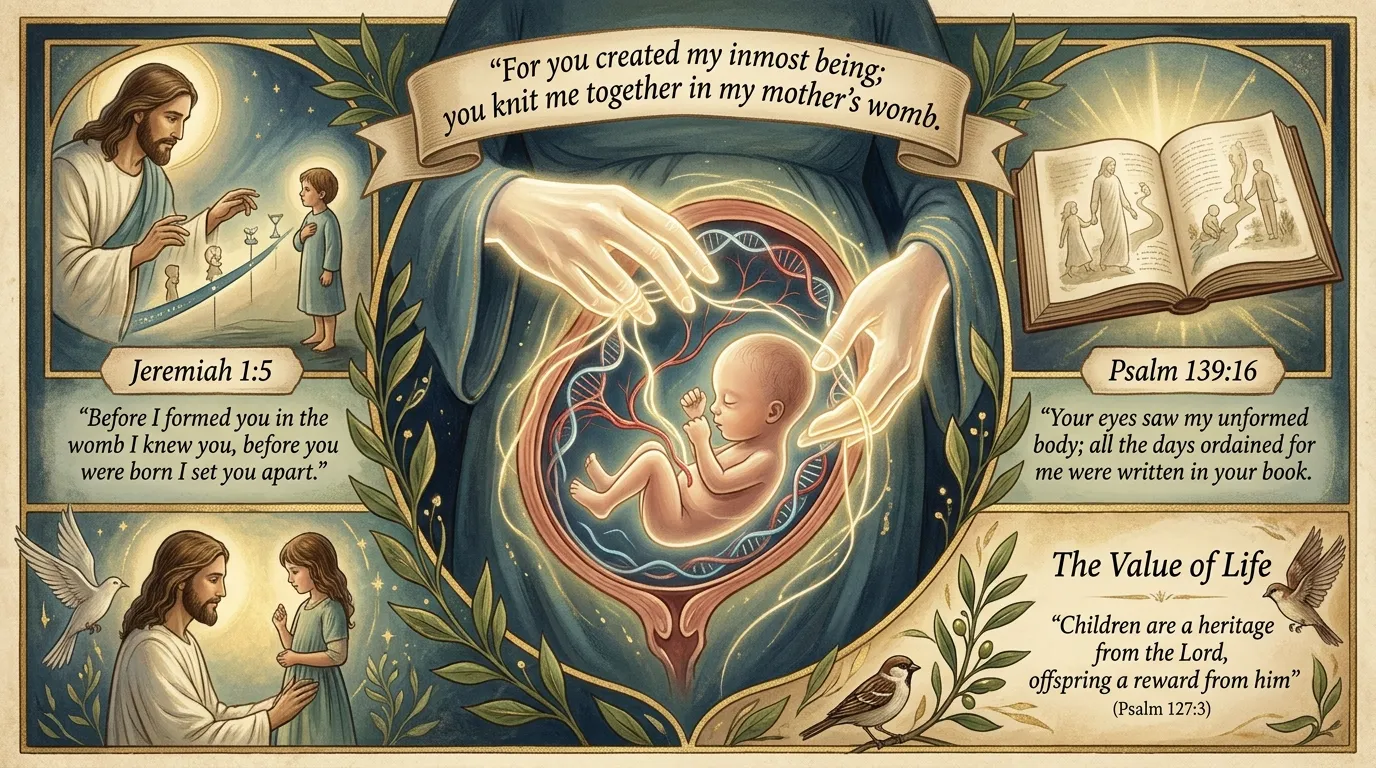
Abortion is one of the hardest and most emotional questions people may ask about the Bible. Christians may face this question because of a pregnancy, a family situation, a school discussion, or a desire to understand what Scripture teaches.
The Bible does not use the modern word abortion, but it does speak about human life, children, the womb, God’s knowledge of people before birth, and the value of every person.
Because of this, many Christians believe that Scripture teaches that unborn life has great value before God. At the same time, the Bible also calls believers to show mercy, love, patience, and care toward people facing painful choices.
This article looks at the main Bible verses about unborn life and explains what they mean in context. It also considers difficult situations and practical ways Christians can respond with both biblical truth and compassion.
Quick Answer: What Does the Bible Say About Abortion?
The Bible does not directly mention modern abortion practices or use the word abortion. However, Scripture strongly teaches that human life is valuable to God, including life in the womb.
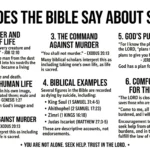
Several passages describe God knowing, forming, and calling people before birth. These include Psalm 139:13–16, Jeremiah 1:5, Luke 1:41–44, and Job 31:15.
Because of these teachings, many Christians conclude that intentionally ending an unborn human life is morally wrong. Still, Christians should discuss abortion with humility and compassion because real-life situations can involve fear, suffering, abuse, medical concerns, and difficult choices.
Does the Bible Say “Abortion” Is a Sin?
The Bible does not contain a verse that simply says, “Abortion is a sin.”
That is important to understand. We should not claim that Scripture says something in words that it does not actually use.
Instead, Christians look at the Bible’s wider teaching about human life, the unborn child, murder, creation, and God’s purpose for people.
The Bible teaches that human beings are made in the image of God.
“So God created mankind in his own image.” : Genesis 1:27
This gives human life a special value. Human worth does not depend on age, size, health, strength, or ability.
A person does not become valuable only after birth. Christians who oppose abortion often connect this truth with the Bible’s descriptions of life in the womb.
What Does the Bible Say About Life in the Womb?
One of the strongest biblical themes is that God knows and cares about people before birth.
Psalm 139:13–16
Psalm 139 gives a powerful picture of God’s knowledge of an unborn child.
David says:
“For you created my inner being; you knit me together in my mother’s womb.” : Psalm 139:13
The passage continues by describing God’s knowledge of David’s developing body.
The point is not to give a scientific description of pregnancy. Instead, David praises God because his life was never hidden from Him.
Psalm 139 teaches that God is present and active in the formation of human life.
For many Christians, this is an important reason to believe that unborn life has dignity and value.
Jeremiah 1:5 and God’s Knowledge Before Birth
Another important passage is Jeremiah 1:5.
God tells Jeremiah:
“Before I formed you in the womb I knew you, before you were born I set you apart.”
This verse speaks directly about Jeremiah’s calling as a prophet.
It does not mean that every person has the exact same prophetic calling as Jeremiah. We should respect the context.
However, the verse clearly shows that God knew Jeremiah before his birth. His life and purpose were not meaningless before he entered the world.
This supports a broader biblical view that life before birth matters to God.
What Does Psalm 139 Teach About an Unborn Baby?
Psalm 139 does more than mention the womb. It speaks about the person being formed there.
David uses personal language throughout the passage. He describes God’s work in his body while he was still in the womb.
The passage teaches several important truths:
- God knows us deeply.
- God is involved in human formation.
- Life in the womb is not outside God’s knowledge.
- Every human life has value before God.
- Human beings cannot hide from God’s presence.
This is why Psalm 139 is often used in Christian discussions about the value of unborn life.
Luke 1:41–44 and the Unborn Jesus
The New Testament gives another important example.
In Luke 1:41–44, Mary visits Elizabeth while both women are pregnant. Luke says that Elizabeth’s baby, John the Baptist, “leaped in her womb” when Elizabeth heard Mary’s greeting.
Elizabeth then says that the baby responded with joy.
This passage is important because John is still unborn, yet Luke describes him as a living child who responds to what is happening around him.
The passage also points to Jesus. Mary was carrying Jesus at the time.
This does not give a direct command about modern abortion. But it contributes to the New Testament’s positive picture of life before birth.
Job 31:15 and God as Creator
Job also speaks about life in the womb.
“Did not he who made me in the womb make them?” : Job 31:15
Job is speaking about the equal value of himself and his servants.
His argument is simple: the same God created both people.
The womb is part of God’s creative work. This gives us another biblical reason to treat human life with dignity.
What About Exodus 21:22–25?
One passage that often comes up in discussions about abortion is Exodus 21:22–25.
This passage describes a situation in which men fight and a pregnant woman is injured.
Different Christian traditions interpret the legal details of this passage in different ways. The Hebrew wording and the legal consequences have also received much discussion among biblical scholars.
Because of this, it is not wise to use Exodus 21 as a simple one-verse answer to every question about abortion.
Instead, it should be read within the laws of Exodus 21 and alongside the Bible’s wider teaching about human life.
Does the Bible Teach That Every Human Life Has Value?
Yes.
The Bible repeatedly gives human life special value because people are made in God’s image.
Genesis 1:26–27 teaches that God made humanity in His image.
Genesis 9:6 connects the value of human life with the image of God.
Jesus also taught His followers to love their neighbors.
“Love your neighbor as yourself.” : Mark 12:31
This means Christians should care about both truth and people.
A Christian response to abortion should never treat people as political arguments or statistics. Behind every pregnancy is a real person, and difficult situations can involve real fear and pain.
What Does the Bible Say About Unborn Children?
The Bible uses several passages that show God’s knowledge and care for children before birth.
These passages include:
- Psalm 139:13–16 : God forms and knows a person in the womb.
- Jeremiah 1:5 : God knows Jeremiah before birth.
- Job 31:15 : God is described as the One who forms people in the womb.
- Luke 1:41–44 : John responds while still in Elizabeth’s womb.
- Isaiah 49:1, 5 : Isaiah speaks of God’s calling from the womb.
- Galatians 1:15 : Paul describes God’s setting him apart from his mother’s womb.
Taken together, these passages create a strong biblical picture of God’s knowledge and purpose surrounding life before birth.
Does the Bible Consider an Unborn Child a Person?
The Bible does not give a modern medical definition of personhood.
Still, Scripture often speaks about unborn children in personal terms.
For example, Luke describes John the Baptist as a baby in the womb. Psalm 139 describes the unborn David in personal language. Jeremiah 1:5 speaks of Jeremiah as someone God knew before birth.
These passages do not answer every philosophical question about pregnancy. But they do show that biblical writers did not treat life in the womb as meaningless or outside God’s care.
What About Difficult Pregnancies?
This is where compassion becomes very important.
Some pregnancies involve serious medical problems. Others involve sexual violence, abuse, poverty, family pressure, or deep emotional pain.
The Bible calls Christians to care for people who are suffering.
“Carry each other’s burdens.” : Galatians 6:2
Christians should not respond to someone in crisis with shame or cruelty.
At the same time, compassion does not require Christians to ignore what they believe Scripture teaches about unborn life.
A faithful Christian response should seek both truth and mercy.
What If Someone Has Already Had an Abortion?
The Christian message is not that a person’s past mistake makes them worthless.
The Bible teaches forgiveness and restoration.
1 John 1:9 says:
“If we confess our sins, he is faithful and just and will forgive us our sins.”
Jesus repeatedly welcomed people who carried guilt and shame.
This does not mean that sin is unimportant. It means God’s grace is greater than our past.
Someone who has had an abortion and now feels regret, grief, or guilt does not need hatred. They need truth, forgiveness, prayer, and loving Christian support.
How Should Christians Talk About Abortion?
Christians should speak carefully.
It is possible to defend unborn life while still showing kindness to women and families. In fact, Scripture calls believers to love people while standing for what they believe is right.
Speak With Truth
Christians should not change biblical teaching simply because a topic is difficult.
If Scripture teaches that human life has value, Christians should be willing to say so.
Speak With Compassion
Jesus showed compassion to hurting people.
Christians should listen before judging. A person may be dealing with circumstances that others cannot see.
Offer Practical Help
Christian care should be more than words.
Churches and families can support pregnant women through:
- Prayer
- Food and basic needs
- Safe housing
- Childcare
- Emotional support
- Adoption resources
- Parenting support
- Financial help
- Friendship and community
This turns concern for life into practical love.
What Can Parents Teach Kids About Abortion?
Parents do not need to explain every adult detail to a young child.
They can start with simple biblical truths.
Teach children that:
- God made every person.
- Every human life has value.
- Babies grow inside their mothers.
- God knows us before we are born.
- We should treat people with kindness.
- Difficult topics should be discussed with truth and love.
As children grow older, parents can explain more about pregnancy, abortion, ethics, and different views.
The goal should not be fear. The goal should be helping children understand God’s view of human dignity.
What Can Teenagers Learn From the Bible About Abortion?
Teenagers may hear many different opinions at school, online, or through social media.
The best response is not simply to repeat someone else’s argument. Teens should learn how to study Scripture and think carefully.
A Christian teenager can ask:
- What does the Bible actually say?
- What does the passage mean in its context?
- What does Scripture teach about human life?
- How can I speak about this topic with grace?
- How can I support someone who is afraid or hurting?
Christian faith calls young people to seek wisdom, not just win arguments.
What Does Christianity Teach About Abortion?
Most historic Christian traditions have taught that unborn human life deserves protection.
However, Christians can differ in how they discuss difficult medical and ethical cases.
Some focus strongly on the protection of unborn life. Others give more attention to complex questions involving pregnancy, health, and moral responsibility.
Because Christian traditions can differ on particular applications, it is wise to study Scripture carefully and seek counsel from trusted pastors and mature Christians.
The central biblical principles remain important: human life has dignity, God knows people before birth, and Christians are called to love their neighbors.
How Should a Christian Respond to Someone Considering Abortion?
A Christian should begin by listening.
Do not assume you know everything about the person’s situation.
Ask how you can help. Pray with them if they are comfortable with prayer. Encourage them to seek qualified medical care and wise pastoral support when needed.
Christians can also offer practical alternatives and ongoing support.
The goal should be to protect life while caring for the person who is facing a difficult situation.
Prayer for Someone Facing an Unplanned Pregnancy
If you or someone you love is facing an unplanned pregnancy, prayer can be a place to begin.
You can pray:
“Lord, give us wisdom, courage, and peace. Help us make decisions that honor You and protect those who are vulnerable. Give strength to the mother, care to the child, and wisdom to the family. Lead us toward people who can provide honest guidance and practical help. Help us trust You in this difficult time. Amen.”
Prayer does not remove every hard decision. But Christians believe God hears His people when they call to Him.
5 Bible Verses to Remember About Life Before Birth
Here are five key passages to study:
1. Psalm 139:13–16
God knows and forms a person in the womb.
2. Jeremiah 1:5
God tells Jeremiah that He knew him before birth.
3. Luke 1:41–44
John the Baptist responds while still in Elizabeth’s womb.
4. Job 31:15
Job recognizes God as the One who formed people in the womb.
5. Genesis 1:26–27
Human beings are made in God’s image.
These verses should be read in their full context. Together, they help Christians understand the Bible’s strong emphasis on the value of human life.
FAQs:
1. Does the Bible directly mention abortion?
No. The modern word abortion does not appear in the Bible. Christians therefore study Scripture’s teachings about human life, the womb, creation, murder, compassion, and God’s knowledge of people before birth.
2. What Bible verse says life begins in the womb?
There is no single verse that uses the modern phrase “life begins in the womb.” However, Psalm 139:13–16 describes God forming and knowing David in his mother’s womb. Other passages, such as Luke 1:41–44, also speak about unborn children.
3. Does God forgive someone who had an abortion?
Yes. The Bible teaches that God forgives people who turn to Him in repentance and faith. 1 John 1:9 teaches that God is faithful to forgive confessed sin. Christians should respond with grace, truth, prayer, and support.
4. What does Psalm 139 say about abortion?
Psalm 139 does not directly discuss abortion. It describes God’s knowledge and work in the womb. Verses 13–16 show that David understood his life as known by God even before birth.
5. How should Christians respond to abortion?
Christians should seek to protect human life while showing compassion to people facing difficult pregnancies. They should use Scripture carefully, avoid shame and cruelty, pray for wisdom, and provide practical support where possible.
Conclusion:
So, what does the Bible say about abortion? Scripture does not directly use the modern word abortion, but it gives a strong picture of the value of human life.
The Bible describes God forming people in the womb, knowing them before birth, and caring about their lives. Passages such as Psalm 139:13–16, Jeremiah 1:5, Job 31:15, and Luke 1:41–44 are central to this understanding.
For many Christians, these teachings lead to the belief that unborn human life should be protected.
Yet biblical faith also calls believers to show mercy to people facing fear, grief, and difficult circumstances.
The Christian response should therefore hold truth and compassion together. We can value unborn life, care for mothers and families, offer practical help, and point people toward God’s grace and hope.

I am Samuel Brooks, a Christian author who enjoys breaking down complex Bible concepts into simple truths. At Biblicaltribez.com, I write content that inspires faith, hope, and spiritual growth. I aim to help readers connect Scripture with real life challenges in a meaningful way.