Skip to content
Have you ever seen a deep green stone called malachite and wondered if it has a special meaning in the Bible? Maybe you saw it in a dream. Maybe someone gave it to you as a gift. Or maybe you simply felt drawn to its rich green color and peaceful beauty.
Many people search for spiritual signs in the world around them. In the Bible, colors, stones, and natural things often carry deep meaning. They can remind us of God’s presence, hope, and faith during hard times.
Malachite is not directly named in most Bible translations. Still, many Christians connect this beautiful green stone with ideas found in Scripture.
Its green color can symbolize life, healing, growth, and renewal. These themes appear again and again in the Word of God.
Some people also believe malachite carries a spiritual message about change and protection. Others see it as a reminder to trust God during seasons of transformation.
So, what is the true malachite Bible meaning? And what can this stone teach us about faith and spiritual growth?
Let’s explore its biblical symbolism and spiritual message together.
Biblical Meaning of Malachite
A Symbol of Growth and New Life
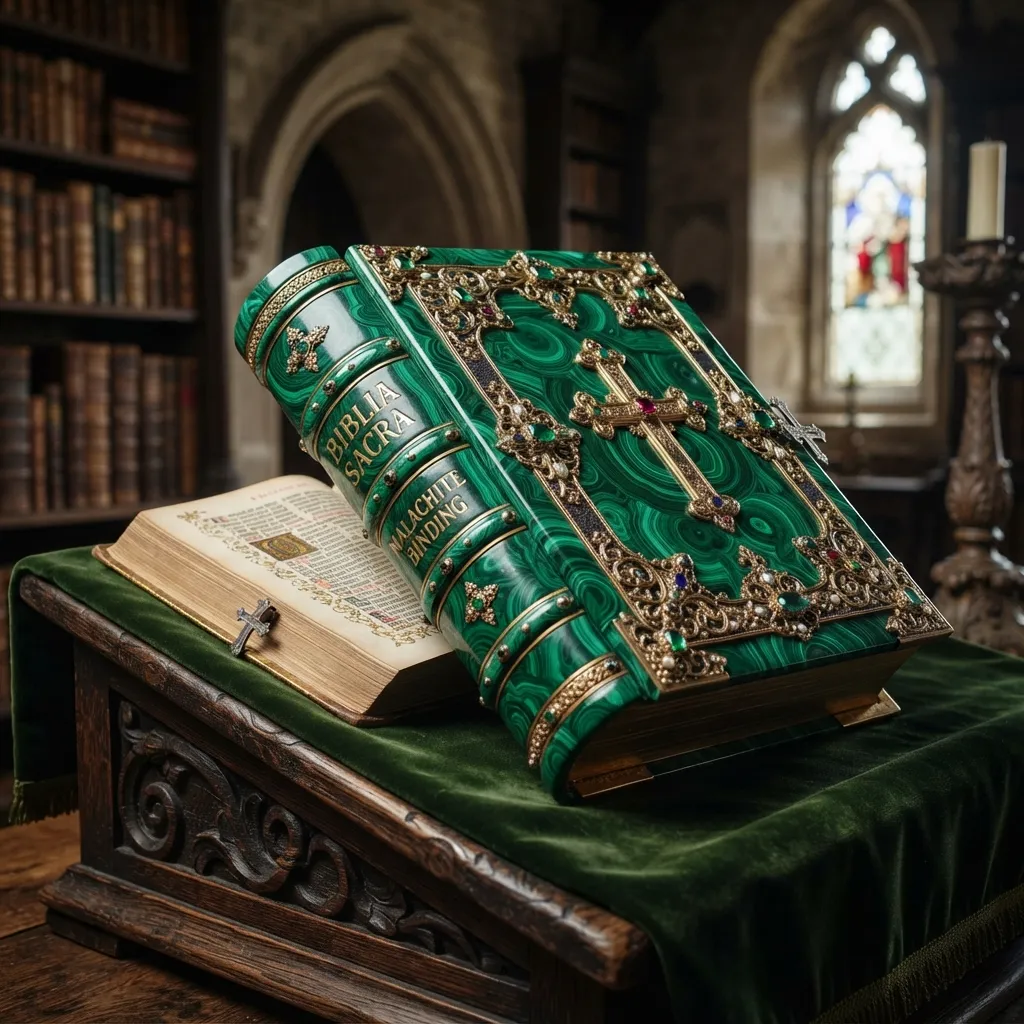
The deep green color of malachite often reminds Christians of life and growth. In the Bible, green things are connected with renewal, peace, and blessing.
One beautiful verse says:
“He maketh me to lie down in green pastures.” Psalm 23:2
Green pastures show God’s care and comfort. They are places of rest and healing. Because malachite is green, many believers connect it with the same feeling of spiritual peace.
The stone can also remind us that God helps us grow little by little. Just like plants grow with water and sunlight, faith grows through prayer and trust in God.
A Reminder of Healing
Many people connect malachite with emotional healing and inner strength. In Christian meaning, healing always points back to God.
The Bible says:
“He healeth the broken in heart, and bindeth up their wounds.” Psalm 147:3
This verse reminds us that God sees our pain. He brings comfort to tired hearts. Some believers see malachite as a reminder of God’s healing power and loving care.
When someone feels lost, hurt, or afraid, the image of a calm green stone can bring thoughts of peace and restoration.
Transformation and Change
Malachite forms in layers over time. Because of this, it is often linked with transformation. Spiritually, this can point to the way God changes us from the inside.
The Bible teaches that believers become new through faith:
“If any man be in Christ, he is a new creature.” 2 Corinthians 5:17
God works in our hearts every day. He helps us leave fear, anger, and sin behind. He shapes us into people filled with love, hope, and faith.
The spiritual symbolism of malachite can remind Christians that change is part of God’s plan.
Protection and Wisdom
In ancient times, precious stones were often connected with protection and wisdom. The Bible speaks many times about wisdom being more valuable than jewels.
Proverbs 3:13-15 says:
“Happy is the man that findeth wisdom.”
This teaches us to seek God’s truth above earthly riches.
Some Christians believe malachite can symbolize spiritual protection. Not because the stone itself has power, but because it reminds believers to stay close to God.
True protection comes from the Lord alone.
Warning Against Idolatry
It is important to remember that Christians should never worship stones or place faith in objects.
The Bible clearly teaches us to trust God, not created things.
Isaiah 42:8 says:
“I am the Lord: that is my name: and my glory will I not give to another.”
Malachite can be appreciated as part of God’s creation. But our hope, healing, and guidance must always come from the Lord.
This keeps our hearts focused on faith instead of superstition.
What is a malachite in the bible
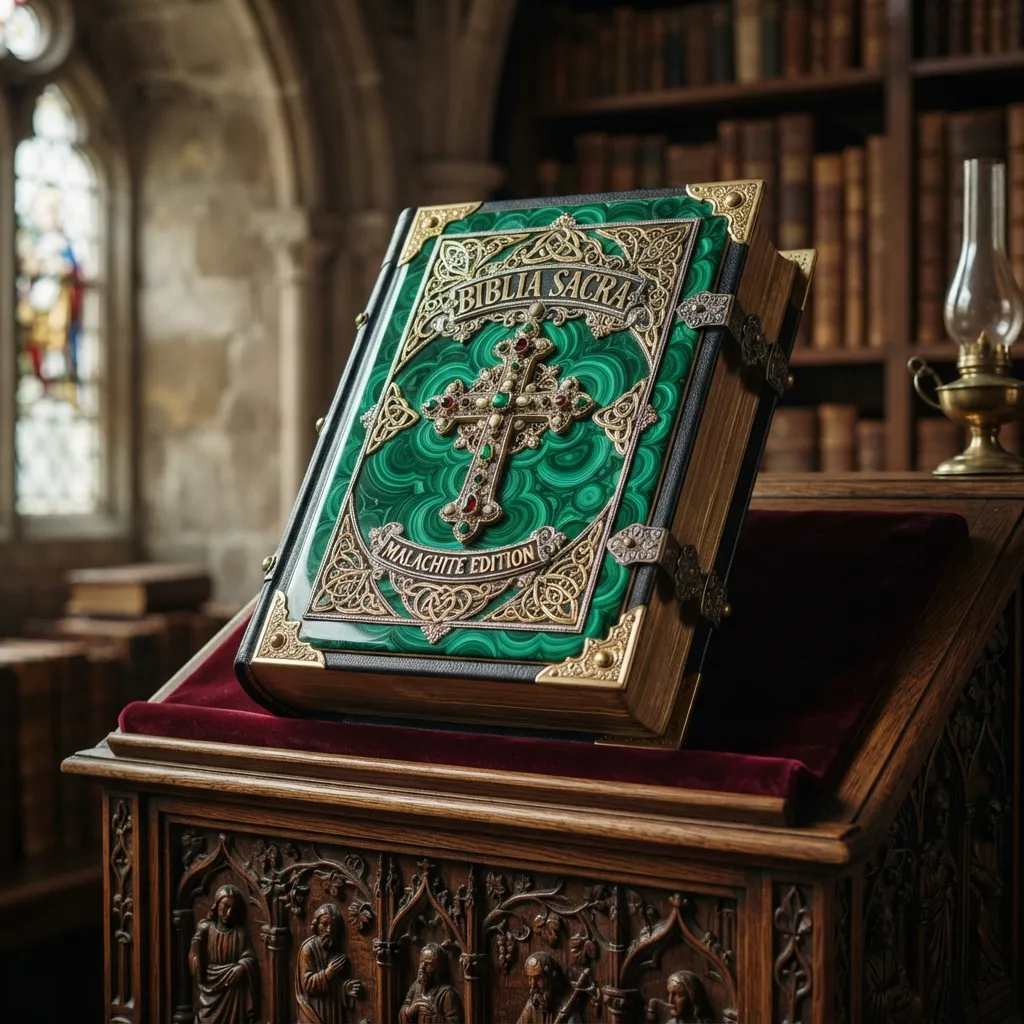
In the Bible, malachite is understood as a precious or decorative stone. Some Bible translations use the word malachite where older translations may use a different name for the stone. It is connected with the beautiful stones used in sacred settings and priestly clothing.
The exact identification of the ancient stone is not completely certain. Biblical stone names can be difficult to match with modern minerals.
So, it is best to understand malachite as a valuable stone mentioned in the biblical description of sacred beauty and wealth.
- Malachite is associated with a precious stone.
- It appears in translations of biblical descriptions of valuable stones.
- The Bible uses precious stones to show beauty, honor, and richness.
- The exact ancient mineral may differ from modern malachite.
Bible verse:
“The workmanship of thy tabrets and of thy pipes was prepared in thee in the day that thou wast created.” Ezekiel 28:13
Ezekiel 28:13 describes the precious stones connected with the king of Tyre. Different Bible translations and traditions vary in how some of these stones are identified.
Malachite meaning bible
The malachite meaning in the Bible is best understood through the biblical use of precious stones. These stones often represent beauty, value, glory, and richness.
Malachite itself does not have a special spiritual meaning clearly defined by Scripture. The Bible does not say that malachite represents a particular spiritual power, blessing, or prophecy.
Therefore, Christians should avoid giving the stone meanings that Scripture does not teach.
- It can be viewed as a valuable and beautiful stone.
- Precious stones can point to beauty and honor.
- The Bible does not teach that malachite has magical power.
- Its meaning should be based on Scripture, not later traditions.
Bible verse:
“Thou hast been in Eden the garden of God; every precious stone was thy covering.” Ezekiel 28:13
This passage shows how precious stones were used as imagery for splendor and beauty.
Malachite bible meaning in hebrew
The phrase “malachite bible meaning in hebrew” refers to the possible Hebrew word or mineral name connected with malachite in biblical study.
Malachite is a green mineral, but identifying the exact Hebrew term is difficult because modern mineral names do not always match the names of stones listed in ancient Hebrew texts.
In the Bible, precious stones often appear in descriptions of the high priest’s breastplate, sacred worship, wealth, beauty, and the glory of God.
However, the Bible does not clearly identify a Hebrew word as “malachite” in the same certain way that modern mineralogy does.
The Hebrew Connection
The Hebrew Bible uses names for precious stones that come from the ancient world. Some of these terms have uncertain meanings because ancient Hebrew descriptions did not use modern mineral classification.
For this reason, when studying malachite bible meaning in hebrew, it is better to ask:
- What Hebrew gemstone term is being translated?
- Where does that Hebrew term appear in Scripture?
- How did ancient Jewish and later translators understand the stone?
- Does the biblical passage give the stone a symbolic meaning?
- Is the identification with modern malachite certain or only possible?
Malachite in the bible
Malachite in the Bible is connected with the biblical discussion of precious stones. However, readers should remember that Bible translations do not always use the same English names for ancient stones.
The ancient Hebrew and Greek names for minerals do not always have a perfect match in modern mineral science. Because of this, one translation may say malachite, while another may use another stone name.
- Translation differences are common with ancient gemstones.
- The Bible contains many references to precious stones.
- Stones were used in priestly garments and sacred descriptions.
- The exact identity of some ancient stones remains uncertain.
Bible verse:
“And the second row shall be an emerald, a sapphire, and a diamond.” Exodus 28:18
This verse is part of God’s instructions for the breastplate of the high priest. It shows the important place that precious stones had in biblical worship.
Malachites
Malachites refers to more than one piece or reference to malachite. In a biblical context, the word should be understood carefully because the Bible was not written using modern mineral names.
Precious stones were highly valued in the ancient world. Scripture mentions many kinds of stones when describing the priesthood, Jerusalem, kings, wealth, and heavenly glory.
- Malachites are green copper minerals in modern mineral science.
- The Bible does not give a detailed description of modern malachite.
- Ancient stone names can have uncertain translations.
- The biblical focus is often on the beauty and value of the stones.
Bible verse:
“And the foundations of the wall of the city were garnished with all manner of precious stones.” Revelation 21:19
This verse shows how precious stones are used to describe the beauty of the New Jerusalem.
Malachite in bible
When searching for malachite in Bible, it is important to check the Bible translation being used. Some translations may use “malachite,” while others may translate the underlying ancient stone name differently.
The Bible does not provide a separate teaching about malachite as a spiritual object. Instead, precious stones appear as part of descriptions of beauty, wealth, priestly garments, and God’s glory.
- Check the translation when studying malachite.
- Compare several Bible translations.
- Do not assume every modern gemstone name has an exact ancient equivalent.
- Focus on what the passage actually teaches.
Bible verse:
“And thou shalt set in it settings of stones, even four rows of stones.” Exodus 28:17
The verse refers to the stones placed in the high priest’s breastplate.
Malachite biblical
The malachite biblical meaning should be separated from modern spiritual claims about crystals and gemstones.
The Bible does mention precious stones, but it does not teach that malachite gives people healing energy, protection, luck, or supernatural power.
A biblical view keeps the focus on God’s Word. If malachite is mentioned in a translation, its importance comes from the biblical passage where the stone appears, not from supposed mystical properties.
- The Bible values God’s creation.
- Precious stones can represent beauty and wealth.
- Scripture does not teach crystal magic.
- Spiritual power belongs to God, not minerals.
Bible verse:
“The earth is the LORD’S, and the fulness thereof; the world, and they that dwell therein.” Psalm 24:1
This reminds believers that creation belongs to God.
The malachite in the bible
The malachite in the Bible can be understood as part of the larger biblical theme of precious stones. Depending on the translation, the word may appear in a passage describing valuable stones connected with sacred or royal imagery.
It is important not to build a doctrine around the stone itself. Scripture gives much greater attention to God, worship, holiness, wisdom, and obedience than to the material value of gemstones.
- Malachite is not a central biblical doctrine.
- Its appearance depends on translation and interpretation.
- Precious stones often illustrate beauty and value.
- The spiritual lesson comes from the passage, not from the mineral.
Bible verse:
“And the building of the wall of it was of jasper: and the city was pure gold, like unto clear glass.” Revelation 21:18
Revelation uses precious materials to communicate the extraordinary beauty and glory of God’s future kingdom.
Malachites bible
When people search for malachites Bible, they may be looking for every biblical reference connected with malachite or for its spiritual meaning. The key point is that the Bible contains many precious-stone references, but the identification of ancient stones is sometimes uncertain.
Therefore, malachite should not be given a meaning that Scripture does not give it. The safest approach is to study the original passage, compare translations, and understand the stone within its biblical setting.
- Biblical gemstones can have translation differences.
- Not every modern gemstone name has a certain ancient equivalent.
- Scripture does not present malachite as an object of worship.
- The Bible points believers toward God rather than toward the power of stones.
Bible verse:
“For every house is builded by some man; but he that built all things is God.” Hebrews 3:4
The verse points attention away from created things and toward their Creator.
Malachite from the bible
Malachite from the Bible refers to the stone as it appears or is identified in certain Bible translations. The Bible’s precious stones were used in several important settings, especially descriptions of the high priest’s breastplate and symbolic descriptions of glory and beauty.
However, modern readers should be careful when saying that a particular biblical stone is definitely the same mineral called malachite today. Ancient gemstone identification is not always certain.
- Malachite is a modern mineral name.
- Biblical translations may differ in naming ancient stones.
- Precious stones were used in important biblical imagery.
- The Bible does not teach that malachite has supernatural powers.
Bible verse:
“And the second row shall be an emerald, a sapphire, and a diamond.” Exodus 28:18
The passage shows that precious stones had an important place in the design of the high priest’s breastplate.
1. Spiritual Meaning of Precious Stones in the Bible
Precious stones in the Bible often point to beauty, glory, value, holiness, wealth, and God’s presence. They appear in descriptions of the high priest’s breastplate, the Garden of Eden, the foundations of the New Jerusalem, and other important biblical settings.
The Bible does not give one fixed spiritual meaning for every stone. Their meaning depends on the passage and context.
Important biblical uses include:
- High priest’s breastplate: Twelve stones represented the twelve crews of Israel.
- God’s glory: Precious stones are used to describe heavenly beauty and majesty.
- Wisdom and value: Precious stones can be compared with things of great worth.
- New Jerusalem: Revelation uses precious stones to describe the city’s glorious foundations.
- Eden: Ezekiel describes the king of Tyre using imagery involving precious stones.
Bible verses:
“And the second row shall be an emerald, a sapphire, and a diamond.” Exodus 28:18
“The foundations of the wall of the city were garnished with all manner of precious stones.” Revelation 21:19
“Wisdom is better than rubies; and all the things that may be desired are not to be compared to it.” Proverbs 8:11
So, spiritually, precious stones can remind believers of God’s glory, wisdom, holiness, and the priceless value of His promises.
2. What Are the 7 Precious Stones in the Bible?
There is no official biblical list called “the seven precious stones.” Different websites and traditions create lists of seven stones, but Scripture mentions many different stones.
Some commonly discussed biblical precious stones include:
- Ruby
- Sapphire
- Diamond
- Emerald
- Jasper
- Beryl
- Amethyst
However, Bible translations sometimes use different English names for ancient Hebrew and Greek words. Therefore, identifying an ancient stone with a modern gemstone is not always certain.
Examples from Scripture:
- Sapphire Exodus 28:18
- Diamond Exodus 28:18
- Emerald Exodus 28:18
- Jasper Revelation 21:19
- Amethyst Revelation 21:20
- Beryl Daniel 10:6
- Ruby Proverbs 31:10, depending on translation
“Who can find a virtuous woman? for her price is far above rubies.” Proverbs 31:10
The key point is that the Bible does not teach that exactly seven precious stones have seven secret spiritual meanings.
3. Precious Stones in the Bible and Their Meaning PDF
If you are studying this topic for a Bible resource or PDF, it is helpful to organize the stones by biblical passage and context, rather than assigning meanings that Scripture does not directly give.
Simple Bible Study Chart
| Stone | Biblical Reference | Main Biblical Context |
| Sapphire | Exodus 28:18 | High priest’s breastplate |
| Diamond | Exodus 28:18 | High priest’s breastplate |
| Emerald | Exodus 28:18 | High priest’s breastplate |
| Jasper | Revelation 21:19 | New Jerusalem |
| Amethyst | Revelation 21:20 | New Jerusalem |
| Beryl | Daniel 10:6 | Heavenly vision |
| Ruby | Proverbs 31:10 | Value of wisdom/virtue |
Helpful verses for study
- Exodus 28:15–21 Twelve stones on the priestly breastplate
- Ezekiel 28:13 Precious stones in Eden imagery
- Daniel 10:6 Appearance of a heavenly messenger
- Revelation 21:19–20 Foundations of the New Jerusalem
- Proverbs 8:11 Wisdom compared with precious things
A good Bible study should also note that ancient gemstone identification is sometimes uncertain. Modern translations may use different names for the same Hebrew or Greek term.
4. Malachite Meaning
Malachite is not clearly identified by name in most standard English Bible translations. Therefore, it would be misleading to claim that the Bible gives a specific spiritual meaning for malachite.
Malachite is a green mineral, and some modern Christian websites associate green stones with ideas such as growth, renewal, or life. However, those associations should not be presented as direct biblical teaching.
The Bible does use green imagery in several places.
“He maketh me to lie down in green pastures: he leadeth me beside the still waters.” Psalm 23:2
Green imagery can suggest life and flourishing in certain biblical contexts, but this does not mean malachite itself has a biblical spiritual meaning.
In short:
- Malachite is not one of the clearly named stones in the standard biblical gemstone lists.
- The Bible does not assign malachite a special spiritual power.
- Modern crystal meanings should not be confused with biblical teaching.
- Christians should base spiritual meaning on Scripture rather than gemstone folklore.
5. Amalekites in the Bible
The Amalekites were an ancient people who repeatedly opposed Israel in the Old Testament. They are first connected with Amalek, a descendant of Esau.
“And Timna was concubine to Eliphaz Esau’s son; and she bare to Eliphaz Amalek.” Genesis 36:12
The Amalekites became known especially for attacking Israel after the Exodus.
“Remember what Amalek did unto thee by the way, when ye were come forth out of Egypt.” Deuteronomy 25:17
Israel fought Amalek during the wilderness journey. In Exodus 17, Moses stood on a hill while Joshua led Israel in battle.
“And Joshua discomfited Amalek and his people with the edge of the sword.” Exodus 17:13
The Amalekites continued to appear throughout Israel’s history. Saul was later commanded to fight them.
“Now go and smite Amalek, and utterly destroy all that they have.” 1 Samuel 15:3
The Amalekites therefore represent a historical enemy of Israel in the Old Testament, rather than simply being a symbol or spiritual concept.
6. Malachite Bible David
There is no clear biblical connection between malachite and King David.
David is associated with many stones and valuable materials in Scripture, especially in connection with the temple preparations and his royal life. However, Scripture does not specifically say that David owned, used, or received malachite.
For example, David prepared large amounts of valuable materials for the future temple.
“Now, behold, in my trouble I have prepared for the house of the LORD an hundred thousand talents of gold.” 1 Chronicles 22:14
David also gathered precious materials for the temple:
“And the gold for things of gold, and silver for things of silver, and for all manner of work to be made by the hands of artificers.” 1 Chronicles 29:5
But malachite is not specifically identified in these passages.
So if you see a claim such as “malachite was David’s stone” or “David used malachite for spiritual protection,” that claim should be treated as extra-biblical tradition, not as a teaching directly supported by Scripture.
7. List of Stones in the Bible
The Bible mentions many stones and gemstones. The exact list can vary because ancient Hebrew and Greek gemstone names are sometimes difficult to match perfectly with modern minerals.
Some stones mentioned in Scripture include:
- Sapphire
- Diamond
- Emerald
- Jasper
- Amethyst
- Beryl
- Ruby
- Onyx
- Sardius
- Topaz
- Agate
- Carbuncle
Important Bible passages
Exodus 28:17–20 describes stones on the high priest’s breastplate.
Ezekiel 28:13 mentions several precious stones in its description of Eden imagery.
Revelation 21:19–20 describes the foundations of the New Jerusalem with numerous precious stones.
“And the twelve gates were twelve pearls; every several gate was one pearl.” Revelation 21:21
The Bible’s use of stones is especially powerful in Revelation because John uses precious materials to describe the beauty, glory, and majesty of the eternal city.
8. Who Are the Amalekites Today?
The Bible does not provide enough information to identify a modern ethnic group as the direct descendants of the Amalekites.
The Amalekites were an ancient people who appear throughout the Old Testament. Later biblical passages describe their defeat and disappearance from Israel’s historical record.
“And David smote the land, and left neither man nor woman alive…” 1 Samuel 27:9
Esther 3:1 also connects Haman with Agag, which links him to the Amalekite story through the biblical tradition surrounding Agag.
“Haman the son of Hammedatha the Agagite…” Esther 3:1
However, this does not allow us to identify a present-day nation or ethnic group as “the Amalekites.”
Important points:
- The Amalekites were an ancient biblical people.
- They were associated with Amalek, a descendant of Esau.
- They fought against Israel several times.
- Their history eventually disappears from the biblical narrative.
- Scripture does not name a modern nation as their surviving descendants.
- Modern claims identifying a particular ethnic or national group as Amalekites are speculative.
Spiritual Significance and Symbolism
A Sign of Spiritual Awakening
Many people see malachite during important moments in life. It may appear during times of prayer, change, or emotional struggle.
Because of this, some Christians connect it with a spiritual awakening. It can serve as a gentle reminder to draw closer to God.
Life can feel heavy sometimes. Fear, stress, and sadness may fill the heart. During these moments, God often calls His people back to peace and trust.
The green color of malachite can symbolize fresh hope and spiritual renewal.
A Reminder to Trust God
Faith is not always easy. There are seasons when people feel uncertain about the future.
Malachite symbolism may remind believers to stay rooted in God’s promises. Just as trees remain planted through storms, Christians are called to stand firm in faith.
Jeremiah 17:7-8 compares faithful people to healthy trees planted near water. This picture reflects stability, life, and trust in God.
Everyday Spiritual Lessons
Simple moments can carry spiritual meaning.
A person may notice malachite during prayer. Another may dream about it during a hard season. Someone else may feel comfort simply by seeing its peaceful color.
These moments can encourage reflection and prayer. They remind believers to seek God’s guidance in daily life.
Biblical Interpretations in Dreams or Real Life
Dreams can sometimes reflect emotions, fears, hopes, or spiritual thoughts. In the Bible, God occasionally used dreams to guide people. Examples include Joseph, Daniel, and Joseph the husband of Mary.
Seeing malachite in a dream may symbolize healing, change, or spiritual growth.
A bright and peaceful malachite dream may point toward hope, renewal, or emotional healing. It can remind a person that God is near during difficult times.
A broken or dark-looking stone may reflect fear, confusion, or spiritual struggle. In this case, the dream may encourage prayer and deeper trust in God.
If someone sees malachite in real life often, it may simply serve as a reminder to slow down, pray, and listen for God’s direction.
Christians should always seek wisdom through Scripture and prayer rather than depending fully on dream interpretation.
God’s Word remains the strongest source of truth and guidance.
Practical Lessons & Faith Insights
The malachite Bible meaning teaches believers to stay close to God during seasons of change.
It reminds us of:
- Healing through faith
- Growth through prayer
- Hope during hard times
- Trust in God’s guidance
When life feels uncertain, remember that God is still working in your heart.
Conclusion:
The malachite Bible meaning points toward healing, growth, hope, and spiritual renewal. Its rich green color reminds many believers of life, peace, and the loving care of God.
While the stone itself has no divine power, it can still serve as a gentle reminder to pray, trust God, and stay faithful during seasons of change.
No matter what you are facing today, remember this: God is always near, guiding your heart with love, wisdom, and hope.
Read More Posts
- Patience in the Bible Meaning: What God Really Say About Waiting
- Joseph Bible Meaning: God’s Plan Behind His Life and Story 2026
- Judah in the Bible Meaning: Why Did God Choose Judah? (2026)

I am Samuel Brooks, a Christian author who enjoys breaking down complex Bible concepts into simple truths. At Biblicaltribez.com, I write content that inspires faith, hope, and spiritual growth. I aim to help readers connect Scripture with real life challenges in a meaningful way.